
This post may contain affiliate links. Please see our disclosure policy.
It is no secret that I love Asian food – and I am not ashamed to say that I am also a big fan of Wagamama. I know some people can be a bit snobby about chain restaurants, but I think Wagamama does some really tasty dishes…including their incredible Pad Thai.
Luckily for me, they shared their Chicken and Prawn Pad Thai recipe during lockdown – which inspired me to create my own version. It is a quick, simple, and totally delicious midweek meal which has become a firm favorite in our house (I still make it regularly all these years later). I am so excited to share my Wagamama Pad Thai with you…
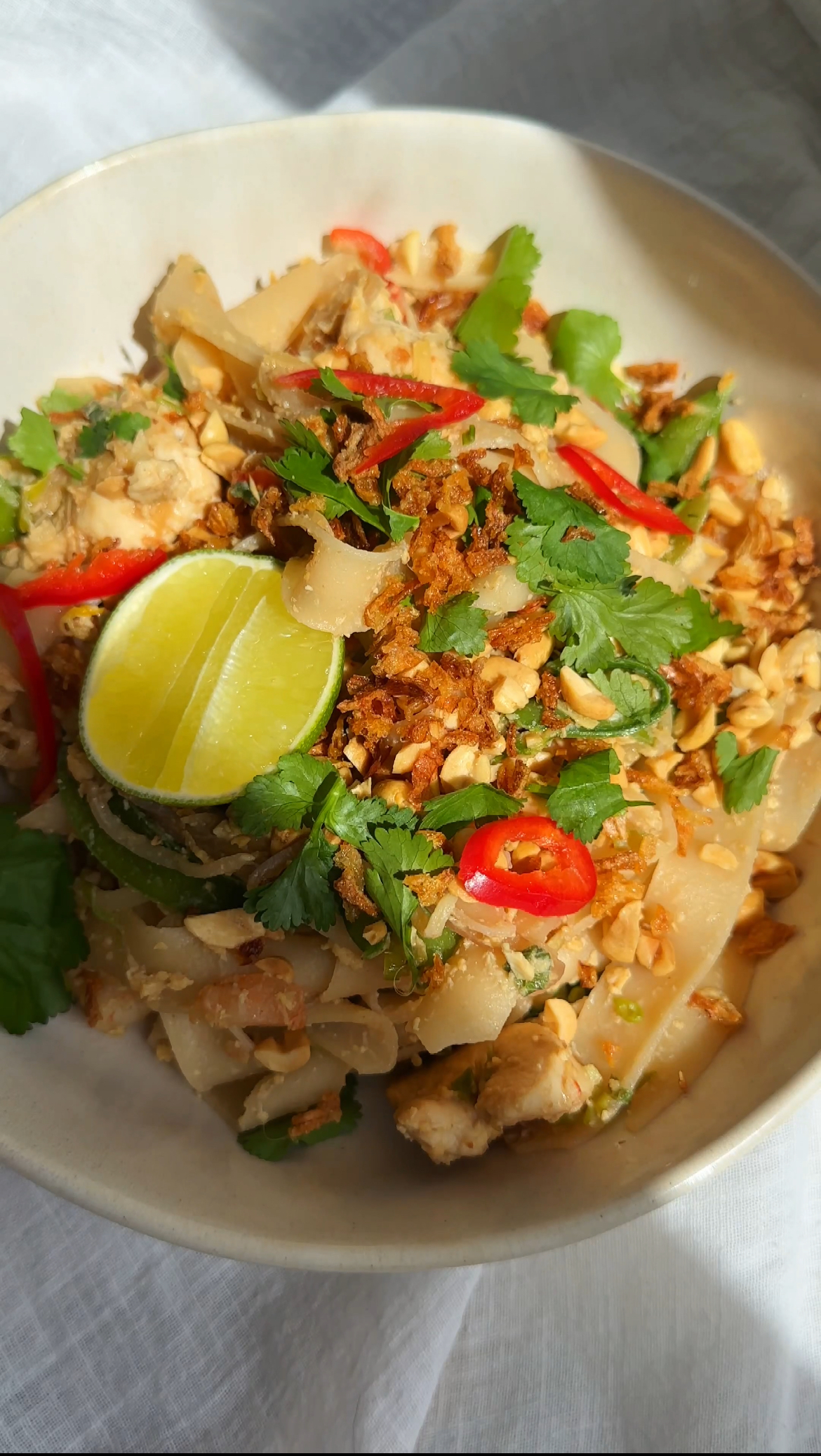
Table of Contents
Why you will love this Pad Thai recipe
- It takes less than 30 minutes from start to finish, making it the perfect midweek meal.
- It is healthy and full of veggies to help you reach your 5 a day – plus plenty of nuts and seeds to work towards 30 plant-based foods a week to help our guts.
- It is super flexible; you can adjust the veggies to suit what you have in your fridge.
- It is full of delicious flavors and textures – salty soy sauce, tangy tamarind, zesty citrus, and crispy fried onions.
- It is much cheaper to make your own ‘fakeaway,’ so you can save yourself a small fortune on eating out or ordering from Deliveroo and enjoy a restaurant-standard dish in the comfort of your own home.
- Once you have got the hang of the recipe, you can get creative with your own flavors and switch up the veggies to use whatever you have left in your fridge or mix up the garnishes with toasted sesame seeds or cashew nuts.
Ingredients
For the sauce:
- Fish sauce – A splash of fish sauce brings a deep umami flavor to this Pad Thai. I also love adding it to things like egg-fried rice.
- Light soy sauce – Full of salty, umami flavor. The lighter version tends to be saltier and thinner than the dark version. You could use tamari instead.
- Soft light brown sugar – This adds sweetness to the sauce and balances out the saltiness of the soy sauce and peanut butter.
- Rice vinegar or tamarind paste – Rice vinegar brings acidity, while tamarind paste adds a delicious tangy, sour flavor to the Pad Thai sauce.
- Smooth peanut butter – While optional, peanut butter adds a lovely nutty flavor to the Pad Thai.
For the Pad Thai:
- Chicken breast – I like to use outdoor-reared free-range chicken breasts.
- Salt – You only need a small pinch of salt as the sauce is quite salty.
- Black pepper – This adds a subtle warmth. Bear in mind you will also add chili later.
- Sesame oil – I love using sesame oil in Asian dishes as it gives the most delicious sesame flavor to the whole meal.
- Rice noodles – These are traditional in a Pad Thai, but you can swap for whatever you have in your cupboards.
- Shrimp (prawns) – Choose sustainably sourced large raw shrimp. There is a fairly small number in this recipe, so you can increase the amount if you are a fan.
- Red onion – Red onion has a milder flavor than white onions and is perfect for adding to stir-fried dishes.
- Snow peas (mangetout) – Add color, texture, and a hint of sweetness. You could swap for sugar snap peas or green beans if you prefer.
- Bean sprouts – Opt for fresh bean sprouts rather than the canned variety. They have a delicate flavor with a hint of nuttiness.
- Garlic – I find 2 garlic cloves are perfect for this recipe, but you can adjust according to taste. You can also swap for garlic paste or garlic granules, if you prefer.
- Chili – I have kept this fairly mild by deseeding the pepper. You can always adjust the heat according to preference – or use dried chili flakes if you can’t get hold of fresh.
- Scallions (spring onions) – To add a subtle onion flavor, and they’re perfect for stir-fries as they can be served raw or very briefly cooked.
- Ginger – Ginger is one of my favorite flavors in Asian dishes. You could use ginger paste if you prefer.
- Eggs – Try to opt for free-range eggs if you can. I recommend large eggs stamped with the British Lion.
To serve:
- Fresh cilantro (coriander )– I love this with cilantro, but you could use parsley if you are not a fan.
- Peanuts – Lightly crushed dry-roasted peanuts have a lovely flavor and crunchy texture.
- Crispy fried onions – These are a must-have ingredient in your store cupboard. They add so much flavor and texture to so many dishes.
- Lime – Adds a tart, zesty flavor to the Pad Thai. You could serve with a lemon if you can’t get hold of a lime.
Substitutions and variations
Smooth peanut butter: This is optional, but it adds lovely body and thickness to the sauce, so I would recommend it. Crunchy PB also works too, of course.
Rice noodles: Flat and wide rice noodles are the traditional choice. You could use other noodles such as egg, vermicelli, udon, etc.
Snow peas (mangetout): Swap for sugar snap peas or green beans if you prefer. Or any veg really; just adjust cooking time. You could add other veggies if they need using from the bottom of the fridge! It won’t quite be a Wagamama recipe but still delicious.
How to make Wagamama Pad Thai
Here’s a quick visual guide — the full recipe with exact measurements is below.
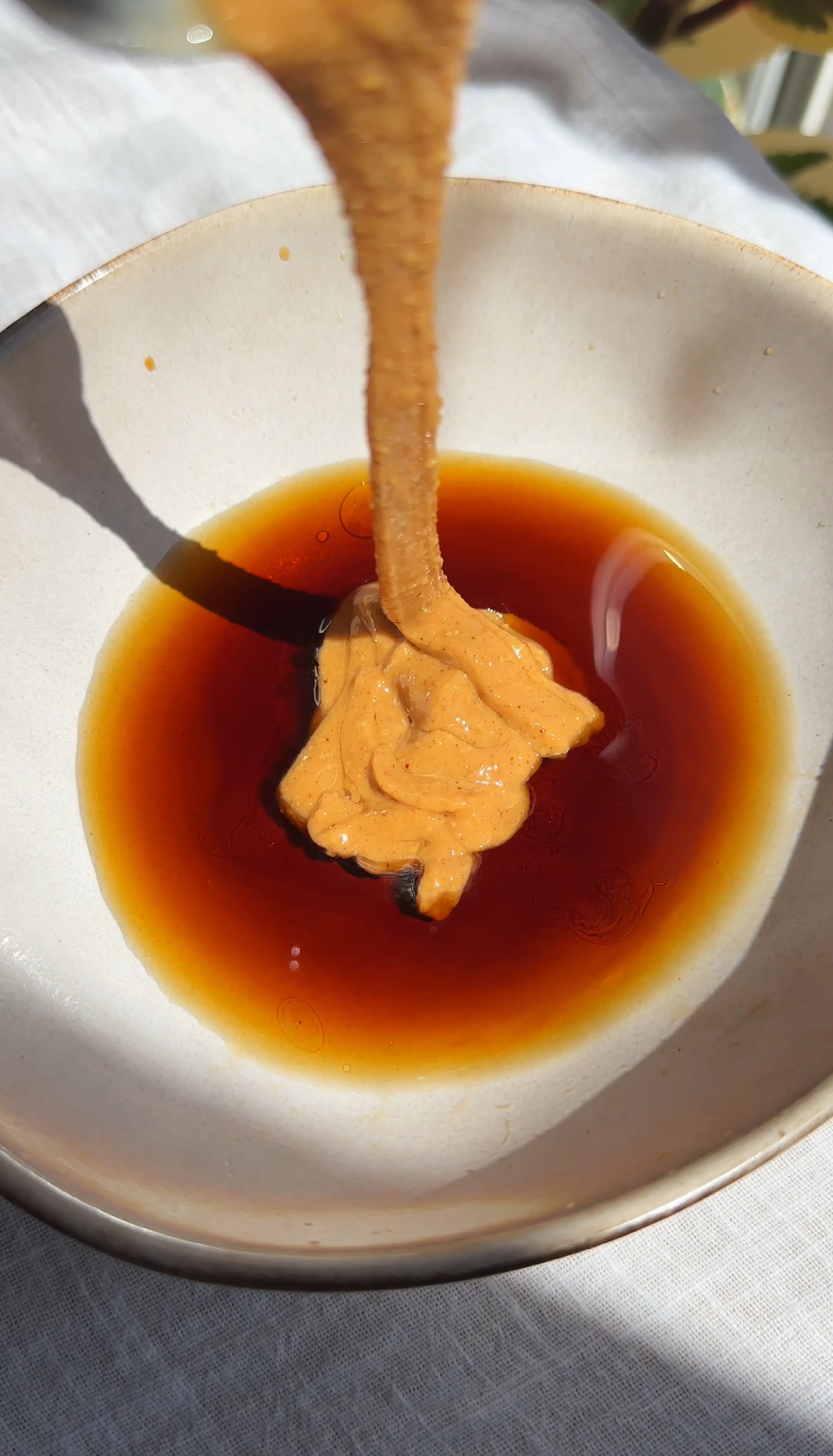
ONE: Add all the sauce ingredients to a bowl.
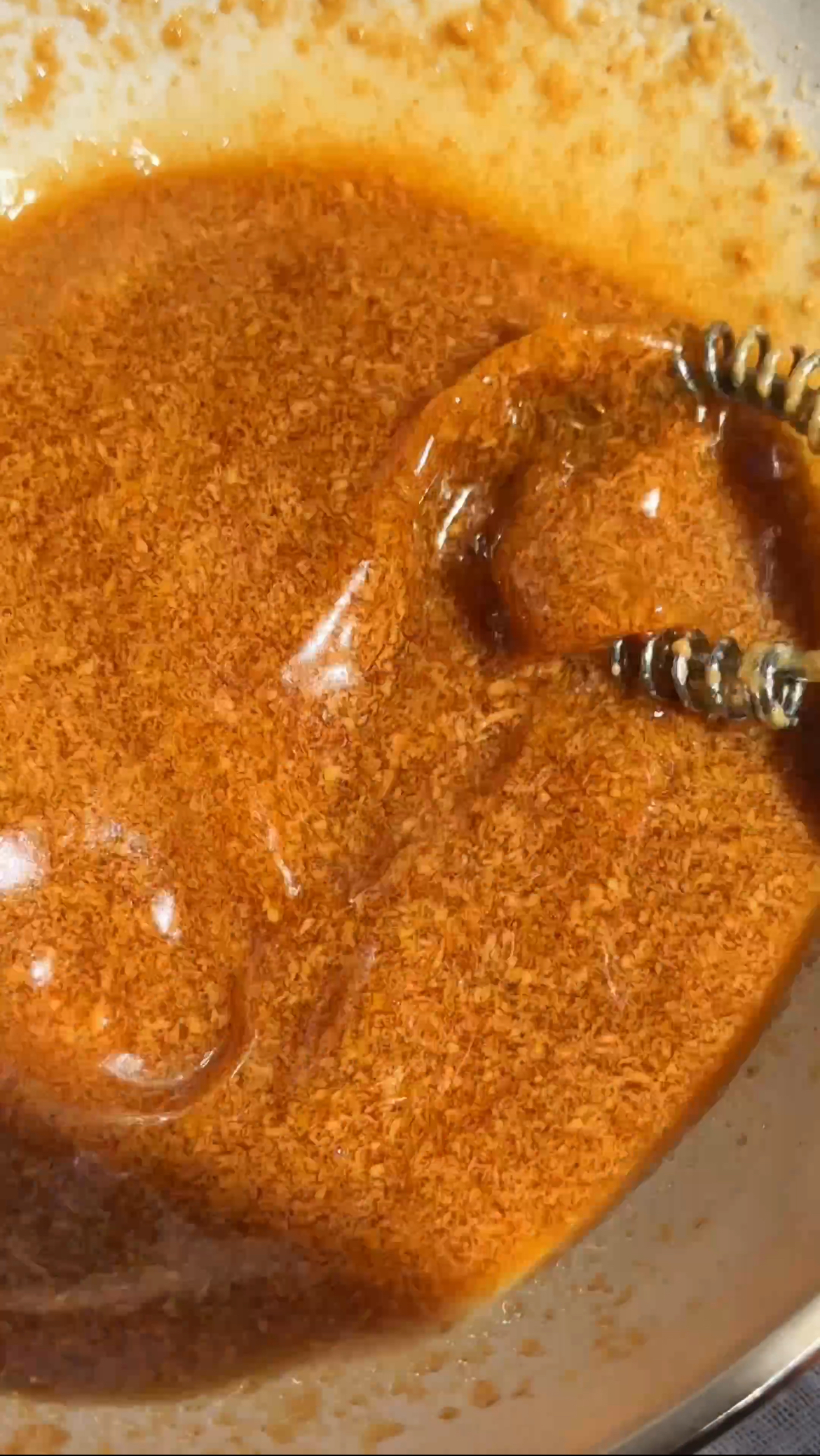
TWO: Whisk until smooth and set aside. At this point, make sure all the veggies are chopped and ready to fry.
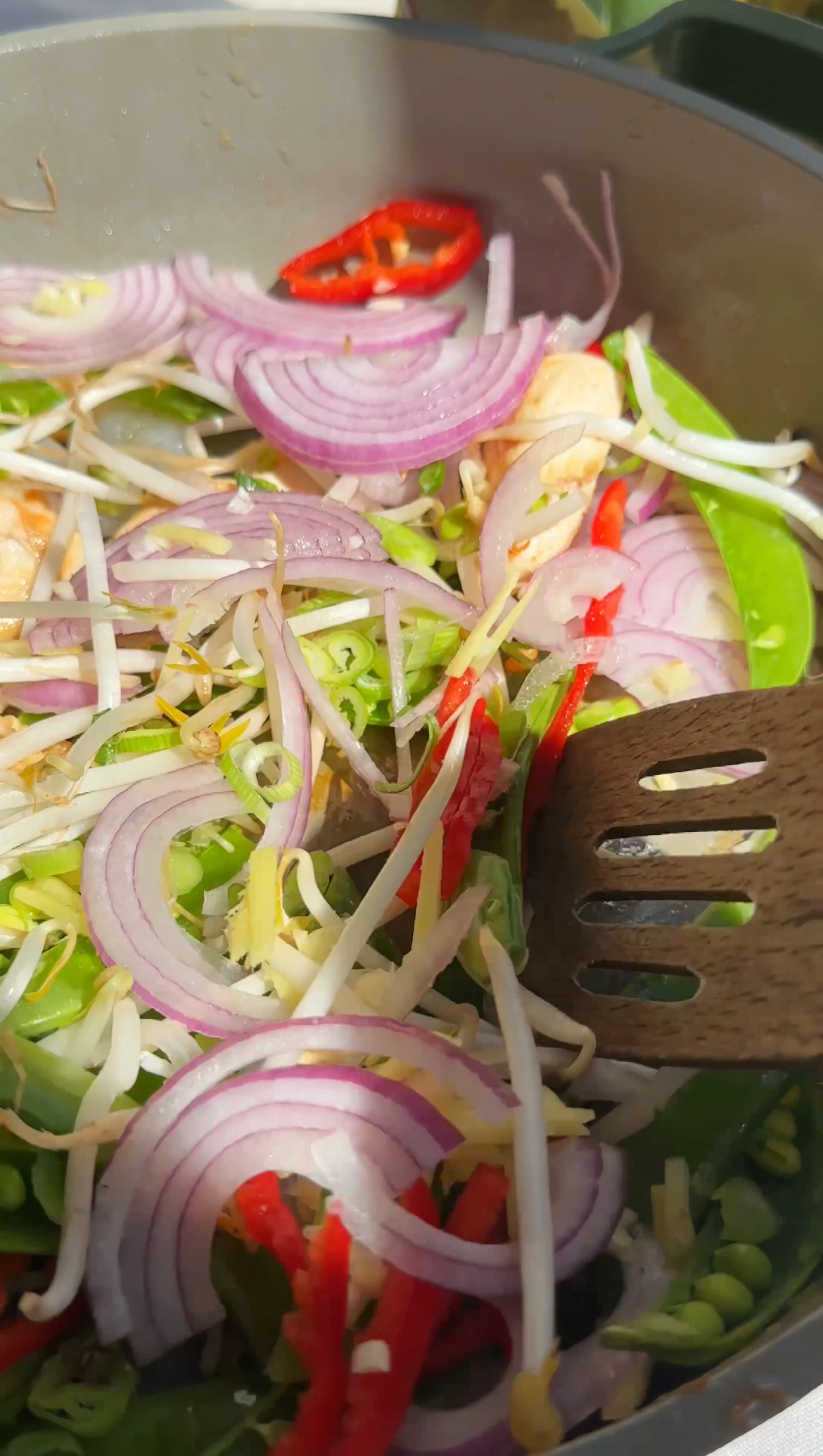
THREE: Fry the chicken until golden, followed by the shrimp, and then all the veggies.
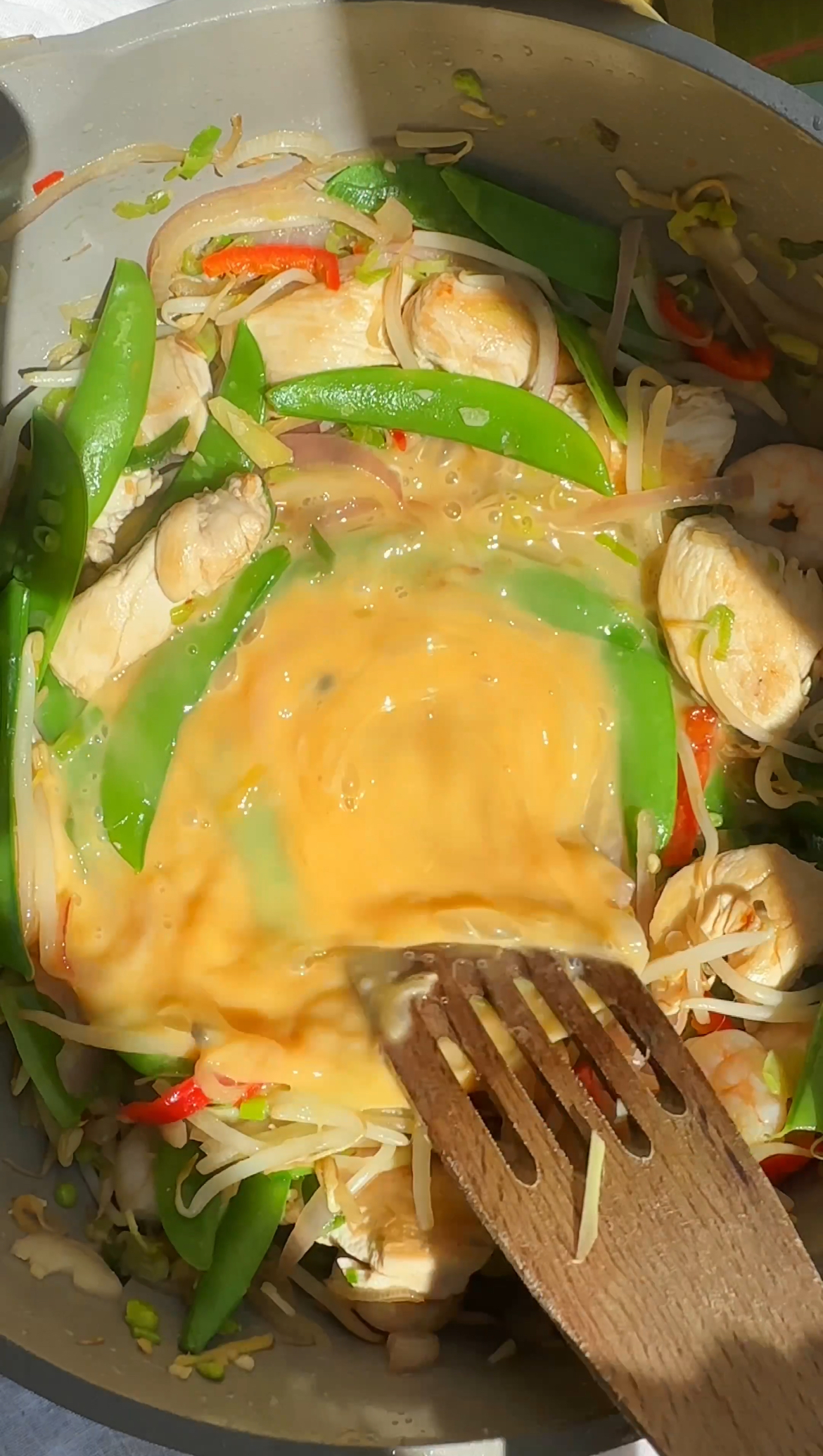
FOUR: Once they have fried for a few mins, make a well and add the eggs. Stir to cook through.
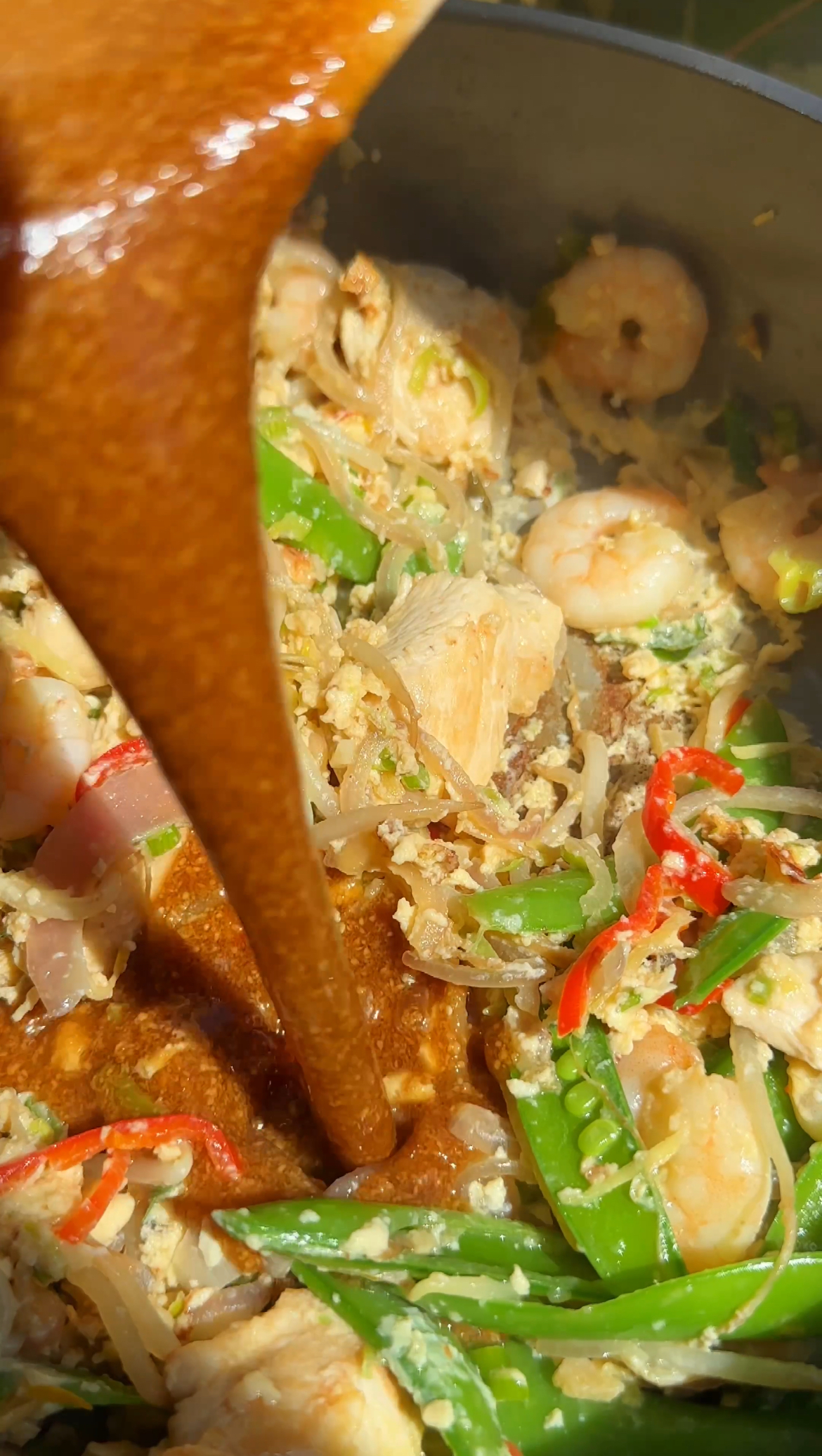
FIVE: Pour in the sauce while tossing and stirring to ensure the sauce coats all the vegetables, but doesn’t stick to the pan. Continue to stir-fry for another 1-2 minutes.
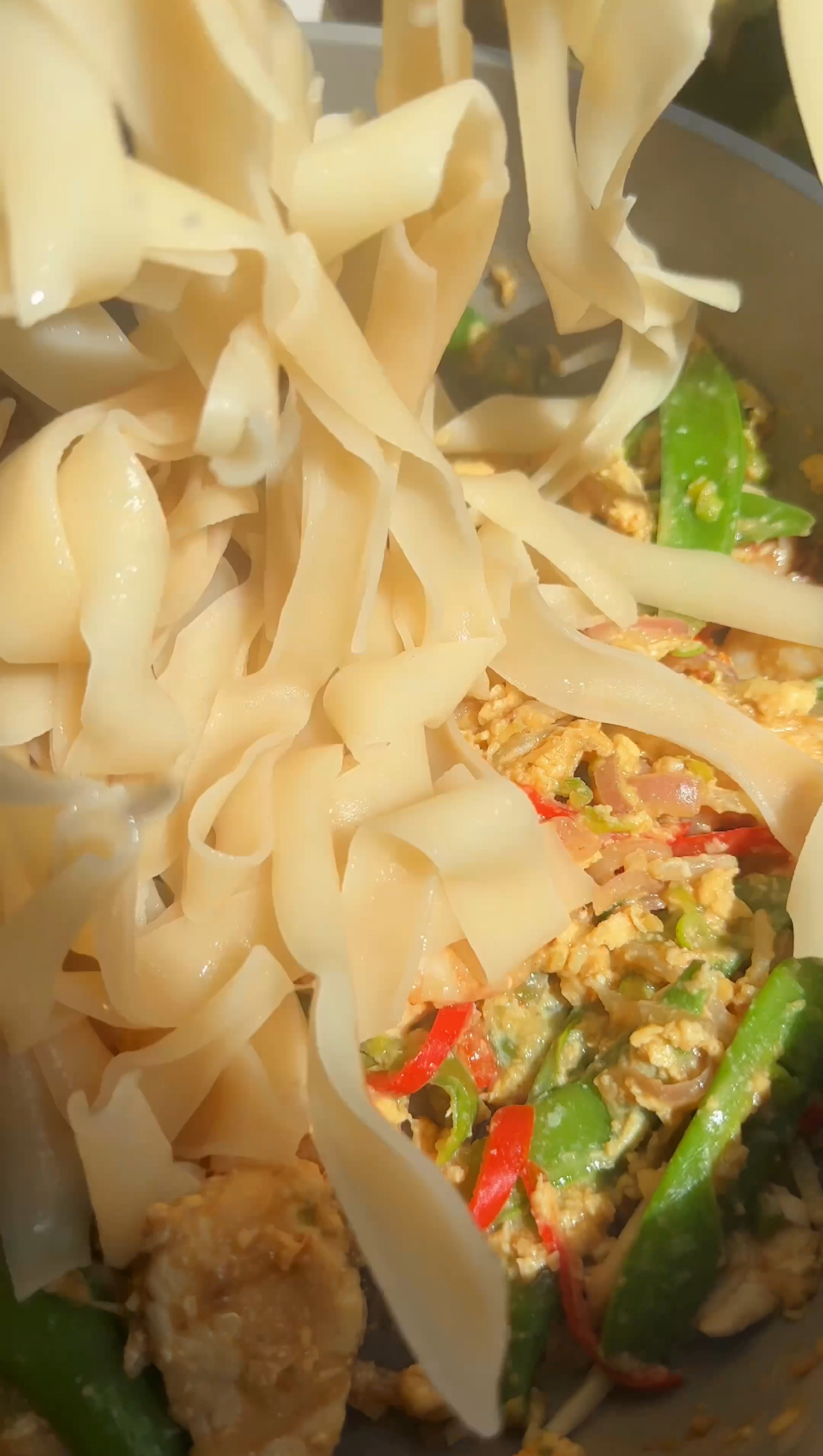
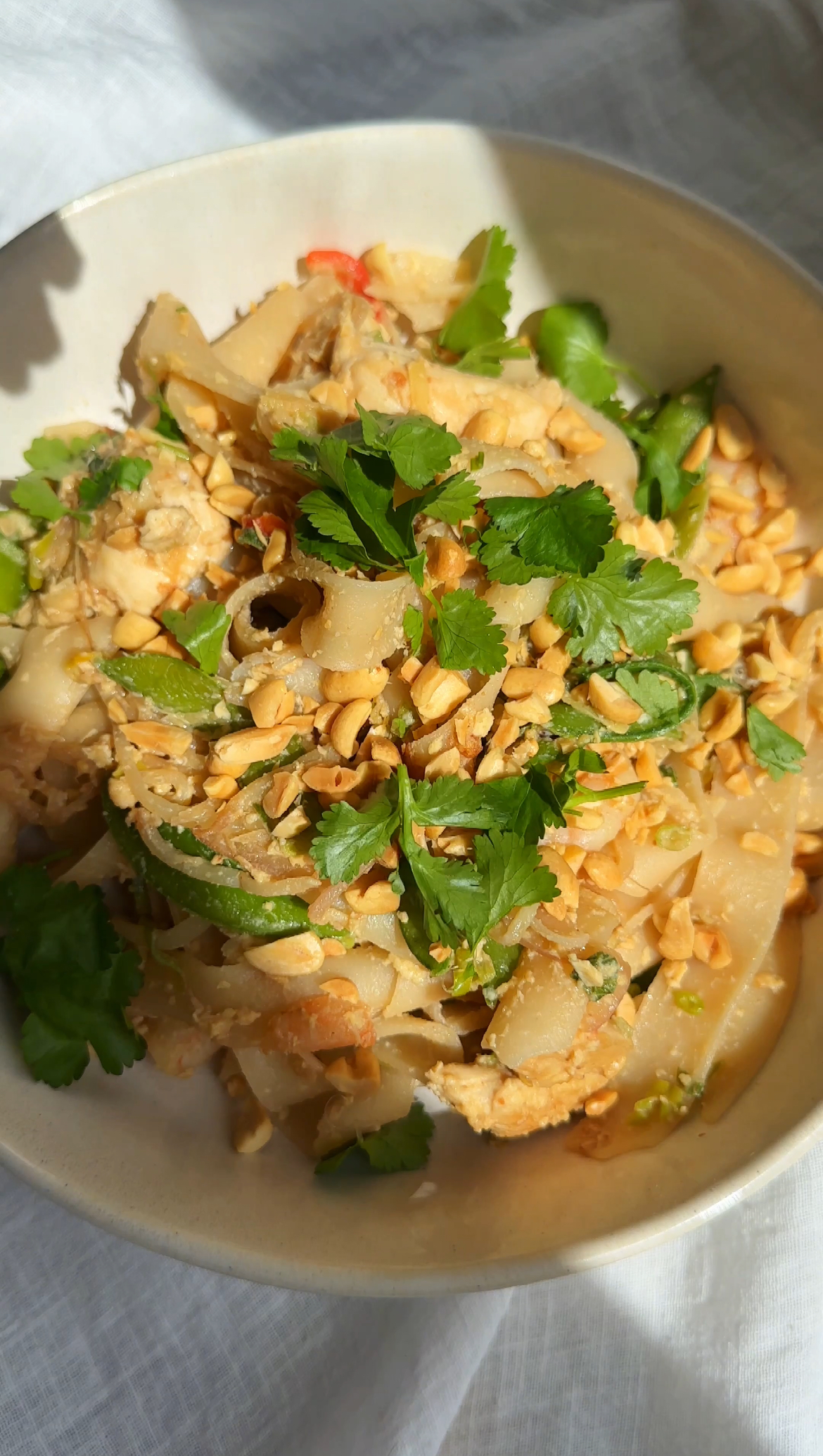
SIX: Finally, add the noodles and stir to coat them all. Then you can serve up and top with cilantro, peanuts, chilis, and fried onions.
Tips from Margie’s kitchen
- Prepping ingredients: It is really important to get everything prepped at the start for a dish like this – it makes the cooking stage much easier (in the chef world we call this ‘mise en place’). This means mixing together all the ingredients for the sauce in a small bowl and chopping all the veggies before you begin so it’s ready to throw in.
- Frying chicken: To make sure the chicken turns golden and gains some color, don’t stir too often in the pan/wok. If you leave it undisturbed, that’s when it has time to turn golden. So just give it a toss every so often to ensure it doesn’t stick.
- Garnishes and extras: Although it might seem a little extra to have garnishes for a weeknight meal, it really makes a big difference to the final dish, both in flavor and overall enjoyment. We eat with our eyes first! But the extra lime, cilantro, and peanuts add zing, freshness, and crunch that round out the dish. So don’t skip it.
- A note on the serving size: I always find it a bit tricky to say how many people my recipes serve, as I like to have (and serve) generous portions. This Wagamama Pad Thai is perfect for 2 people in my house, but you can adjust the noodles to suit your appetite.
Frequently asked questions
Pad Thai is a delicious stir-fry dish made with rice noodles, shrimp (prawns), chicken, egg, peanuts, and vegetables tossed in a tangy Pad Thai sauce. It is a very popular street food in Thailand and a favorite in Thai restaurants around the world.
This is a delicious meal in itself, but you could serve it with some spring rolls, a Thai salad, or a selection of other Asian dishes as part of a larger spread.
Yes – although the sauce will be a little different, you could make a vegetarian version of this Pad Thai with a few adjustments. Simply swap the chicken and shrimp for a plant-based alternative (such as tofu) and omit the fish sauce (you will need to add more soy sauce, but keep tasting as you are making it to balance out the flavors).
It is possible to make a vegan Wagamama Pad Thai, but you will need to swap the chicken and shrimp for something like tofu, leave out the egg, and omit the fish sauce (you will need to add more soy sauce, but keep tasting as you are making it to balance out the flavors). Also, be sure the soy sauce is vegan-friendly; tamari is a good alternative.
Other recipes you may enjoy
If you are a noodle fan like me, this Cold Peanut Noodle Salad with Chicken is so simple and will really hit the spot. If you prefer some soupier, brothy noodles, this Easy Pork Ramen is delicious. My Wagamama Chili Chicken Ramen is also a classic Wagas recipe that you will enjoy if you love this recipe! For rice but Asian flavors, try my Chicken Satay Rice Bowl.
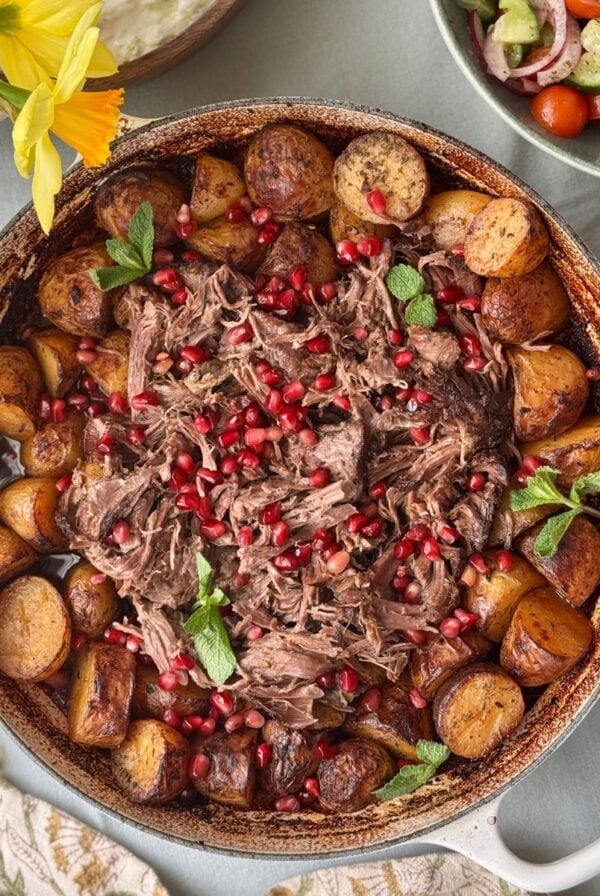
Easy Lamb Recipes
One-Pan Slow Cooked Lamb with Baby Potatoes & Oregano

Pancake Recipes
Kaiserschmarrn (Traditional Austrian Pancakes)
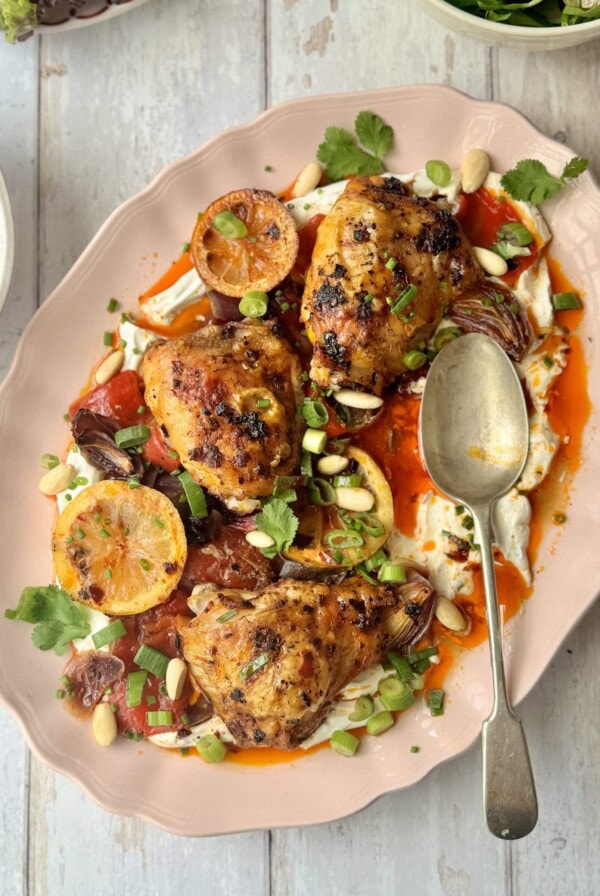
High Protein Recipes
High Protein Dinner Recipes

Easy Baking Recipes
Cornflake Dream Cake with Mini Eggs
If you tried this Wagamama Pad Thai or any other recipe on the site, please do leave a rating or comment and let us know how it went!

Wagamama Pad Thai
Ingredients
For the sauce:
- 1 1/2 tbsp fish sauce
- 1/2 tbsp light soy sauce
- 2 1/2 tbsp soft light brown sugar
- 1 tbsp rice vinegar or tamarind paste
- 1 tbsp smooth peanut butter, optional
For the pad thai:
- 1 chicken breast, thinly sliced
- Salt and freshly ground black pepper
- About 2 tbsp sesame oil
- 7 oz dry rice noodles
- 1.5 oz raw shrimp (prawns), peeled
- 1 red onion, thinly sliced
- 3.5 oz snow peas (mangetout)
- 3.5 oz bean sprouts
- 2 garlic cloves, finely chopped
- 1 red chili, deseeded and finely sliced
- 2 scallions (spring onions), finely sliced
- 1 inch piece of ginger, peeled and finely sliced into matchsticks
- 2 large eggs, beaten
To serve:
- Sprigs of fresh cilantro (coriander)
- 2 tbsp dry roasted peanuts, crushed
- Sliced chilies
- Crispy fried onions
- Lime, cut into wedges
Instructions
- Mix together all the ingredients for the sauce in a small bowl and set aside.
- Chop and slice all the vegetables (red onion, snow peas, bean sprouts, garlic, chili, scallions, and ginger) if you haven’t done so already and place them into a large bowl.
- Season your sliced chicken with salt and freshly ground black pepper. Add 1 tbsp sesame oil to a large non-stick frying pan or wok and set over a medium-high heat.
- Add the chicken and fry for a few minutes, turning occasionally, until golden all over. Add the remaining oil, followed by the shrimp (prawns), and the vegetables.
- Separately, cook the noodles according to the package directions. Drain well and set aside.
- Add the eggs to the pan. Continue to stir-fry for a few more minutes, or until everything begins to caramelize and the eggs are cooked.
- Pour in the sauce while tossing and stirring to ensure it coats all the noodles and vegetables, but doesn’t stick to the pan. Then add the noodles. Continue to stir-fry for another 1-2 minutes.
- Divide between 2 bowls. Scatter with fresh cilantro, crushed peanuts, sliced chilies, and crispy fried onions. Serve with a wedge of lime and enjoy!
Notes
Make-ahead and storage
To store: Any leftover Pad Thai can keep in the fridge in an airtight container for up to 3 days, though it is best freshly made. To reheat: Since everything’s cooked, you want to reheat Pad Thai gently, either on the stove or in the microwave. Stir regularly so the noodles don’t get too sticky, and add a splash of water if needed. Make-ahead: If you wanted to get a head start, you could cook the chicken, cut the vegetables, and make the sauce up to a day in advance. Keep all of them in separate containers in the fridge. When you’re ready to cook, you’ll simply reheat the chicken while cooking the shrimp, then make the stir-fry as directed.More quick tips
Prep everything: It is really important to get everything prepped at the start for a dish like this – it makes the stage much easier (in the chef world, we call this ‘mise en place’). Skip the peanuts: You can leave out the peanut butter in the sauce and the roasted peanut garnish if you are allergic to peanuts – it will still be delicious, and the crispy fried onions will give the dish plenty of crunch. Choose your noodles: Rice noodles are traditional in Pad Thai, but you could use any noodle you wish – such as egg or udon. You can use straight-to-the-wok noodles; just remember to cook according to package instructions.Nutrition
Nutrition information is automatically calculated, so should only be used as an approximation.


