
This post may contain affiliate links. Please see our disclosure policy.
This delicious San Sebastián cheesecake (a.k.a burnt Basque cheesecake) is the perfect dessert to make ahead of time. It has a wonderfully light, creamy texture (a bit like a cross between a mousse and custard) and signature caramelised top. It may look burnt on top but that’s the appeal – it’s not burnt, it’s caramelised!

My favourite part of a San Sebastián cheesecake is the texture – it really sets it apart. The filling is somehow light while still being luxuriously smooth and creamy. It doesn’t have the heaviness or the same sort of richness as some other cheesecakes. The flavour combination is also pretty incredible. It’s tangy with subtle vanilla and the burnt top. I say ‘burnt’, it is more caramelised… a bit like a crème caramel. It tastes so good.
This is a baked cheesecake with a biscuit base, even if not totally traditional of a San Sebastián cheesecake. I first tried it this way from Le Choux, a bakery in London, and it was so good that I have been making this cheesecake the same way since. It adds a great bit of texture to the creaminess.
Table of Contents
- What is San Sebastián cheesecake?
- Why you will love this recipe:
- Ingredients:
- Substitutions and Variations:
- Here’s how to make a perfect San Sebastián cheesecake:
- Cooking Tips:
- Recipe Tip
- Frequently Asked Questions
- Other recipes you might enjoy:
- try these…
- Made this recipe and loved it?
- San Sebastián Cheesecake Recipe
What is San Sebastián cheesecake?
San Sebastián cheesecake (a.k.a burnt Basque cheesecake) is an iconic baked cheesecake from San Sebastián, a city in Spain’s Basque Country. Although it was first created in the late 1980s (by chef Santiago Rivera at his pintxo bar La Viña), it has become very popular in recent years. I often see it on restaurant menus these days!
The cheesecake itself is known for its striking burnt top and unique silky smooth, creamy texture (which is much lighter than other cheesecakes). Tastewise, it is a beautifully balanced combination of sweet vanilla and deep caramel, thanks to the caramelised surface.
Why you will love this recipe:
- It looks impressive but is actually a super simple show stopping dessert.
- It can be made ahead.
- It’s perfect for easy entertaining.
- It is a guaranteed crowd pleaser.
Ingredients:

Full recipe can be found in the printable recipe card at the bottom of the post, just scroll down!
Digestive biscuits – these are for the biscuit base. Use Graham crackers if you’re in the US.
Cream cheese – opt for a full-fat version and drain off any excess liquid before using. Low-fat varieties won’t set properly. I like to use Philadelphia (make sure it is at room temperature too).
Caster sugar – known as superfine sugar, you can also use granulated.
Double cream – also known as ‘heavy’ cream. This helps give the creamy, indulgent texture. Don’t be tempted to swap for single cream as it won’t work properly.
Substitutions and Variations:
Biscuits/cookies: the biscuit base isn’t traditional with a San Sebastián cheesecake, but I like the texture. However, you can swap the digestives for all sorts of biscuits to switch up the flavour. Lotus biscoff biscuits add a caramelised flavour. Hobnobs give ‘oatiness’ to the base or try Ginger Nuts. They are great for a warming spiced flavour. Bear in mind you may need to adjust the quantity of butter to get the correct consistency (some biscuits are drier than others).
Mascarpone: you can swap some of the cream cheese for mascarpone if you like. It has a slightly sweeter, richer flavour than cream cheese. By all means, try swapping the full amount, but we haven’t actually tested it that way, so we cannot guarantee the same results! Bear in mind that with all mascarpone, the cheesecake will taste even more indulgent.
Citrus: although this recipe uses vanilla to add flavour, you can add some orange or lemon zest for a refreshing citrus flavour, if you prefer. You will love my one-bowl easy lemon curd cake, if you love citrus.

Here’s how to make a perfect San Sebastián cheesecake:
Here’s a step by step guide for what you need to do, but you can find the full recipe at the bottom of the page for detailed instructions.

ONE: Tip the digestive biscuits into a food processor and blitz into fine crumbs. Add the melted butter and whizz again until you have the desired crumbly consistency. It should resemble damp sand.

TWO: Tip into the prepared tin, pressing down into a smooth and compact layer. Cover and chill in the fridge whilst you make the filling.

THREE: Put the cream cheese and sugar into the bowl of a stand mixer. Using the whisk attachment, whisk on low-medium speed until smooth and the sugar has dissolved.

FOUR: Add the eggs, one at a time, whisking well until combined between each addition (pause the machine to scrape down the sides, as necessary).

FIVE: Pour in the cream, followed by the vanilla extract.

SIX: Sift in the flour then whisk to the combine until smooth and lump free.

SEVEN: Remove the chilled biscuit base from the fridge and pour the creamy filling on top. Smooth over the surface, then tap on your work surface a few times to remove any air bubbles.

EIGHT: Pop in the oven and bake for about 40-45 minutes or until golden brown on top, set at the sides but still a little jiggly in the centre. Remove the cheesecake from the oven and place on a wire rack. Leave to cool in the tin for about 4 hours – or until it has reached room temperature.
Cooking Tips:
Lining the tin: you don’t need to line the tin as neatly as you would for a traditional cake. The fluted indents are all part of the San Sebastián cheesecake’s rustic look. Just make sure that it comes a little higher up the sides as the cheesecake rises in the oven (before sinking as it cools – see below). I like to scrunch it up before laying it in the tin. The scrunching helps the paper stay in the pan rather than coming right back out again.
Room temperature ingredients: Make sure your ingredients are at room temperature before you start. That way, you will find it much easier to achieve a smooth texture.
Full-fat ingredients: This San Sebastián cheesecake is not the time to use low-fat ingredients! It will completely alter the taste and texture. A good quality full-fat cream cheese and double cream are non-negotiable!
Rising: You will notice that the cheesecake will rise in the oven as it bakes. However, once removed, it will start to deflate as it cools. Don’t worry, this is entirely normal.
Patience: Don’t rush the cooling time; you need to allow the San Sebastián cheesecake enough time to set up. Popping in the fridge overnight is ideal and will give you beautifully clean slices.
Cracking: don’t panic if the surface does crack, it will still taste delicious!
Recipe Tip
If you don’t have a food processor (or don’t want the washing up), simply place the biscuits into a sandwich bag and bash with a rolling pin until you have fine crumbs. Next, tip into a large mixing bowl and mix in the melted butter until you have the desired crumbly consistency.
Frequently Asked Questions
It should be browned on top, puffed and set around the edges, but when gently shaken, it has a jiggle in the middle. You don’t want it totally loose but it should have more of a jiggle than a traditional cheesecake. This is why leaving it to cool completely and/or setting in the fridge overnight is important.
You could use a 9-inch round tin, but the cheesecake won’t be as thick and therefore needs less time to cook. Start by baking it for 30 minutes and see how done it is. It may need longer. It’s better for it to be slightly underbaked than overbaked, as overbaking risks curdling.
Grainy/curdled cheesecake can mean it’s been overbaked or your oven was too hot. If you know your oven runs hot, adjust accordingly (ie. lower the temp slightly or you may need to bake it for less time). Err on the side of underbaked rather than overbaked and use your common sense. I like to look for visual cues to see if it’s done.
It may need to set longer than 4 hours. Try popping in the fridge if this is the case. It may also be underbaked. See above to see what to look for when the cheesecake is done. It may need longer than 45 minutes, depending on your oven.
This San Sebastián cheesecake is better if given plenty of time to cool, then left to chill overnight. You will get much cleaner slices that way. Prepare it the day before and just remove it from the fridge 30 minutes before serving (unless it is a super hot day). It will keep well in the fridge for up to 3 days. Another good preppable pudding is my creamy Italian custard pudding.
Keep covered or in an airtight container in the fridge for up to 3 days.
Leave to cool completely, then chill overnight before wrapping well in cling film and freezing for up to 3 months. Defrost overnight in the fridge and bring to room temperature before serving.
Other recipes you might enjoy:
If you like the sound of this San Sebastián cheesecake, try my brownie tiramisu cheesecake, or lemon meringue cheesecake.? For cakes rather than cheesecake, try my orange and almond cake or caramelised upside down banana cake.
try these…

Easy Dessert Recipes
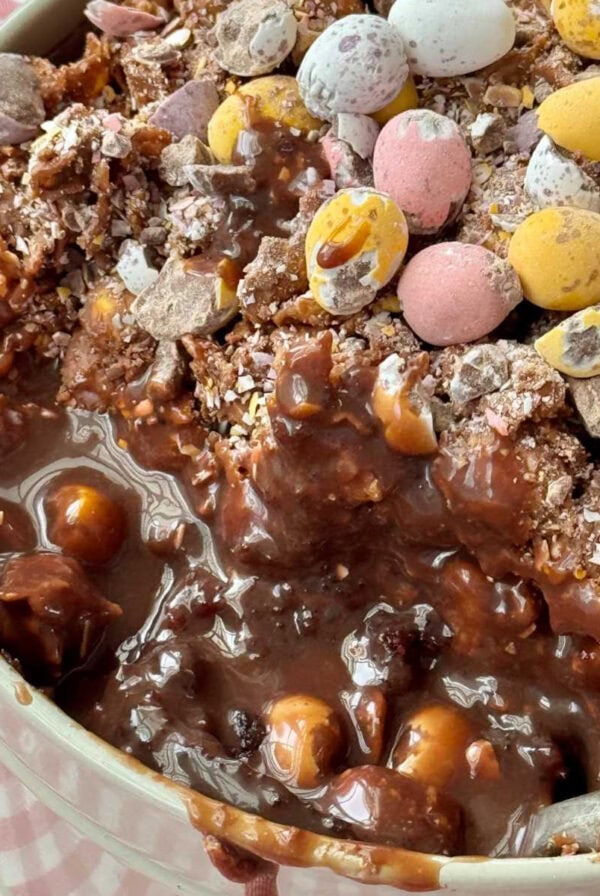
Mini Egg Cheesecake

Easy Dessert Recipes
White Chocolate Cheesecake With Passionfruit

Puddings
Crème Brûlée Cheesecake

Made this recipe and loved it?
If you made this San Sebastián Cheesecake or any other recipe on the site, please do leave a rating or comment and let us know how it went!

San Sebastián Cheesecake
Ingredients
For the biscuit base:
- 300 g digestive biscuits
- 150 g unsalted butter, melted
For the cheesecake:
- 800 g full-fat cream cheese, at room temperature
- 250 g caster (superfine) sugar
- 5 large eggs, at room temperature
- 360 ml double (heavy) cream, at room temperature
- 1 tbsp vanilla extract
- 60 g plain (all-purpose) flour
Instructions
- Preheat the oven to 200℃/180℃ Fan/(390℉. Grease and line the sides and bottom of a 20cm (8-inch) springform tin with non-stick baking paper – you can do this by laying a large piece of non stick baking paper over the tin so it’s large enough to cover the sides, then scrunching it up and press into the tin as best you can, with some overhanging the top. This is not meant to be perfect, the ridges in the parchment are what give this cheesecake its characteristic look and set it apart from other cheesecakes. Set aside.
- For the biscuit base: tip the digestive biscuits into a food processor and blitz into fine crumbs. Add the melted butter and whizz again until you have the desired crumbly consistency. It should resemble damp sand.
- Tip into the prepared tin, pressing down into a smooth and compact layer. Cover and chill in the fridge whilst you make the filling.
- For the cheesecake filling: put the cream cheese and sugar into the bowl of a stand mixer. Using the whisk attachment, whisk on low-medium speed until smooth and the sugar has dissolved.
- Add the eggs, one at a time, whisking well until combined between each addition (pause the machine to scrape down the sides, as necessary).
- Pour in the cream, followed by the vanilla extract. Sift in the flour then whisk to the combine until smooth and lump free (if it is lumpy, I recommend passing it through a sieve as you need the mixture to be glossy and smooth).
- Remove the chilled biscuit base from the fridge and pour the creamy filling on top. Smooth over the surface, then tap on your work surface a few times to remove any air bubbles. Pop in the oven and bake for about 40-45 minutes or until golden brown on top, set at the sides but still a little jiggly in the centre (don’t be tempted to open the oven door during baking). If the top doesn’t look quite ‘burnt’ enough, but the set appears perfect, pop under a hot grill for 1-2 minutes (keep a close eye on it as it will ‘turn’ quickly).
- Remove the cheesecake from the oven and place on a wire rack. Leave to cool in the tin for about 4 hours – or until it has reached room temperature.
- Release the cheesecake from the tin and gently peel down the non-stick baking paper from the sides (leave the paper underneath). Slide onto a plate, cut into slices and serve.
Notes
Nutrition
Nutrition information is automatically calculated, so should only be used as an approximation.


Amazing excellent chef . Very well explained for beginners .like me
This San Sebastian Cheesecake is so incredibly good, it’s creamy and rich with a light texture.