
This post may contain affiliate links. Please see our disclosure policy.
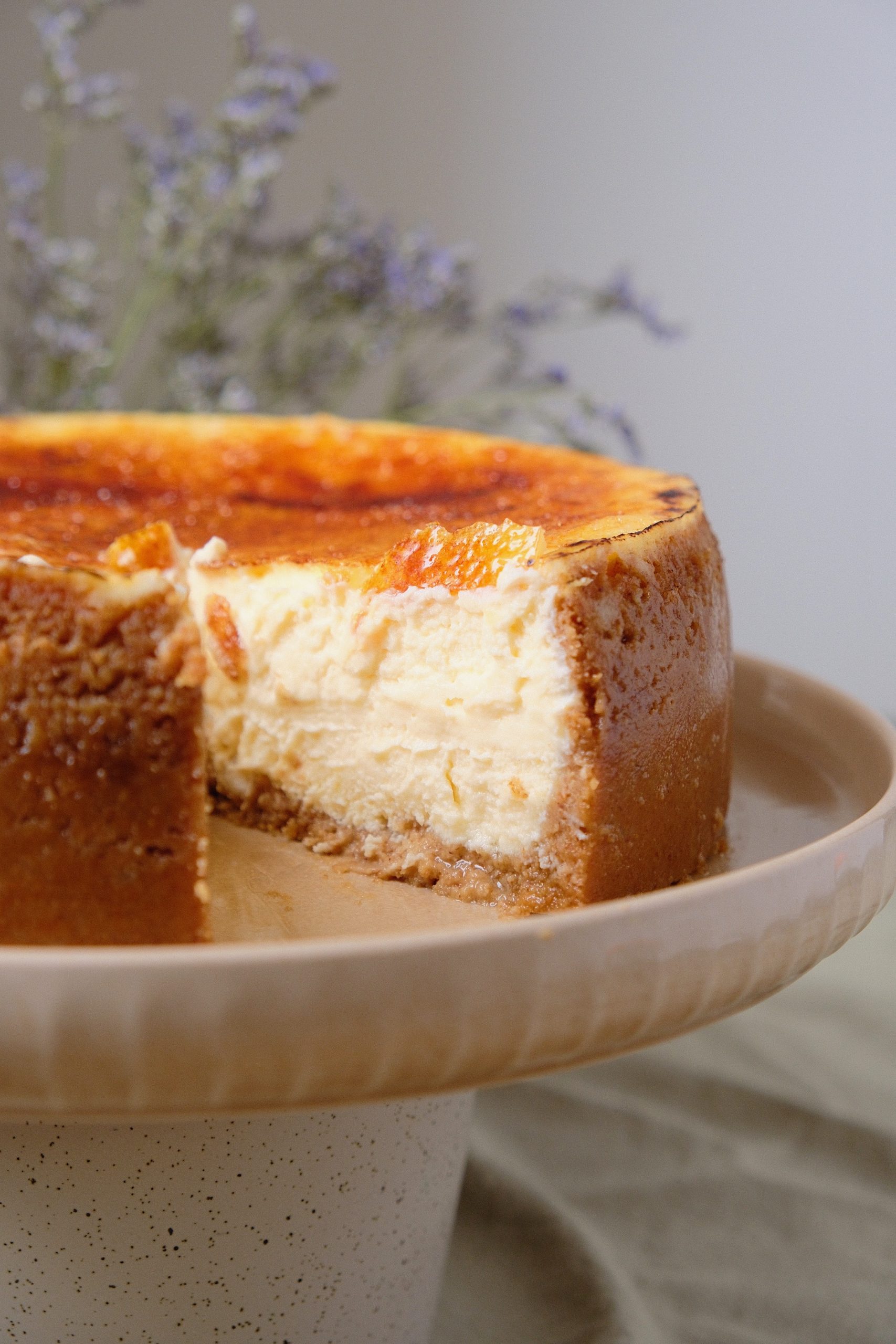
Imagine if a creamy, fluffy baked cheesecake married a crème brûlée. Doesn’t that sound good? This recipe for Crème Brûlée Cheesecake is exactly what you need. It has the perfect combination of rich cheesecake filling and caramelized crispy brûlée topping. The crust is digestive biscuits and butter, so very simple and complements the caramelized top so well.
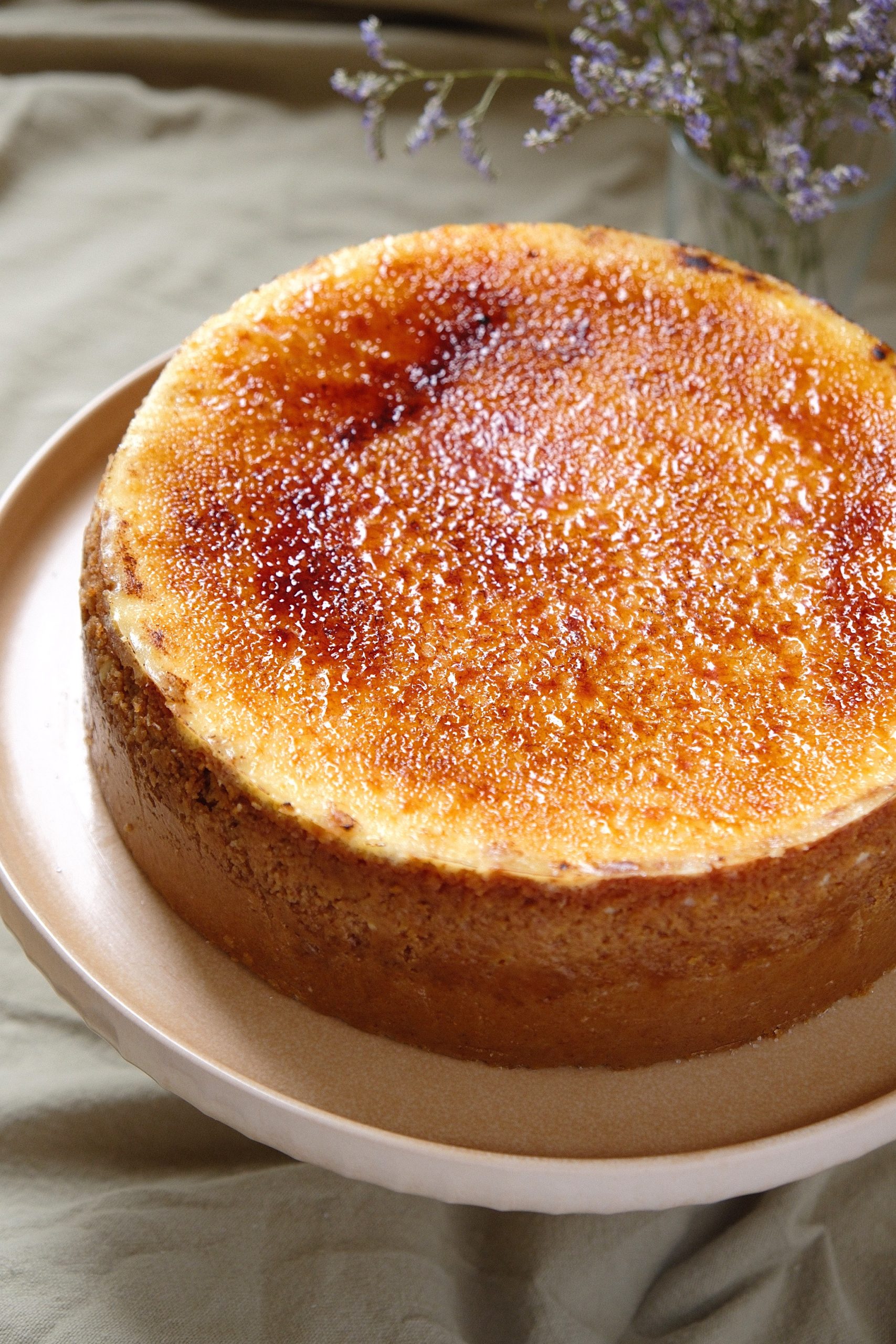
Table of Contents
You will need a blowtorch for this recipe to get the crème brûlée top, but I’ve included tips for using the broiler (grill) if that’s all you have. It doesn’t work quite as well, though it’s a good option if you don’t have a blowtorch. For a no-bake cheesecake alternative, try my Mini Egg Cheesecake. You can add different types of chocolate to the mix if it’s not Easter!
Why you’ll love this recipe
- It looks so impressive, a real centerpiece to the table, but really isn’t that hard at all.
- You get the best of both worlds – buttery biscuit base alongside the creamy filling and hard caramelized sugar on top.
- As long as you use gluten-free biscuits, the whole dessert is gluten-free, and the whole table will still love it.
- It’s perfect for entertaining, since you can make the cheesecake a day or two ahead and torch the top just before serving.
Ingredients
- Digestive biscuits – These form the biscuit crust. I like digestives, but you can sub for a gluten-free biscuit if needed.
- Butter – Melted to mix with the biscuit crumb. I typically use unsalted, but salted also works.
- Cream cheese – Philadelphia full-fat is the best option here. I know it’s slightly more expensive, but it just gives the best results, so if you can, use it.
- Superfine sugar (caster sugar) – This very fine sugar gives the best texture, but you can also use granulated sugar if that is what you have on hand.
- Sour cream – The tang from this is great against the rich cream cheese, so it balances it out well. Use full-fat here too.
- Vanilla extract – Always choose pure vanilla extract, vanilla bean paste, or vanilla beans. Avoid imitation vanilla (vanilla essence), which will give you an artificial flavor.
- Pinch of salt – I like flaky sea salt, such as Maldon Salt Flakes.
- Eggs – Use large, free-range eggs if you can.
- Granulated sugar – This is for the caramelized sugar on top. Granulated has bigger sugar crystals than superfine (caster) sugar, so they take longer to caramelize, and you get a more golden top.
Substitutions and variations
Digestive biscuits: I think digestives are best here, but you could also use gingersnaps (ginger nut biscuits) for a twist. Or gluten-free digestives. If you are in the US, use graham crackers.
How to make crème brûlée cheesecake
Here’s a quick visual guide — the full recipe with exact measurements is below.
Make the crust
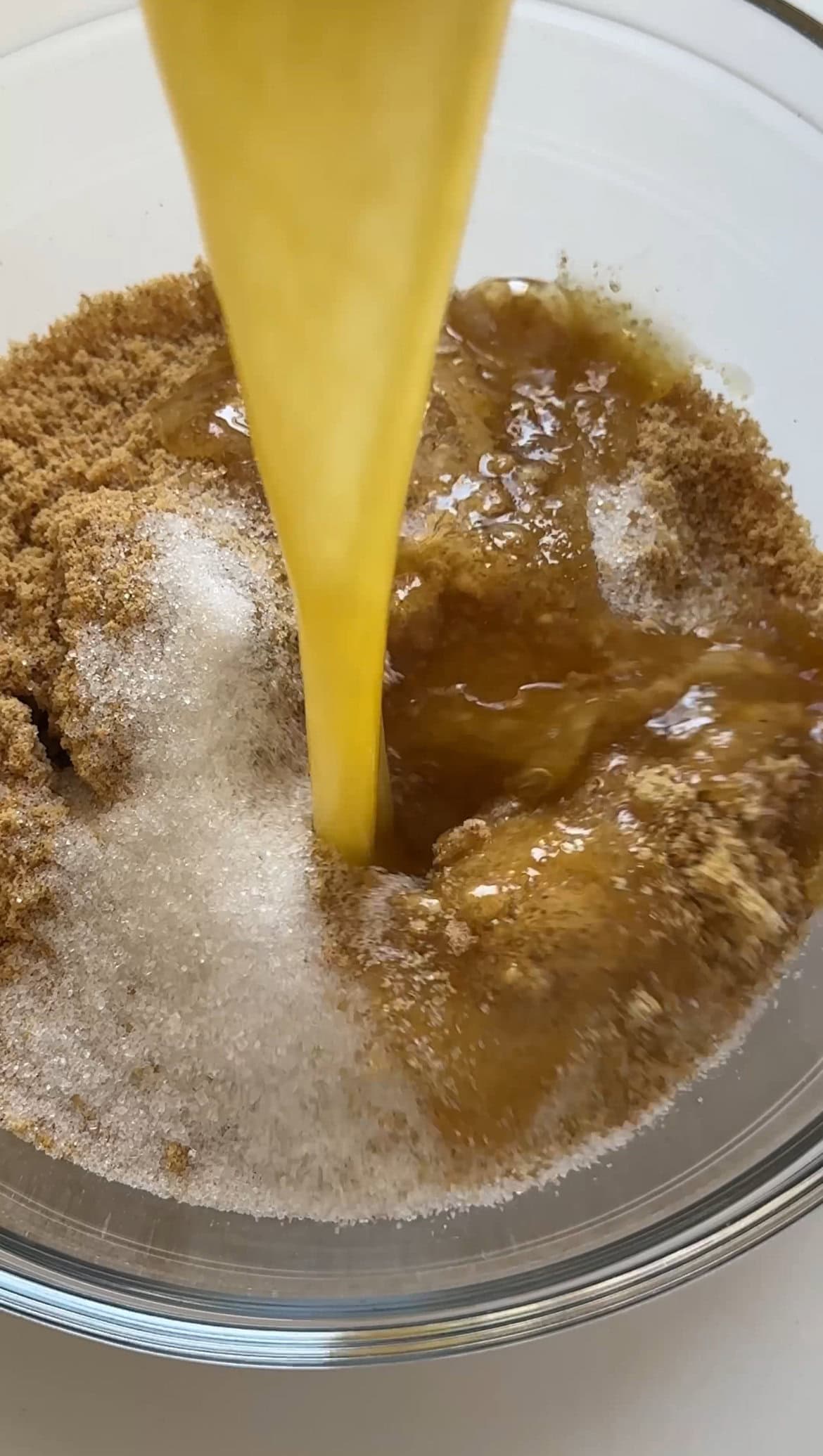
ONE: Blend the biscuits in a food processor or pop them in a zipper-top bag and bash well with a rolling pin. Tip into a bowl and add the melted butter. Mix well.
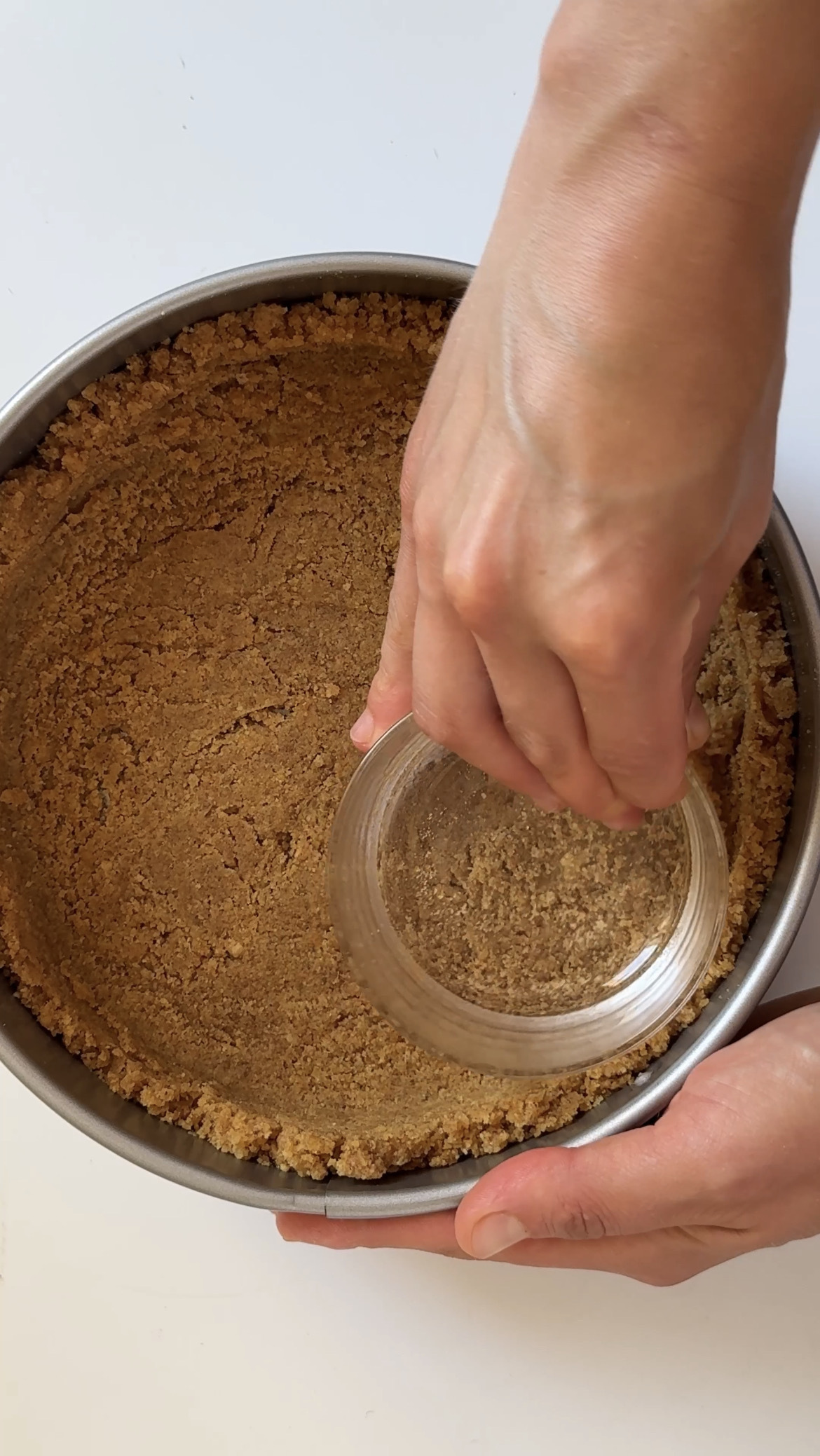
TWO: Pour the biscuit base into a 9inch (23 cm) springform pan and press firmly into the bottom and up the sides of your pan. Then set aside while you make the filling.
Make the cheesecake
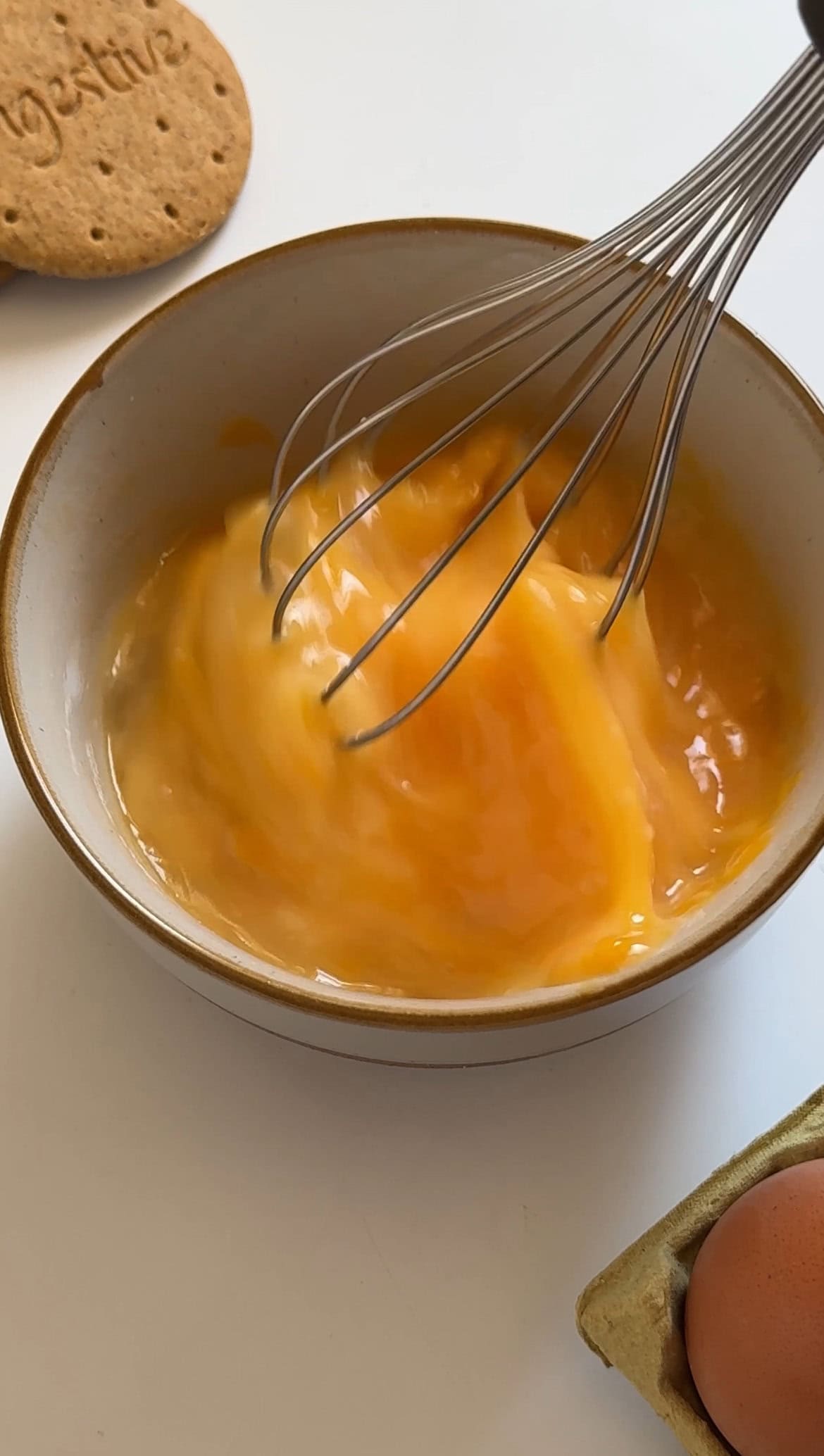
THREE: Beat the eggs and set aside.
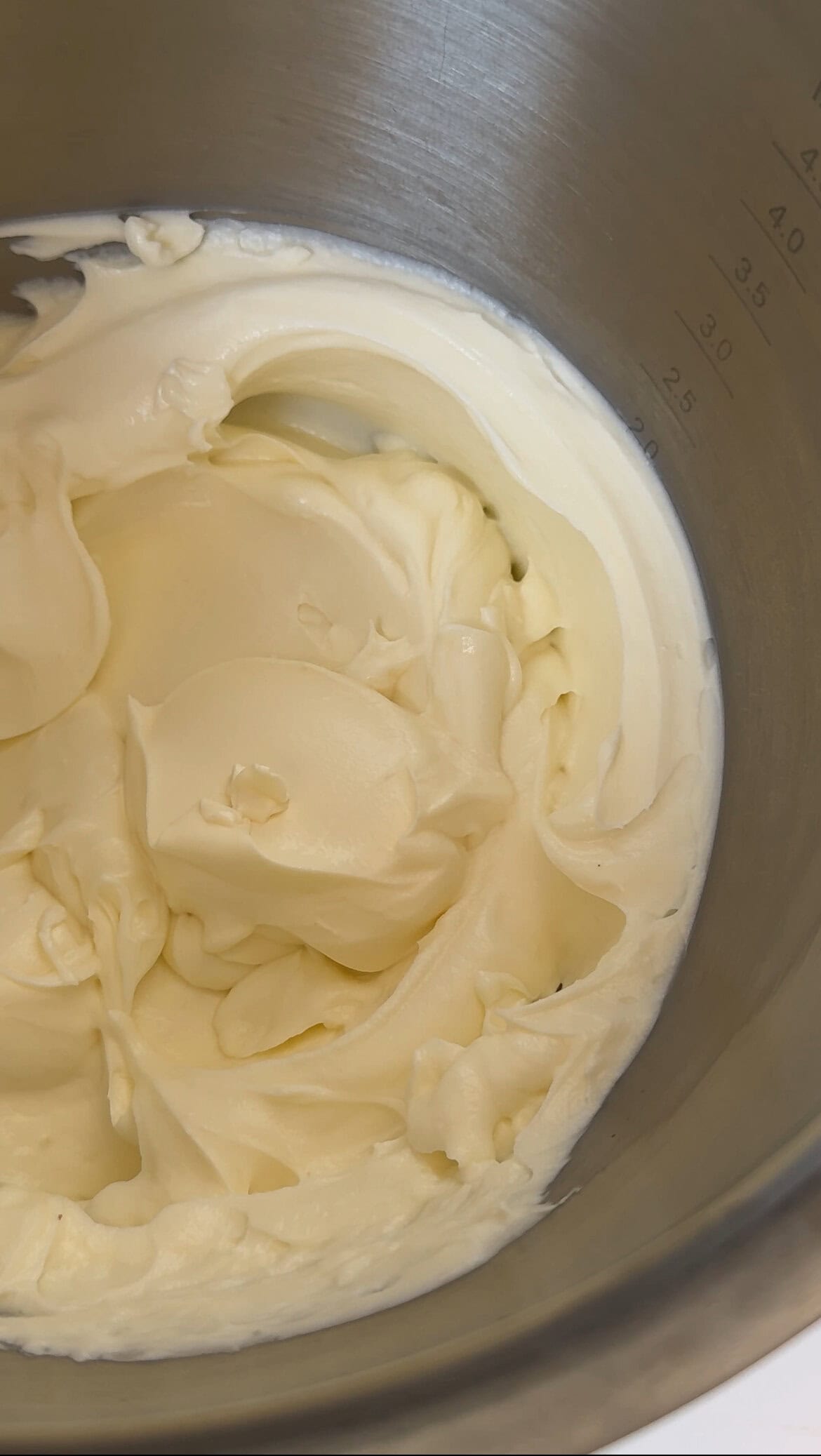
FOUR: Lightly whisk the cream cheese until creamy and smooth. Don’t overbeat it – this is important. Then add the sugar and mix again.
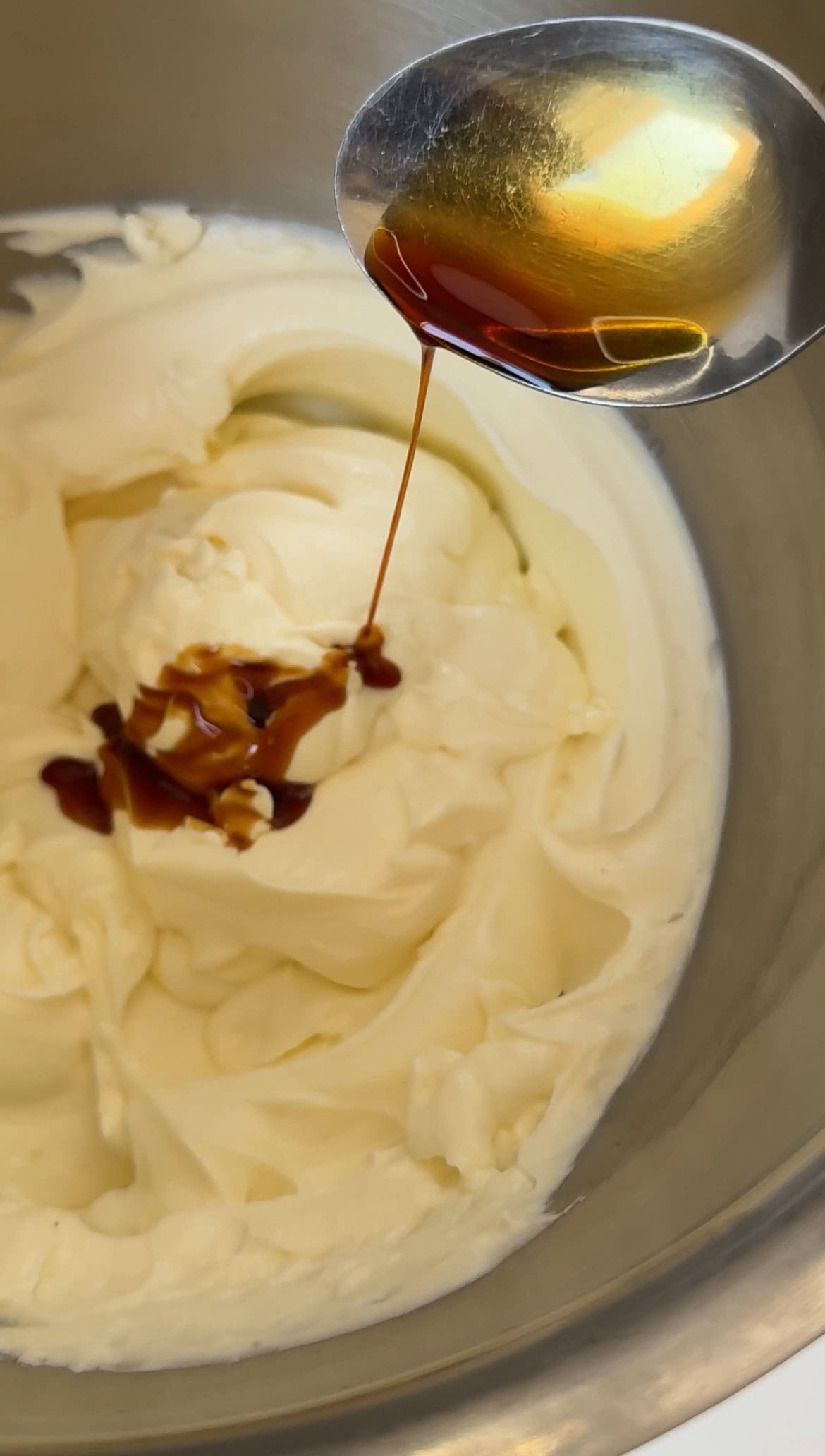
FIVE: Then add the sour cream, vanilla extract, and salt, and stir until well-combined. Keep scraping down the sides of the bowl.
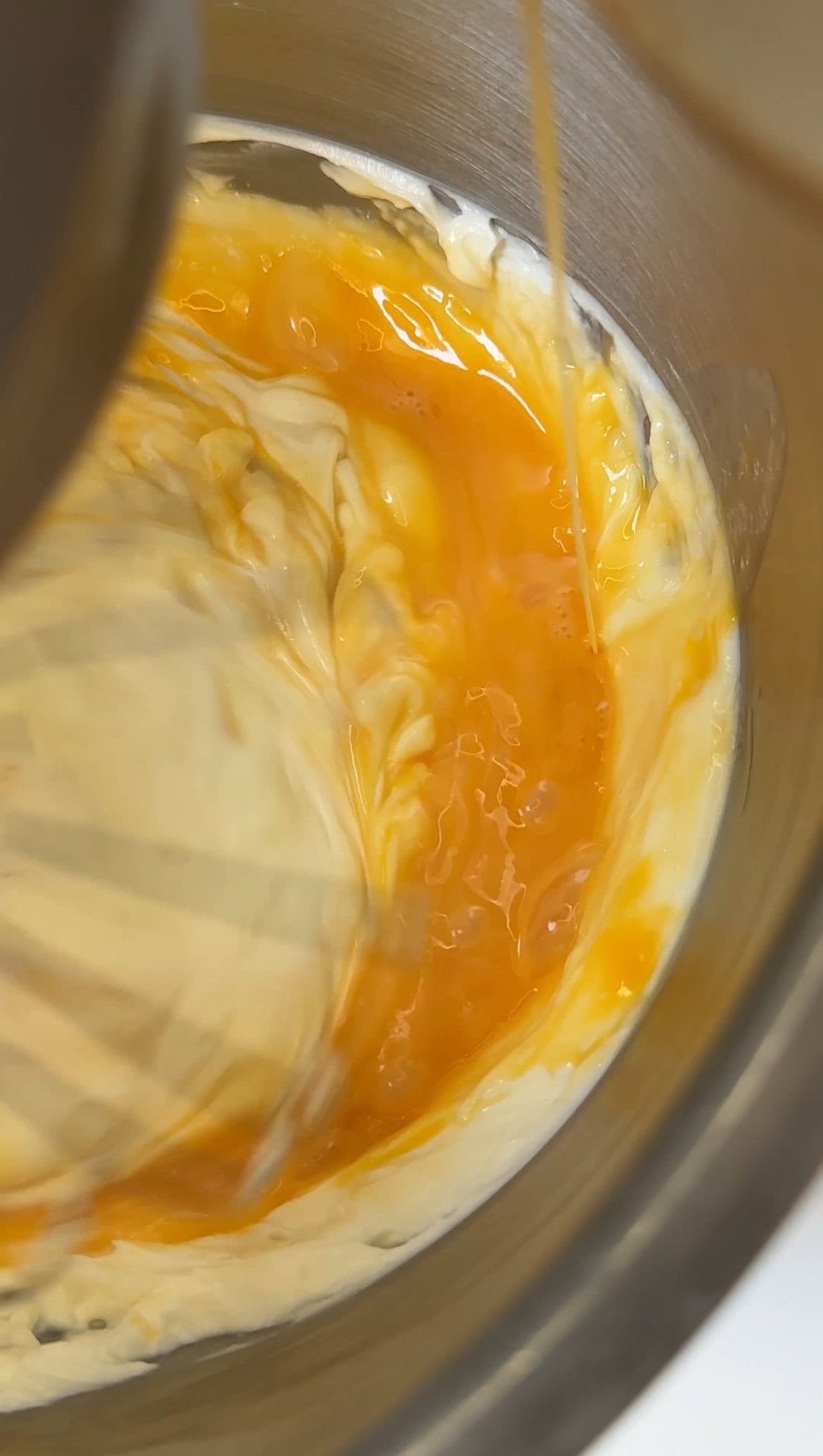
SIX: Put the mixer on low and then slowly add the egg mixture, a little at a time, stirring just until it’s combined.

SEVEN: Pour the mixture into the prepared springform pan. Place on a baking sheet lined with foil. Bake at 325°F (160°C/140°C fan) for 50-60 minutes (or longer as needed). The edges will slightly puff up and begin to turn a very light golden brown, and the center should spring back to the touch but will still be jiggly. It’s very important not to overbake – it should still have movement at this stage.
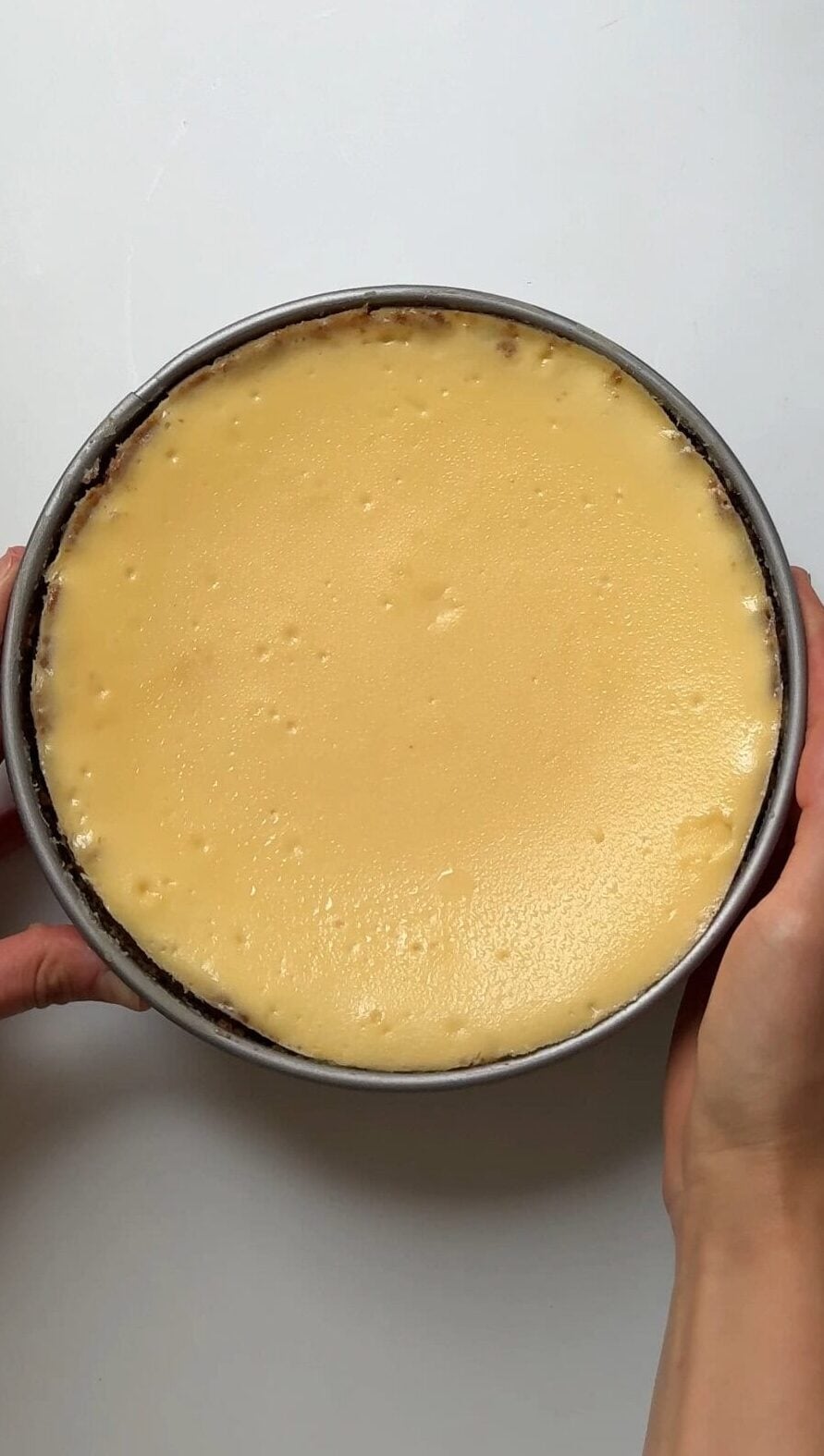
EIGHT: Remove from the oven and allow to cool on top of the oven for 10 minutes. Then you can use a knife to gently loosen the crust from the inside of the springform pan to prevent cracking. Keep it in the pan as it cools completely. Allow the cheesecake to cool before popping it in the fridge to chill. Leave it overnight or at least 4 hours.
Make the brûlée topping
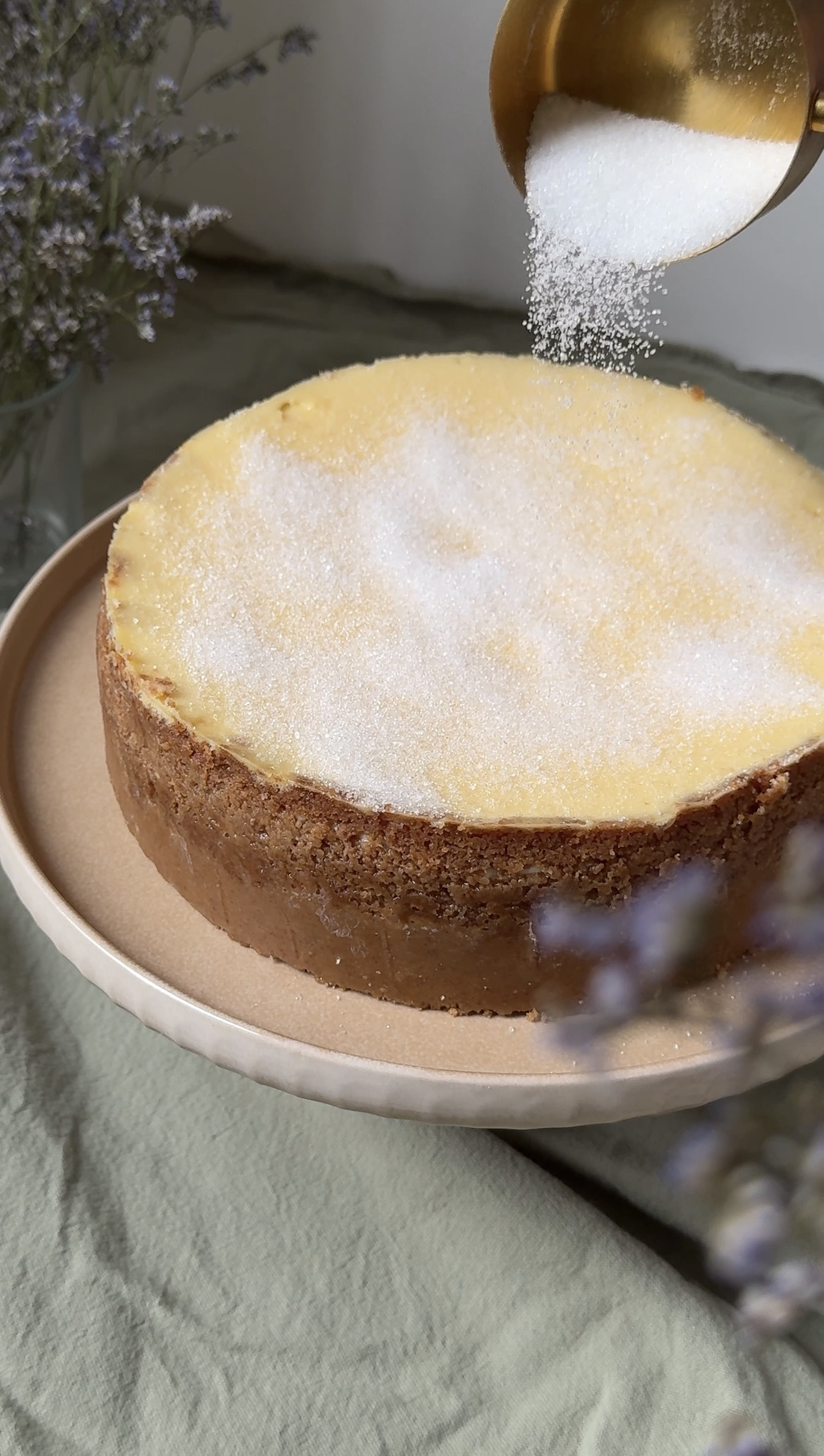
NINE: Scatter granulated sugar evenly over the top. Don’t use brown sugar, as it will go far too dark and almost burnt, and it can also produce spotty sugar rather than a speckled light brown top.
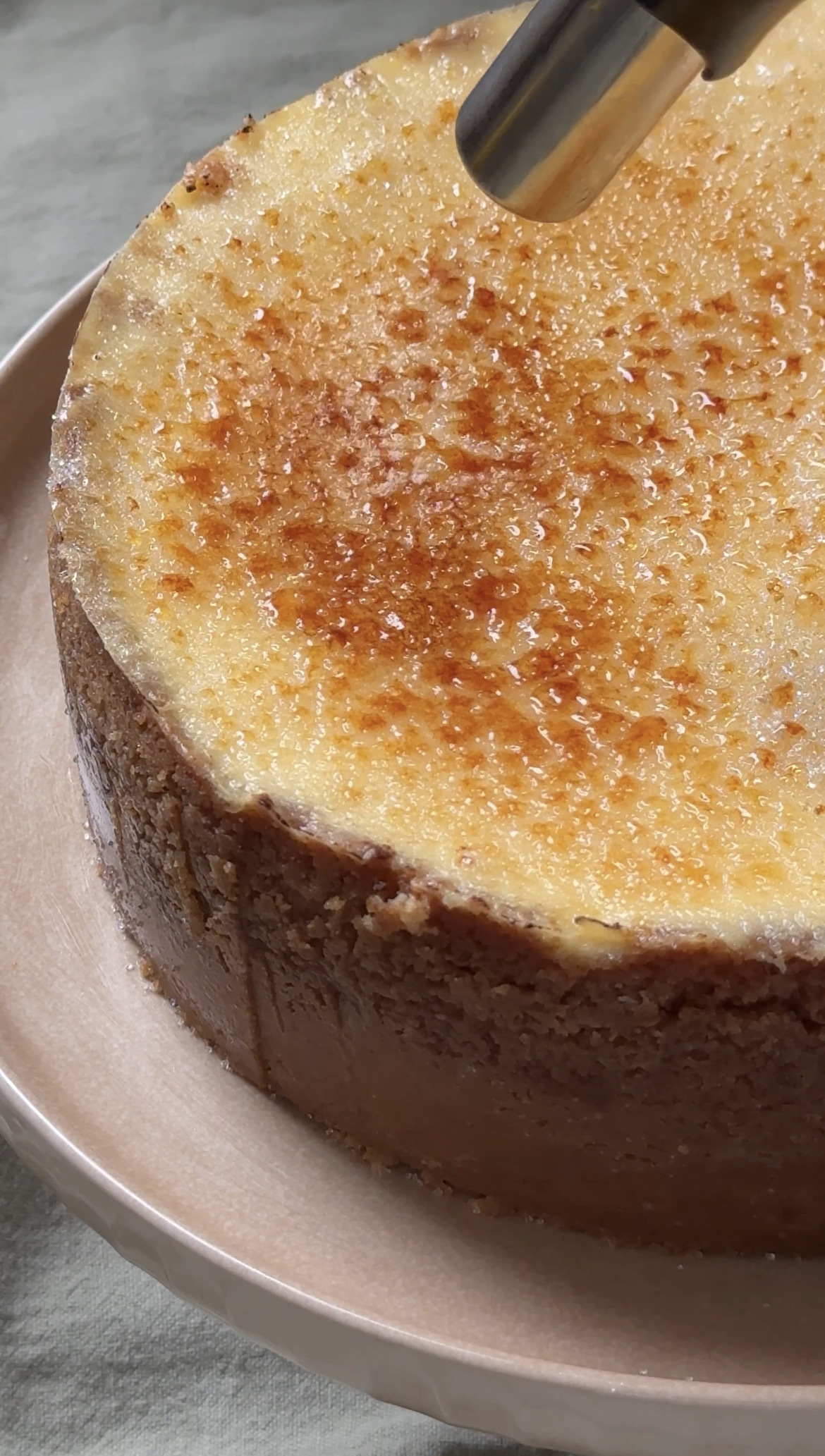
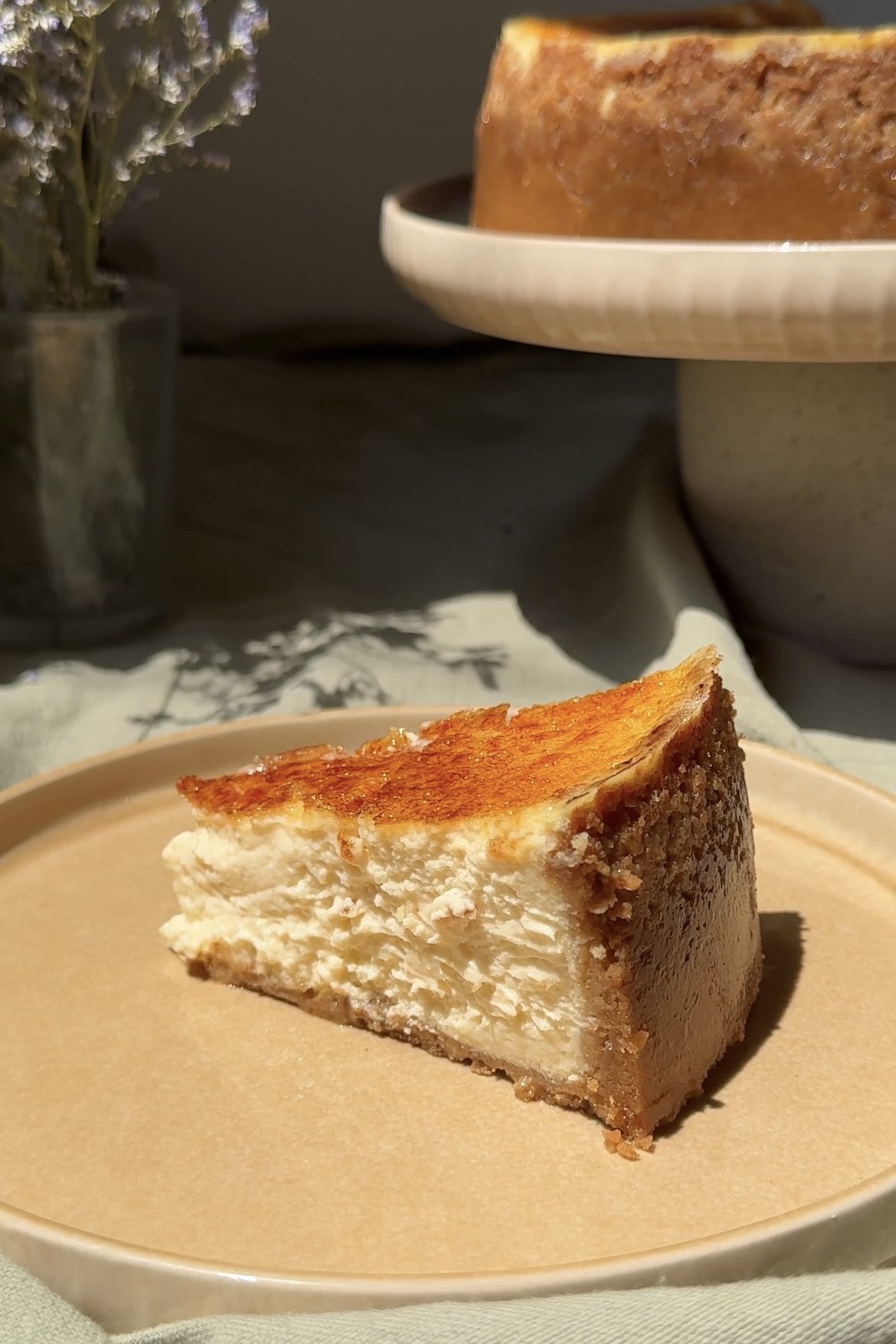
TEN: Use a blowtorch to evenly toast the top. You should see little bubbles form as the sugar melts, and then it will harden once it cools. Once the top is totally golden brown, leave for a few minutes to firm up so that it has a crunchy top when sliced.
Tips from Margie’s kitchen
- Use full-fat cream cheese and sour cream: This is crucial for the right texture, as the fat content is what sets it rather than leaving it runny. There are plenty of desserts that can be lower in fat if this is a concern for you, but this isn’t one!
- Baking the cheesecake: Once the baking time has passed, the edges will slightly puff up and will begin to turn a very light golden brown, and the center should spring back to the touch but will still be jiggly. It’s very important not to overbake – it should still have movement at this stage. Give it a gentle shake to check this.
- Blowtorching the sugar: I like to sprinkle the sugar in sections. Start with a quarter, blowtorch that area, then move to the next. This avoids the risk of the sugar seeping into the cheesecake itself, which means it’s hard to blowtorch without burning the top.
- Crust: Make sure the crust is really well packed into the pan. I like using a glass to push it up the sides. This gives you clean slices without crumbling, and the base remains crisp.
- Chilling properly: The cheesecake (pre-topping) needs to be chilled for at least 4 hours, ideally overnight. This allows it to set fully and makes the whole cheesecake better. Don’t try to rush this!
Frequently asked questions
It’s a classic baked vanilla cheesecake finished with a thin layer of sugar that’s torched until it turns into a crackly caramel shell, just like the top of a crème brûlée.
Cracking can occur if there is a sudden change in temperature. This includes opening the oven door or putting it in the fridge too soon. Make sure it’s fully room temp before popping it in the fridge, and try to avoid opening the oven door.
Yes, you can make everything except for the caramelized sugar topping in advance. I would do the cheesecake 1-2 days in advance, cover and place in the fridge. Then add the caramelized sugar topping when ready to serve.
The edges will slightly puff up and begin to turn a very light golden brown, and the center should spring back to the touch but will still be jiggly (like my San Sebastián (Burnt Basque) Cheesecake). It’s very important not to overbake – it should still have movement at this stage.
Store in an airtight container in the fridge for 5 days. The brûlée topping will soften over time, so just be aware of that. You could always brûlée individual slices when ready to eat if you aren’t going to eat it at once.
If you don’t have a blowtorch, you can use the broiler (grill). Make sure the cheesecake is totally chilled (fridge cold!). Preheat the broiler to high, sprinkle an even layer of sugar on the cheesecake, and place it under the broiler. It should take no more than a few minutes, so keep an eye on it. I leave the door open to see it as it goes. Then remove from the oven and allow it to cool. This hardens the sugar.
You could also use gingersnaps (ginger nut biscuits) for a twist. Or gluten-free digestives. If you are in the US, use Graham crackers.
Other recipes you might enjoy
If you would rather have a cheesecake that doesn’t need baking, these No-bake Mini Biscoff Cheesecakes set in the fridge and are SO good. Super simple too. In terms of baking, for something simple and more classic, try my Moist Dark Chocolate Muffins – they are delicious. These Banana Chocolate Muffins are also a great muffin recipe to use up old bananas. If you want something even sweeter, I love this Giant Cookie in a Pan (the name is as it says) or these Nigella-inspired Triple Chocolate Brownies. A classic for a reason!
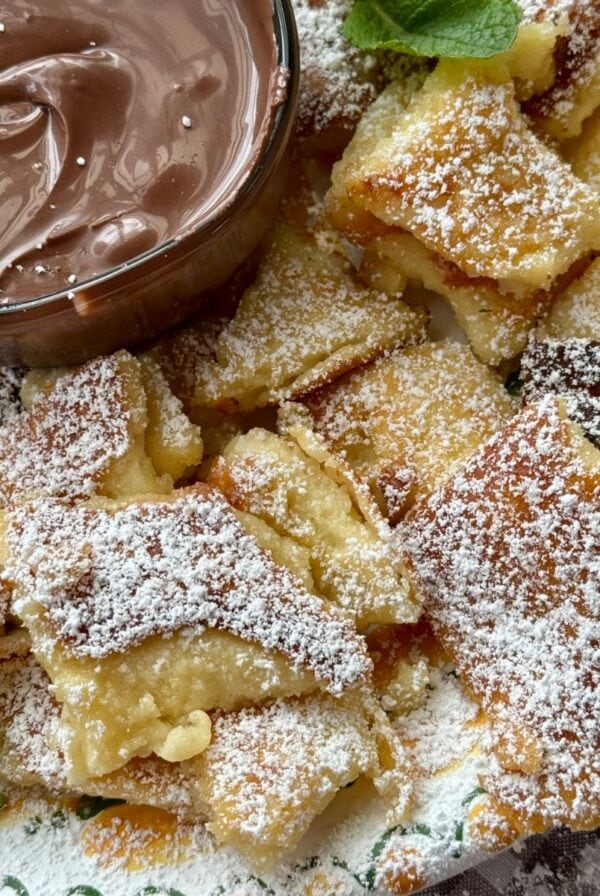
Pancake Recipes
Kaiserschmarrn (Traditional Austrian Pancakes)
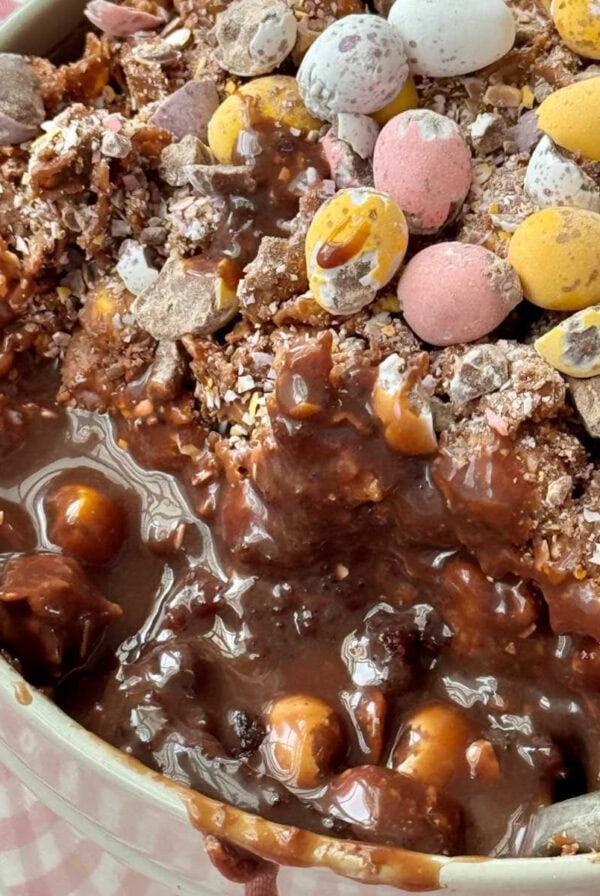
Easy Baking Recipes
Cornflake Dream Cake with Mini Eggs

Christmas Recipes
The Best Chocolate Salami

Easy Dessert Recipes
Chocolate Budino (Creamy Italian Pudding)
If you tried this Crème Brûlée Cheesecake or any other recipe on the site, please do leave a rating or comment and let us know how it went!

Crème Brûlée Cheesecake
Ingredients
For the crust:
- 6 oz digestive biscuits or graham crackers, about 1 1/2 cups crumbs (about 11 digestives or 10 full graham sheets)
- 3.5 oz butter, about 7 tbsp; melted
For the cheesecake:
- 32 oz cream cheese, softened to room temperature
- 7 oz superfine sugar (caster sugar), about 1 cup
- 5.6 oz sour cream, about 2/3 cup
- 1 1/2 tsp vanilla extract
- Pinch of salt
- 4 large eggs, room temperature; lightly beaten
For the topping:
- 1.75 oz granulated sugar, about 1/4 cup
Instructions
To make the crust:
- Preheat oven to 325°F (160°C/140°C fan).
- Blend the biscuits in a food processor or pop them in a zipper-top bag and bash well with a rolling pin. Tip into a bowl, add the melted butter, and mix well.
- Pour the biscuit base into a 9-inch (23 cm) springform pan and press firmly into the bottom and up the sides. Then set aside while you make the filling.
To make the cheesecake:
- I tend to use a stand mixer for this, but you can also use a large bowl and a hand mixer (or use old-fashioned elbow grease!) Lightly whisk the cream cheese until creamy and smooth. Don’t overbeat it – this is important. Then add the sugar and mix again
- Then add the sour cream, vanilla extract, and salt, and stir until well combined. Keep scraping down the sides of the bowl.
- Put the mixer on low and then slowly add the lightly beaten eggs, a little at a time, stirring just until combined.
- Pour the mixture into the prepared springform pan. Place on a baking sheet lined with foil.
- Bake for 50-60 minutes (or longer as needed).The edges will slightly puff up and will begin to turn a very light golden brown, and the center should spring back to the touch but will still be jiggly. It’s very important not to overbake – it should still have movement at this stage.
- Remove from the oven and allow to cool on top of the oven for 10 minutes. Then you can use a knife to gently loosen the crust from the inside of the springform pan to prevent cracking. Keep it in the pan as it cools completely.
- Allow the cheesecake to cool before popping it in the fridge to chill. Leave it overnight or at least 4 hours.
- After the cheesecake is done chilling, remove from the fridge. Remove the ring from around the pan.
Make the crème brûlée topping:
- Sprinkle the sugar in an even layer on top of the cheesecake. Use a torch to caramelize the sugar on top.
- Allow for the caramelized sugar to harden up on top, which should take a few minutes. Slice and serve.
Notes
Make-ahead and storage
To store: Store in an airtight container in the fridge for 5 days. The brûlée topping will soften over time, so just be aware of that. You could always brûlée individual slices when ready to eat if you aren’t going to eat it at once. Make ahead: Make everything except for the caramelized sugar topping in advance. I would make the cheesecake 1-2 days in advance, cover and place in the fridge. Then add the caramelized sugar topping when ready to serve.More quick tips
Make without blowtorch: If you don’t have a blowtorch, the cheesecake is still delicious without the brûlée topping. Otherwise, you can use the broiler (grill). Make sure the cheesecake is totally chilled (fridge cold!). Preheat the broiler to high, sprinkle an even layer of sugar on the cheesecake, and place it under the heat. It should take no more than a few minutes, so keep an eye on it. I leave the door open to see it as it goes. Then remove from the oven and allow it to cool. This hardens the sugar. Cracks: These can occur if there is a sudden change in temperature. This includes opening the oven door or putting in the fridge too soon. Make sure it’s fully room temp before popping in the fridge, and try to avoid opening the oven door. Biscuits: You could also use ginger nut biscuits for a twist. Or gluten-free digestives. If you are in the US, use graham crackers.Nutrition
Nutrition information is automatically calculated, so should only be used as an approximation.




This is so simple to make and tastes divine. Thanks for the recipe. . I make 1.5 times the amount for the base as found there wasn’t enough mix to do the sides the first time.