
This post may contain affiliate links. Please see our disclosure policy.
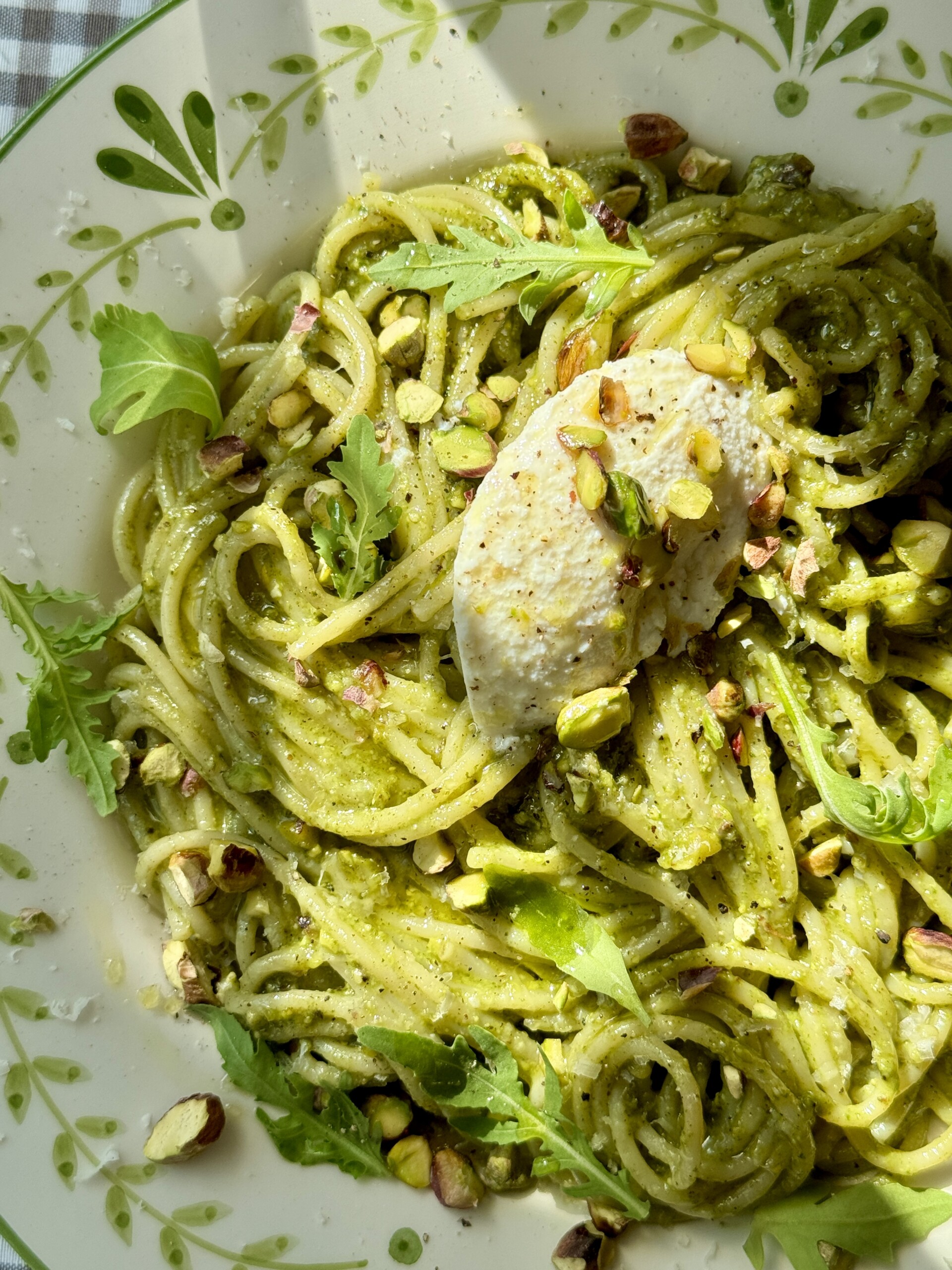
When you are short on time and energy is flagging, there is no better supper than a quick bowl of pasta. This Pistachio Pesto Pasta, also known as Pasta Al Pesto Pistacchio in Italy (where the dish originates), is one of my favorites.
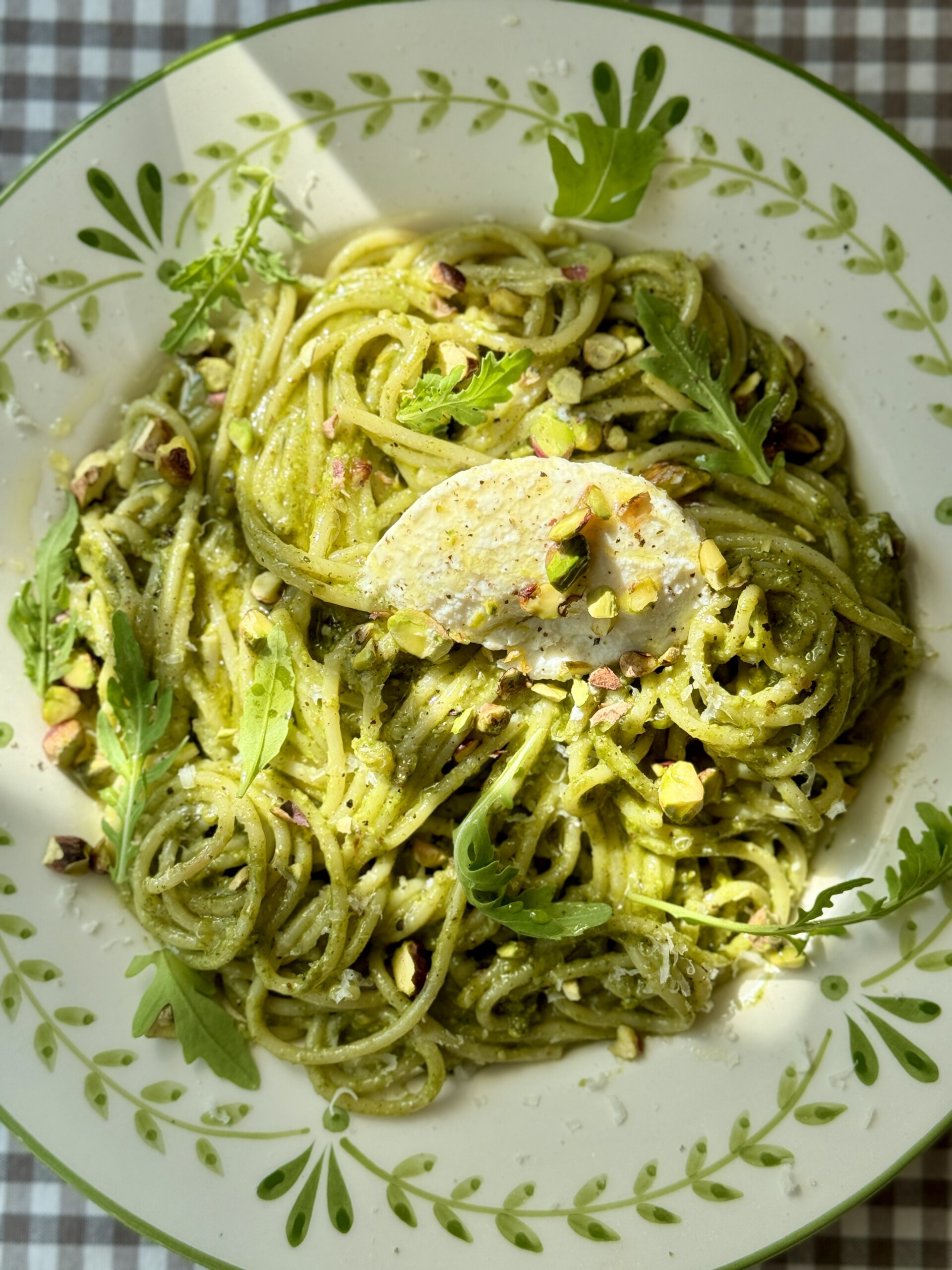
Table of Contents
Yes, it is a homemade pesto (my full Pistachio Pesto post has more tips), which you may think is a lot of effort, but if you have any sort of blender, it’s really simple. This all comes together in the time it takes for the pasta to cook, plus it makes a whole jar of pesto.
Make this Pistachio Pesto Pasta as the first way to use it, then you can also use the pesto on so many other things, like this layered Zucchini (Courgette) Gratin or this Chicken Flatbread that has a yogurt base and pesto over the top. For a more traditional pesto pasta recipe, try my Pasta al Pesto.
Why you will love this recipe
- The recipe is quick and easy: pop all in a blender, blitz, stir through pasta!
- It makes a whole jar of pesto that you can use in this recipe and in a whole range of other recipes too.
- The homemade pesto makes the whole dish seem a lot more impressive than it really is.
- It elevates everyday pesto pasta with the nutty, creamy pistachios that is so much better than classic basil pesto.
Ingredients
- Pistachios: In a classic basil pesto, this would be with pine nuts, but it’s so delicious with pistachios. Ideally, you want shelled and roasted pistachios, as it saves you having to shell them yourself. If you buy raw shelled pistachios, I like to toast them to bring out the flavor, but this is optional. Try to avoid heavily salted pistachios as this might make it too salty with the parmesan.
- Fresh basil: A big fresh bunch with vibrant green leaves is ideal. But something like a pesto is ideal to use up any slightly older herbs that may have been in your fridge for a while.
- Olive oil: Choose something light in flavor because you’ll be blending it into the pesto.
- Garlic: Fresh garlic is what I prefer, but if you don’t like strong garlic flavor, you could use a roasted clove of garlic or a teaspoon of garlic granules.
- Lemon: This elevates the pesto and adds a little brightness to bring out other flavors.
- Black pepper
- Parmesan: Pecorino and Grana Padano would make good substitutes. Make sure the cheese you’re using is vegetarian if that matters to you!
- Salt: Nothing fancy here because it’s just for seasoning, not finishing, though I do really recommend Maldon Sea Salt Flakes.
- Pasta: Spaghetti is great here, but truly any pasta works. I also love it with casarecce as it’s so twisty and catches the pesto well.
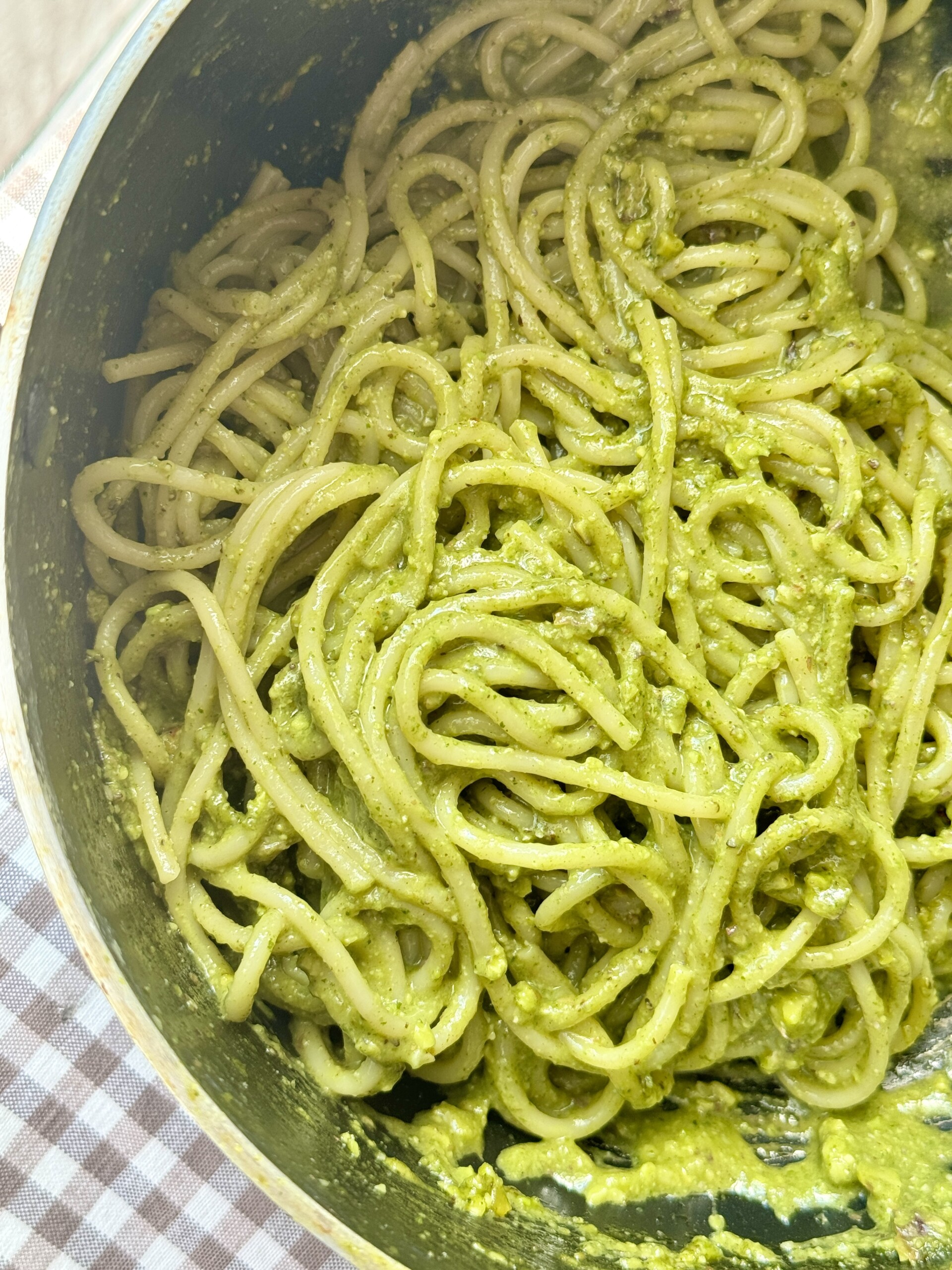
Substitutions and variations
Basil: You could use a mix of herbs if you want to make it a little different or use up what you have already. A combination of basil and parsley would be very good, or a few chives thrown in too will give it a good flavor.
Pistachios: Of course, this recipe is for pistachio pesto pasta, so please do try with those, as it’s delicious. But if you are looking for a basic pesto, this recipe works with other nuts such as pine nuts, almonds, or walnuts.
Parmesan: Use Pecorino or Grana Padano if you have that in the fridge instead. If making for vegetarians, opt for a vegetarian alternative that can be found in most supermarkets.
How to make pasta al pesto pistacchio
This is a very simple recipe, but I’ve included a few step-by-step images to help. As usual, the full recipe is below in the recipe card at the bottom of the page.
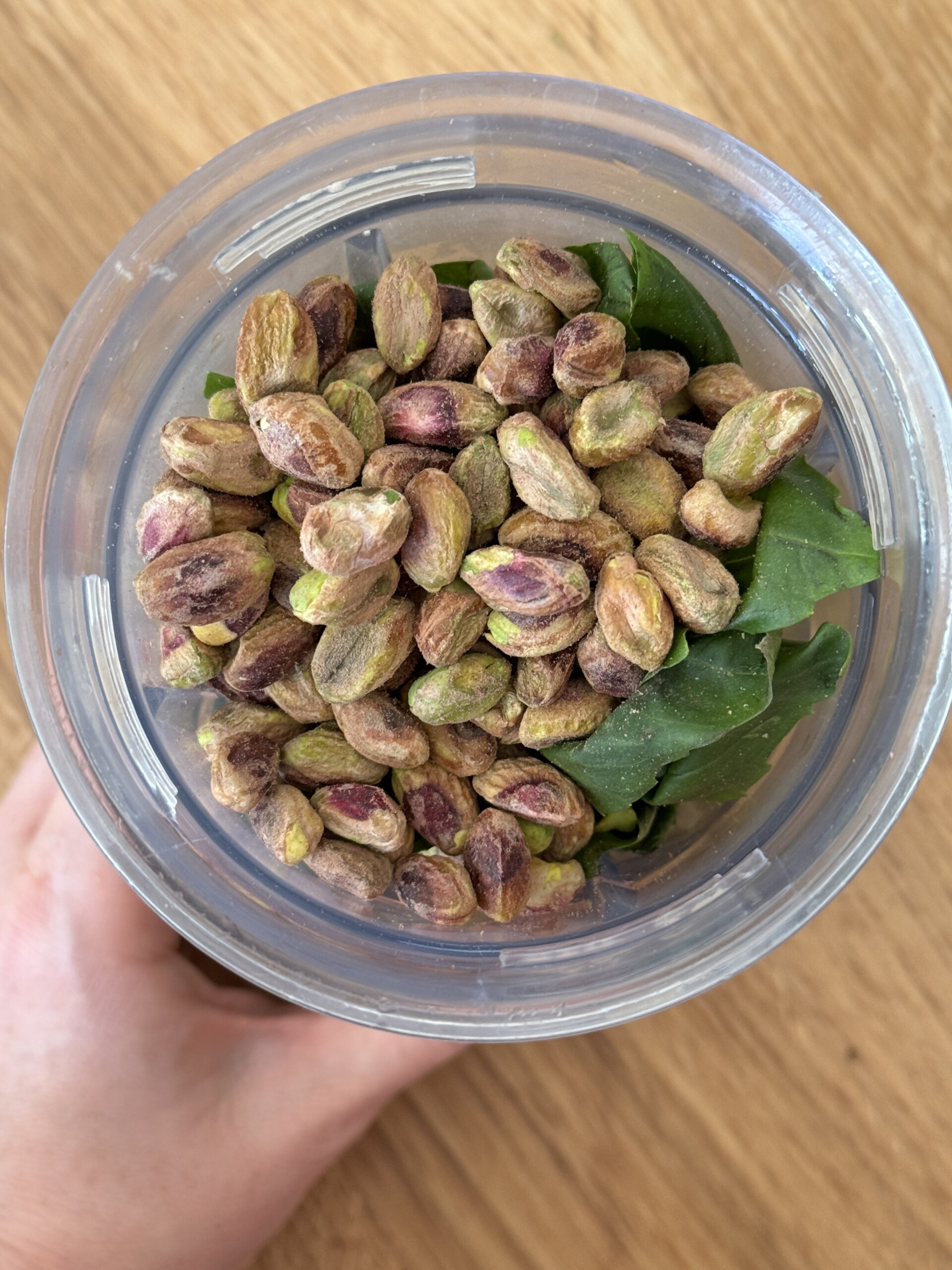
ONE: Add the basil, garlic, lemon zest and juice, pepper, and olive oil to a blender.
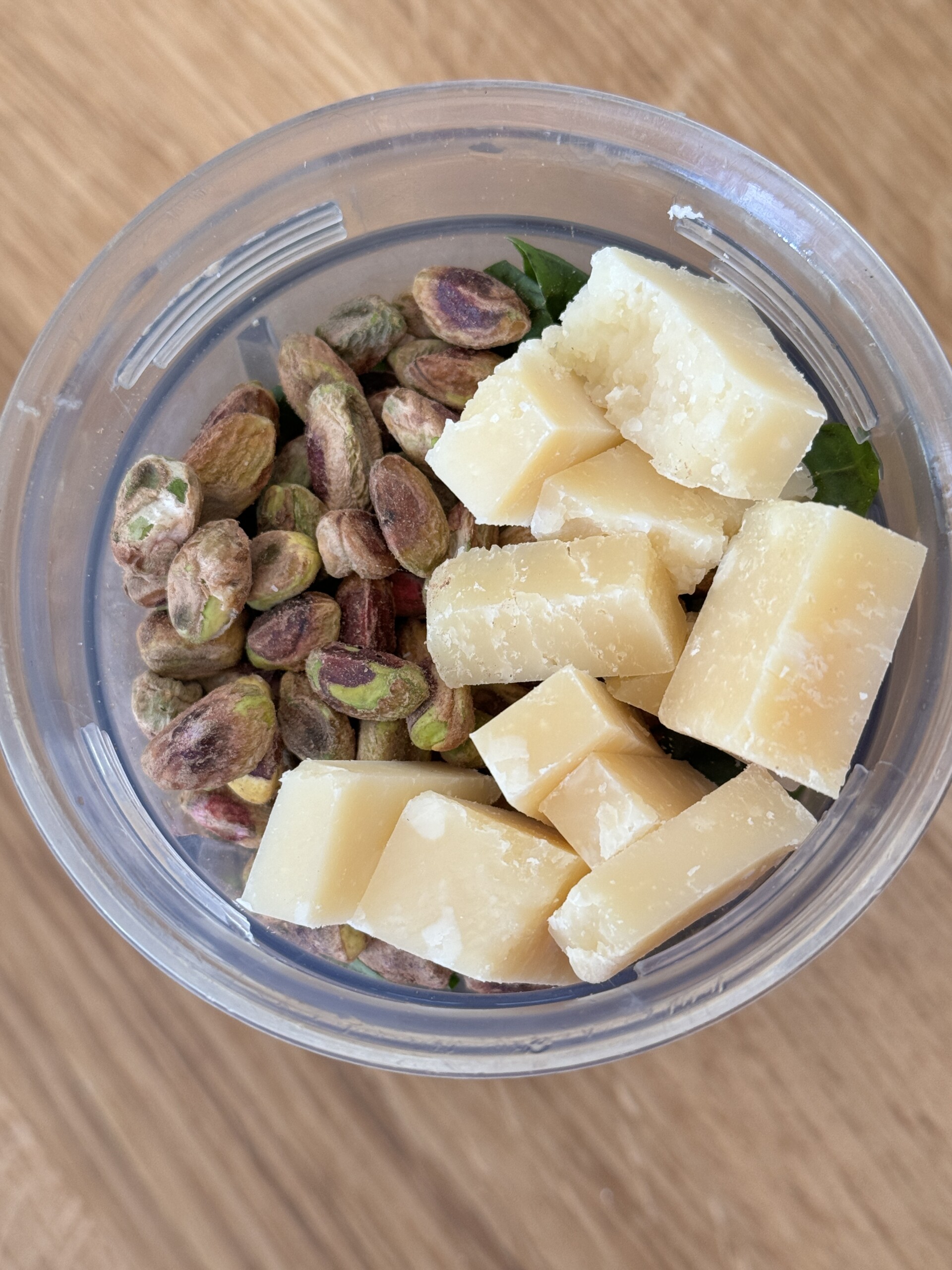
TWO: Add the Parmesan too. I have found there’s no need to grate it in; the chunks blend up just fine.
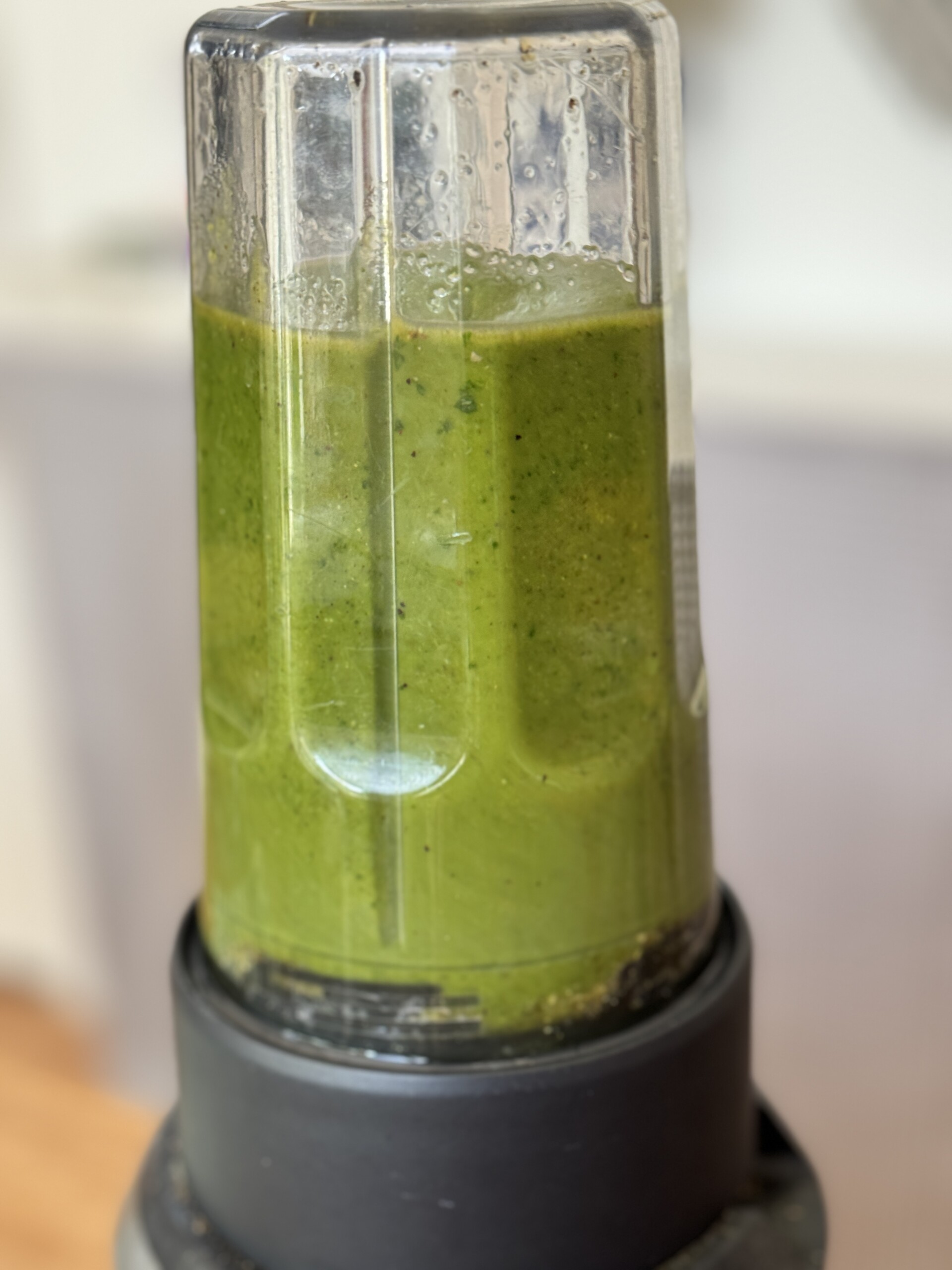
THREE: Blend together, either in a blender or food processor. You can blend less for a chunkier texture, or you can blend more to make it smoother. I like it right in the middle.
FOUR: Toss into spaghetti or another pasta, adding more grated Parm if you like.
Tips from Margie’s kitchen
- How to toast pistachios: I like to toast pistachios in a pan, as this means I can keep a closer eye on them to make sure they don’t burn. Toast over medium-high heat and keep the pan moving to make sure they are evenly toasted. It should take about 5-7 minutes. Let them cool slightly before blending up. You can toast in the oven, but I find it harder to control, and that makes them easier to burn.
- How to store the pesto: Leftovers can be stored in the fridge in an airtight container or jar. It should last a week or two. If you want to keep it longer, I would advise adding it to a jar and leveling it out so it’s flat. Then add some olive oil over the top to create a layer that essentially seals the pesto. This will stop it from going bad as fast. The olive oil will solidify a bit in the fridge, but once mixed into hot pasta or smoothed onto toasted bread, it’ll melt.
- How to store basil: Any leftover basil should be stored in the following way to keep it alive and strong for a good week. Slice the ends off the basil stalks and place them in a small glass or mug of water. Take a clean sandwich bag and cover the basil with it, pulling the bag down the glass. Then seal the sandwich bag around the glass/mug. Leave at room temp.
Frequently asked questions
Yes you can, it just won’t be quite as smooth, but the traditional way to do it is with a pestle and mortar. Start with the garlic (if using) and a pinch of salt and pound together until a paste. Then add the chopped basil, little by little, until they form a paste. Add nuts and repeat. To add the cheese, grate it finely, then mix it in little by little, along with the pepper and the lemon juice/zest. Add the olive oil slowly, pounding into the sauce as you go. This will aim to emulsify it a little rather than having little bits of basil and pistachio suspended in oil.
It will last at least a week in the fridge. As long as it looks and smells okay, you can eat it. See the cooking tips above for how best to store it. It can be stored in an airtight container or jar. It should last a week or two. If you want to keep it longer, I would advise adding it to a jar and leveling it out so it’s nice and flat. Then add some olive oil over the top to create a layer that essentially seals the pesto. This will stop it from going bad as fast. The olive oil will solidify a bit in the fridge, but once mixed into hot pasta or smoothed onto toasted bread, it’ll melt.
This recipe makes a jar of around 1 1/4-1 1/2 cups (300-350 ml) of pesto, which is much more than needed to serve 2 people with pasta. There are plenty of other ways to use it (see below), and it keeps in the fridge well too, for a quick supper.
Yes, you can freeze any leftovers. Either freeze in an airtight container, ice cube trays, or a freezer bag. The freezer can sometimes darken the pesto in color, so don’t be alarmed; it will still taste delicious. You can keep it in the freezer for up to 3 months.
Yes, the pesto can be made a week in advance and stored in the fridge. I wouldn’t cook the pasta until ready to serve, for best results, as it’s best hot out of the pan. When ready to eat, toss in the hot, freshly cooked pasta. If you do want to make it in advance, you could make it as a pasta salad, in which case you can cool the mixed pesto pasta and eat it cold. Or really, room temperature is best! Make sure you remove it from the fridge 20-30 minutes before you want to eat it to remove the fridge chill, and use short pasta (macaroni, fusilli, penne), as spaghetti isn’t ideal for pasta salads. I like to add a drizzle more olive oil in that case and a splash of balsamic vinegar to loosen it.
It’s best eaten fresh, but any leftovers can be reheated. I keep leftovers in the fridge for 3 days, and then when ready to eat, I warm it through gently in a pan over medium heat with a little more pesto and more cheese. A knob of butter helps it come together too. Stir well to make sure it’s all evenly heated and coated in sauce!
Other recipes you might like
If you want to use up any leftover pesto, you can sub it in my Chicken with White Beans and Pistachio Pesto or Greek Lamb Burgers with Pesto. I also love this recipe for Pesto, Goat Cheese, and Parma Ham on Toast, it’s so delicious.
Pesto is also delicious in a sandwich! I love it in this Chicken, Bacon, and Pesto Sandwich or also in the famed Desert Island Dishes recipe for Stanley Tucci’s Favorite Sandwich. Yum!
Easy Lamb Recipes
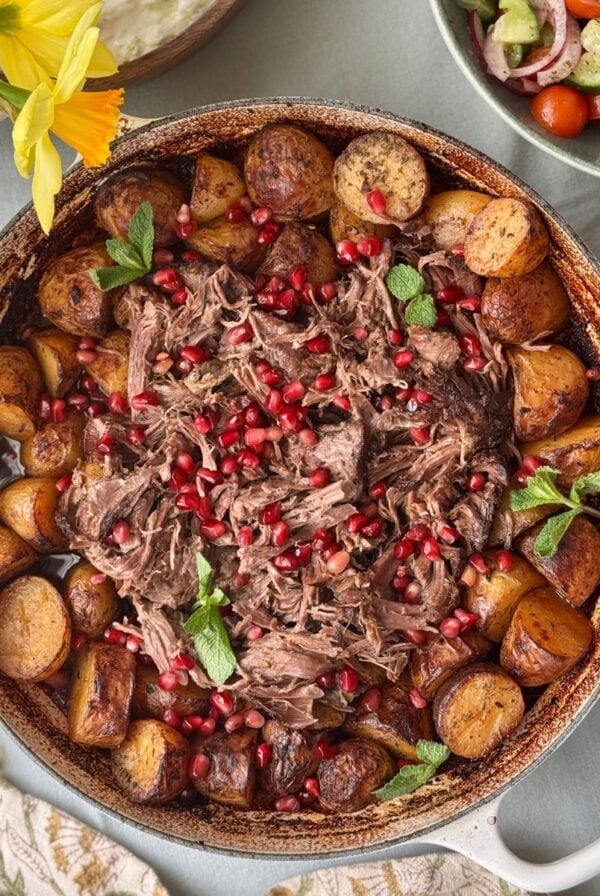
One-Pan Slow Cooked Lamb with Baby Potatoes & Oregano
Pancake Recipes
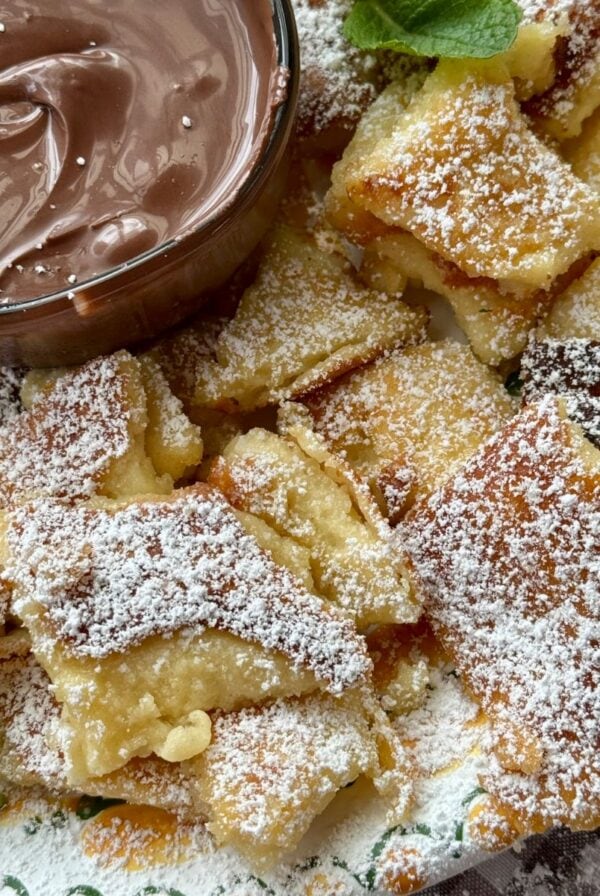
Kaiserschmarrn (Traditional Austrian Pancakes)
High Protein Recipes
High Protein Dinner Recipes
Easy Baking Recipes
Cornflake Dream Cake with Mini Eggs
Made this recipe and loved it?
I would love love LOVE if you could leave a review in the comments… I love hearing what you thought, any changes you made, and the stories behind what made you try my recipes. Also, if you share a photo on Instagram, please tag me @desertislanddishes, it makes my day to see you making my creations!

Pistachio Pesto Pasta (Pasta Al Pesto Pistacchio)
Ingredients
For the pesto:
- 3.5 oz shelled pistachios, ideally roasted (see cooking tips above if you need to roast your own)
- 3.5 oz fresh basil
- 6.75 fl oz olive oil, about generous 3/4 cup
- 1 garlic clove, optional
- 1 lemon, zest and juice
- 1/2 tbsp freshly ground black pepper
- 2.5 oz Parmesan
- salt, to taste
For the pasta:
- 7 oz pasta, any shape
- Parmesan/pecorino, grated
- Ricotta/mozzarella/burrata, to top (optional)
Instructions
- Get a large pot of salted water to boil. Once boiling, add the pasta and cook for 10 minutes, or according to package instructions.
- Add all of the pesto ingredients to a blender and blitz until smooth. No need to grate the Parm; it's fine in the blender in chunks. Taste the pesto and see if you need to add any salt; you may find it’s salty enough from the cheese.
- Reserve a small amount of pasta water, drain the pasta, and return it to the saucepan. Add a few good tablespoons of pesto and a splash of pasta water. Mix really well. Serve into bowls, top with more parmesan and a dollop of ricotta or burrata if you like.
Notes
Make-ahead and storage
Make-ahead: The pesto can be made a week in advance and stored in the fridge. I wouldn’t cook the pasta until ready to serve, for best results, as it’s best hot out of the pan. When ready to eat, toss in the hot, freshly cooked pasta. If you do want to make it in advance, you could make it as a pasta salad, in which case you can cool the mixed pesto pasta and eat it cold. Or really, room temperature is best! Make sure you remove it from the fridge 20-30 minutes before you want to eat it to remove the fridge chill. Make sure you use a short pasta (macaroni, fusilli, penne) as spaghetti isn’t ideal for pasta salads. I like to add a drizzle more olive oil in that case and a splash of balsamic vinegar to loosen it. To store the pesto: Store in the fridge in an airtight container or jar. It should last a week or two. If you want to keep it longer, I would advise adding it to a jar and leveling it out so it’s nice and flat. Then add some olive oil over the top to create a layer that essentially seals the pesto. This will stop it from going bad as fast. The olive oil will solidify a bit in the fridge, but once mixed into hot pasta (for example) or brought to room temperature, it’ll melt. To store the pesto pasta: Keep in an airtight container in the fridge for 3 days. Then reheat when ready (see below). To reheat the pesto pasta: It’s best eaten fresh, but any leftovers can be reheated. I keep leftovers in the fridge for 3 days, and then when ready to eat, I warm it through gently in a pan over medium heat with a little more pesto and more cheese. A knob of butter helps it come together too. Stir well to make sure it’s all evenly heated and coated in sauce! To freeze the pesto: Freeze in an airtight container, ice cube trays, or a freezer bag. The freezer can sometimes darken the pesto in color, so don’t be alarmed, but it will still taste delicious. You can keep it in the freezer for up to 3 months. When ready to use, simply defrost at room temp and stir through pasta/use as you wish. Making without a blender: You can make the pistachio pesto by hand; it just won’t be quite as smooth, but the traditional way to do it is with a pestle and mortar. Start with the garlic (if using) and a pinch of salt and pound together until a paste. Then add the basil, chopped, little by little until they form a paste. Add nuts and repeat. To add the cheese, grate it finely, then mix it in little by little, along with the pepper and the lemon juice/zest. Add the olive oil slowly, pounding into the sauce as you go. This will aim to emulsify it a little rather than having little bits of basil and pistachio suspended in oil.Nutrition
Nutrition information is automatically calculated, so should only be used as an approximation.


This was absolutely delicious. I blanched the basil leaves and added extra garlic but the basic recipe is great.
My new favourite pesto recipe – the pistachios make it so creamy. Will add to my rotation!