
This post may contain affiliate links. Please see our disclosure policy.
These easy homemade marshmallows are a perfect sweet treat that actually so easy, despite what you may think. If you have never had them, the soft, fluffy texture and sweet flavour is so delicious and so different to the shop-bought option. The texture is just so different, so if you think you don’t love marshmallows, these may change your mind!
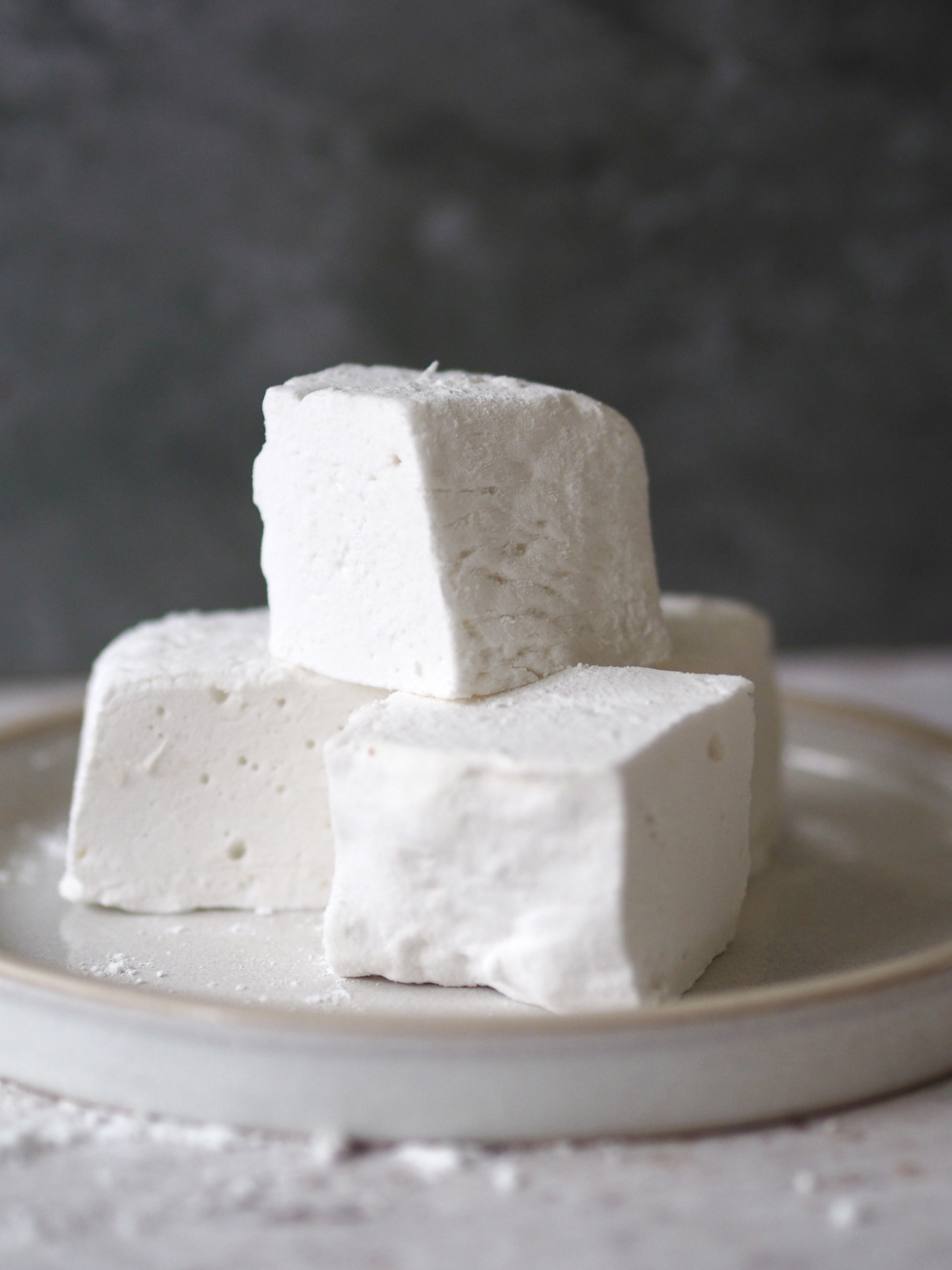
I know marshmallows have a reputation for being sickly sweet and cloying. However, that really isn’t the case with homemade marshmallows. They are light, springy and sweet – but not overpoweringly so. They truly are very easy as you just need to grease a container, whip it up and then let it set! If you want to make chocolate marshmallows, they are also just as simple and delicious.
Table of Contents
- Why you will love this recipe:
- Ingredients:
- What is Liquid Glucose?
- Substitutions and Variations
- Here’s how to make easy homemade marshmallows:
- Cooking Tips:
- Can I make these marshmallows without a sugar thermometer?
- How to make raspberry marshmallows
- Frequently Asked Questions
- Other recipes you might enjoy:
- Easy Homemade Marshmallows Recipe
Why you will love this recipe:
- They are so much better than shop bought marshmallows. Imagine beautifully sweet, soft and light bites of deliciousness.
- They are the perfect homemade gift. Plus, you can make ahead up to 3 weeks in advance.
- They can be used in so many ways. Think gooey s’mores, rich hot chocolate, or indulgent rocky road.
Ingredients:
Full recipe can be found in the printable recipe card at the bottom of the post, just scroll down
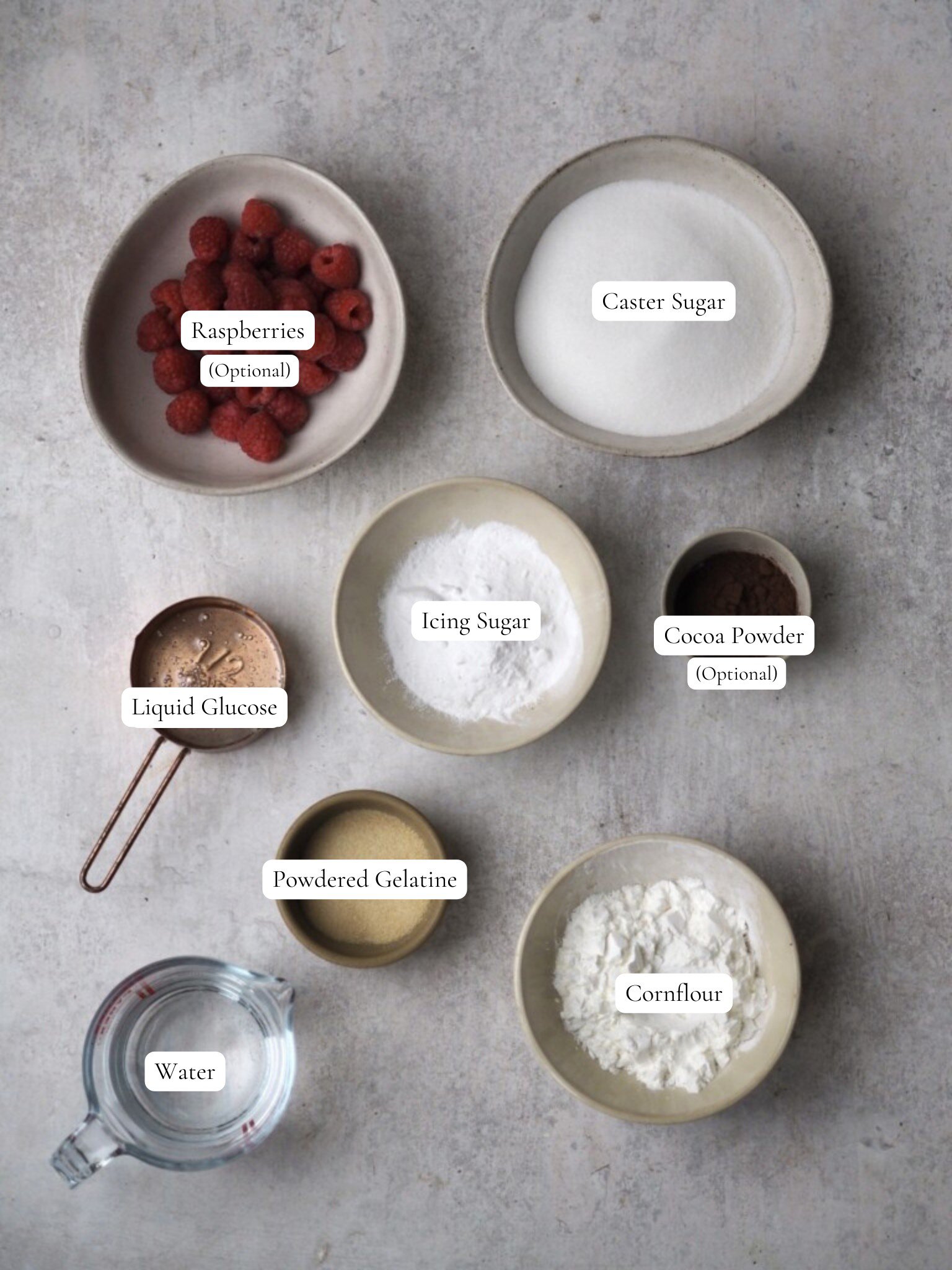
Powdered gelatine – this allows the marshmallow mixture to set, ready to be cut into perfect cubes.
Liquid glucose – this is the secret ingredient to the perfect homemade marshmallows. It helps create the perfect soft and bouncy texture.
Caster sugar – this forms the basis of the sugar syrup. You can use golden caster sugar for a darker marshmallow. Granulated sugar also works well.
What is Liquid Glucose?
Liquid Glucose is a thick, clear syrup made from corn starch or maize starch (or other starches). It can also be known as corn syrup or glucose syrup, but they are a little different. They would work in a pinch but try to find liquid glucose to be sure.
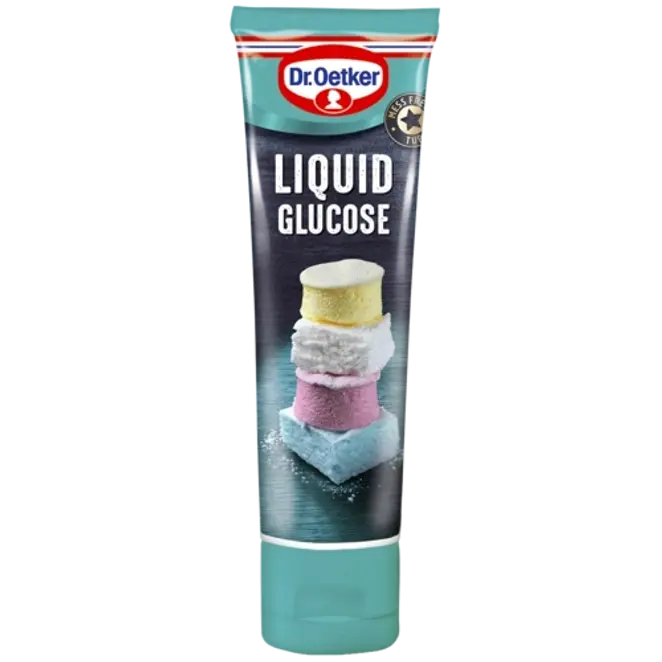
It’s used in many baking or confectionery recipes such as these marshmallows but also it’s useful in icings and jams. It’s much easier to buy it than to make it, so I’d recommend that. You can buy it in the UK in many big supermarkets in the baking section. Dr Oetker Liquid Glucose is a good one. Otherwise, ordering online is easy too.
It has the same texture and viscosity as golden syrup but it’s clear and doesn’t taste the same.
Substitutions and Variations
Fruit: you can swap the raspberries for all sorts of berries. Strawberries, blackberries, blueberries and cherries all make delicious marshmallows. If you don’t want to make your own purée, you can use a shop bought one.
Vanilla: you can flavour the plain ones with vanilla by mixing in a little vanilla extract or vanilla bean paste.
Food colouring: you can make different coloured marshmallows by adding a couple of drops of food colouring. Ideal if making for themed parties or to match a colour scheme.
Use gelatin sheets rather than powder: Sub the 8 tsp gelatin powder for 12 sheets/leaves of gelatin. Soften them in cold water, squeeze out all the water and then dissolve in the 4 tbsp of water like you would for the powder. Continue as instructed.
Here’s how to make easy homemade marshmallows:
Here’s a step by step guide for what you need to do, but you can find the full recipe below for detailed instructions.
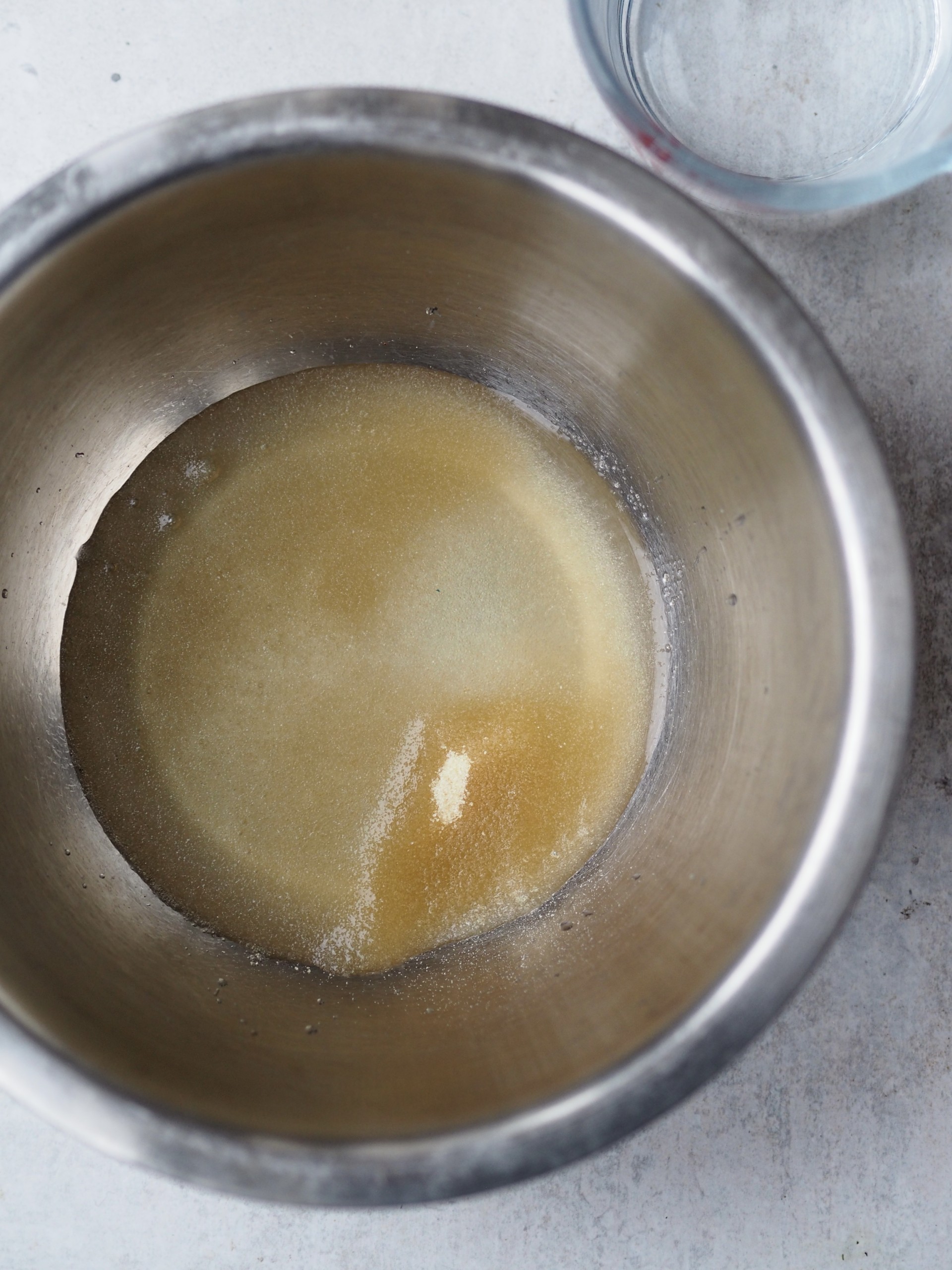
ONE: Place the gelatine into a large heatproof bowl (ideally the bowl of a stand mixer if you have one). Add the 4 tbsp cold water and mix well. Set aside.
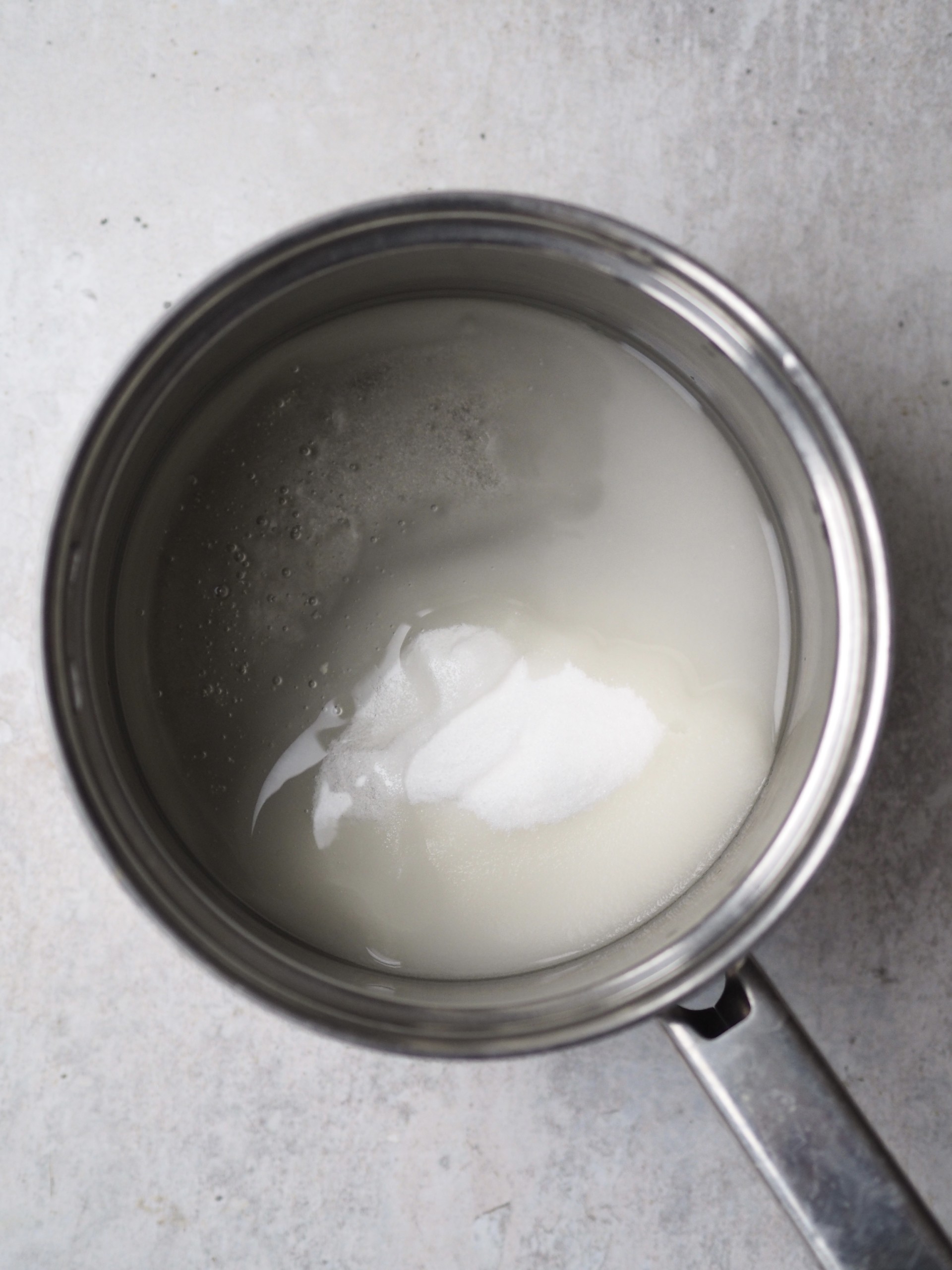
TWO: Next, add the glucose syrup and caster sugar to a large saucepan. Pour in 300ml water and place over a medium heat. Stir gently until the sugar has dissolved in the water. Once the mix begins to simmer, stop stirring.
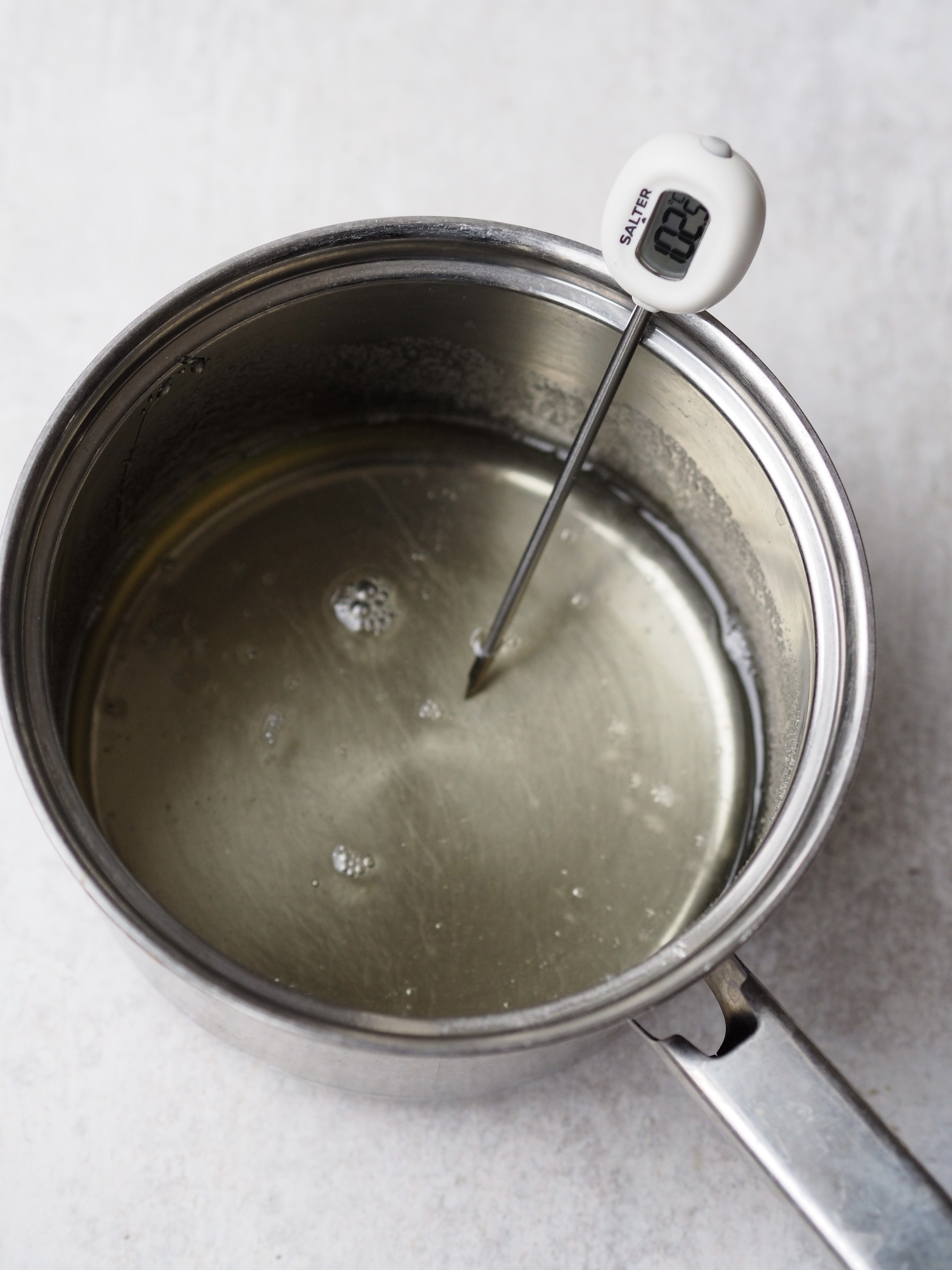
THREE: Continue to heat over a medium-high heat, gently swirling the pan, until the sugar syrup reaches 115C (use a jam thermometer to check). At this stage the liquid should be clear and bubbling. Handle the pan carefully as it will be extremely hot.
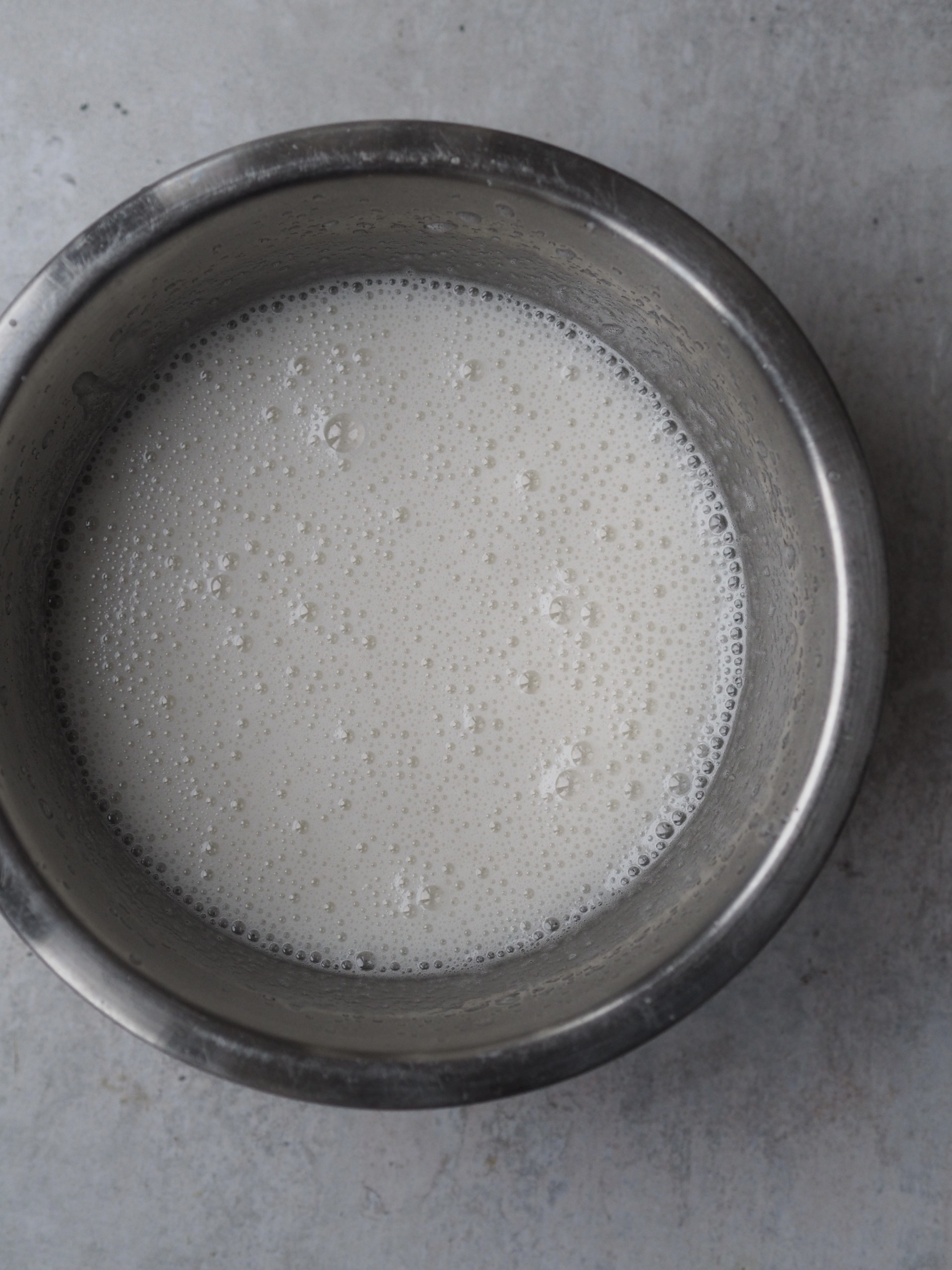
FOUR: Remove the pan from the heat and very carefully, drizzle the sugar syrup into the gelatine whilst whisking with an electric whisk. You will find this easiest if you use a stand mixer fitted with the whisk attachment.
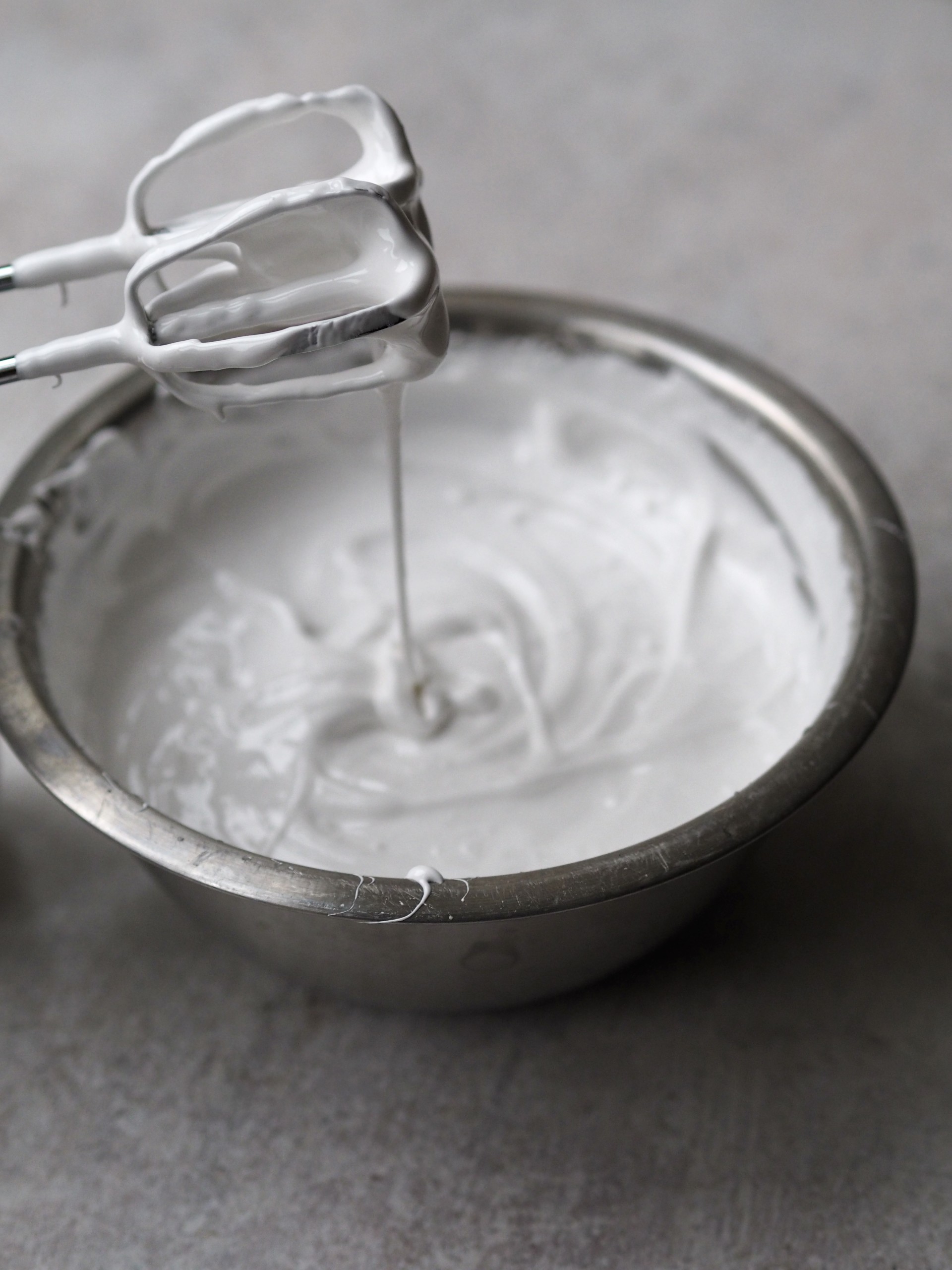
FIVE: Once all has been added, whisk on medium-high speed for a further 12-14 minutes – or until you have a thick, white meringue-like texture.
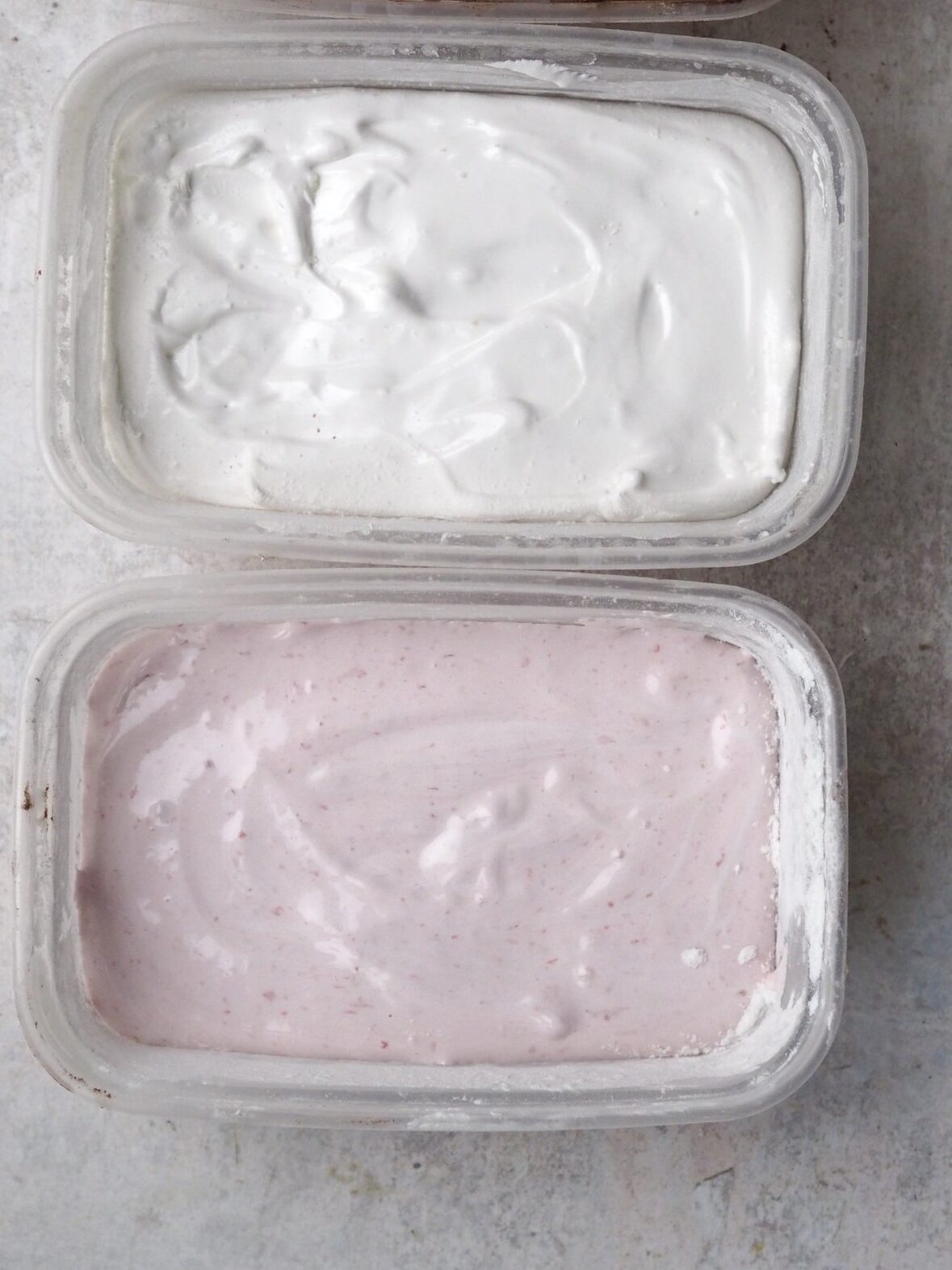
SIX: Spoon the mixture into the greased tin and smooth over the top using a spatula or palette knife. Leave to set for at least 2 hours.
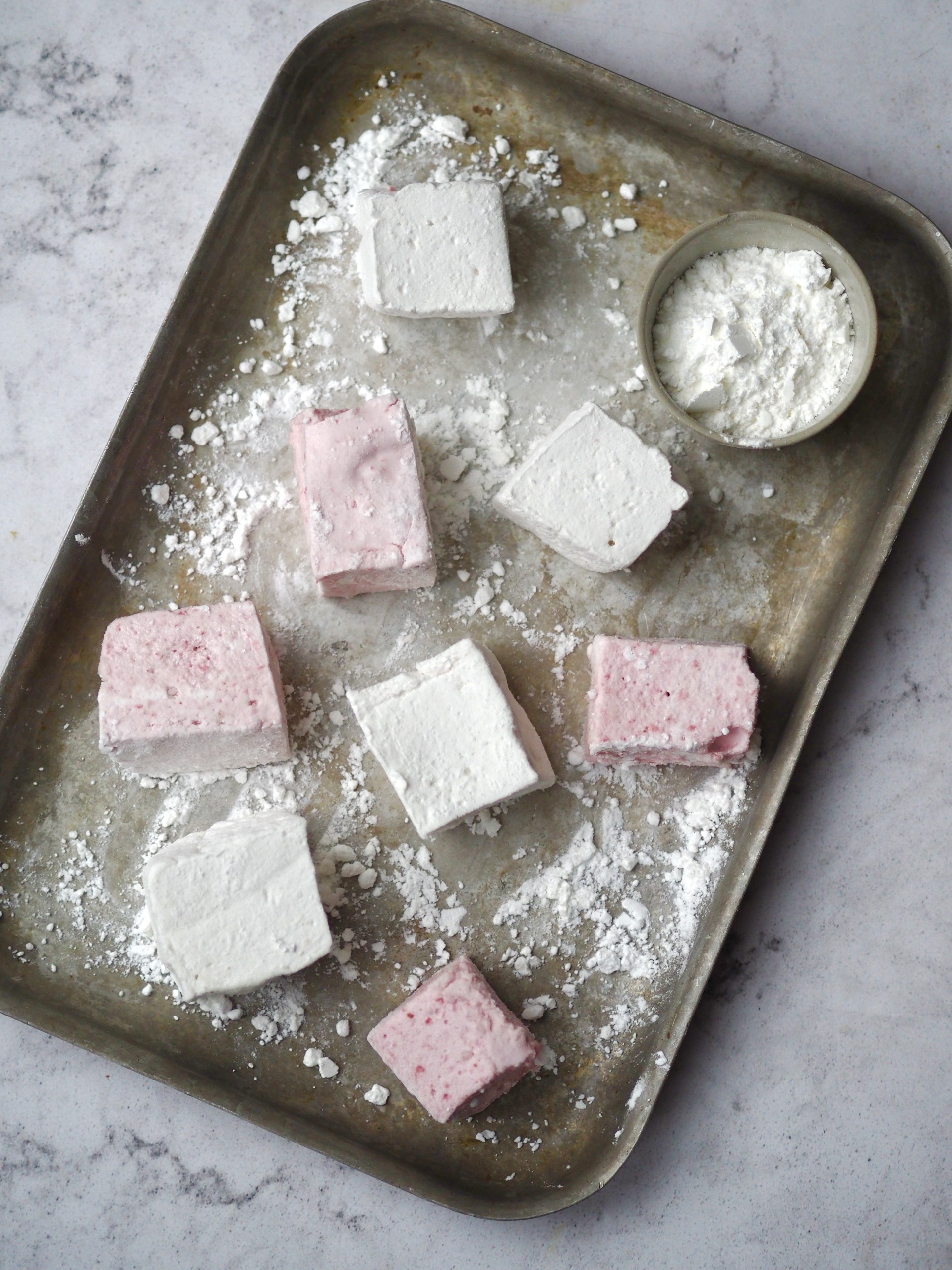
SEVEN: Dust a large sharp knife with icing-sugar cornflour then cut the marshmallow into equal-sized cubes. Toss each one in more icing sugar & cornflour.
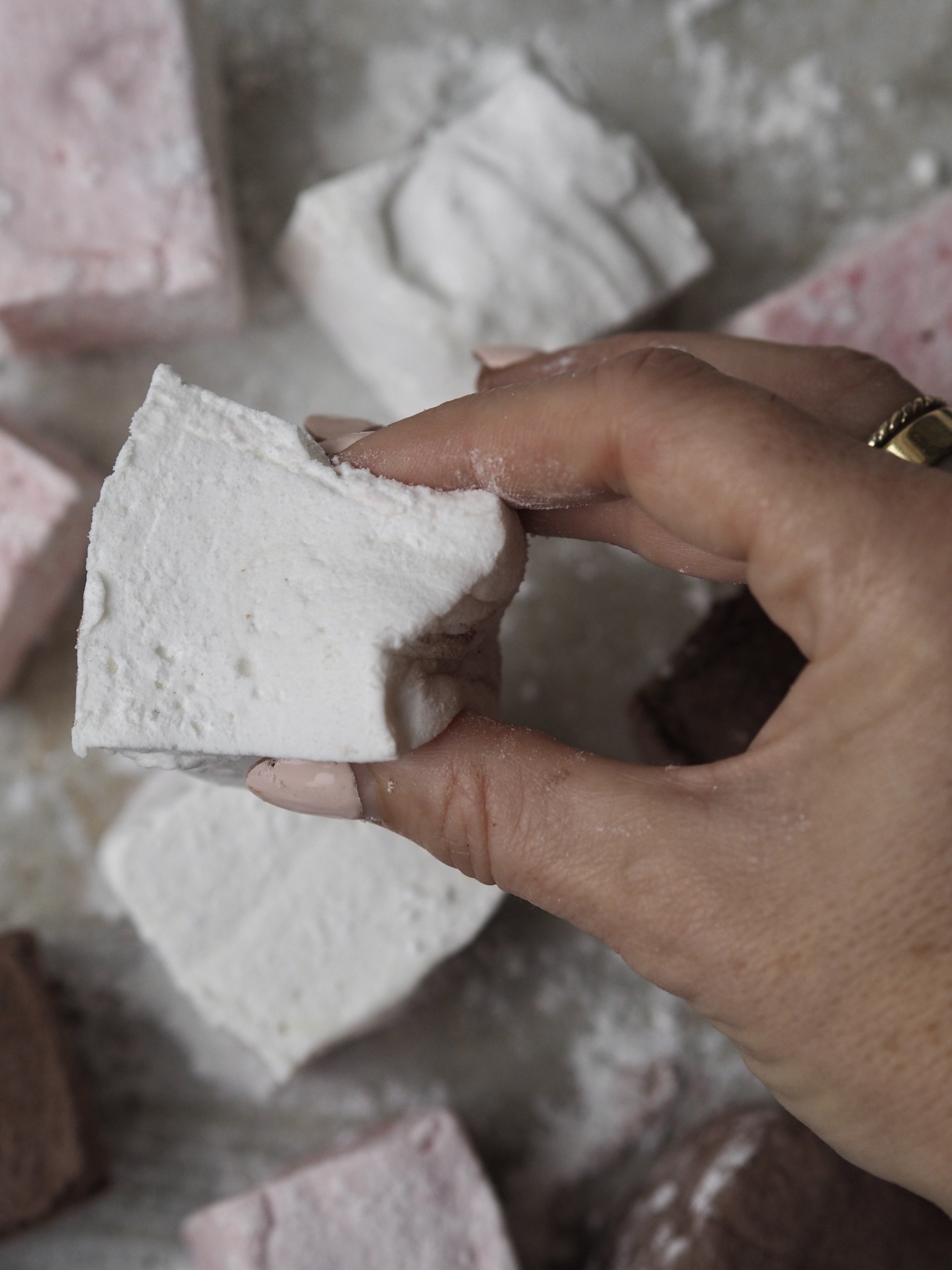
EIGHT: This is the texture you are looking for once done!
Cooking Tips:
Preparing the container: homemade marshmallows are very sticky. That means you do need to make sure you grease your tin very well. The same applies with adding the cornflour dusting. Equally, before storing, make sure they are liberally coated. Otherwise they will stick together.
Different sized marshmallows: you can make whatever size you like. Use larger tupperware containers for shallower marshmallows. Alternatively, use narrower tupperware containers for deeper marshmallows. Once set, you can choose how big or small to make your marshmallow cubes or rectangles.
Using a sugar thermometer: I would highly recommend a thermometer. If you don’t have one, scroll down for how to do it without.
Dust the knife: before cutting the marshmallows, dust the knife with the cornflour-icing sugar mix. This will help you create clean, neat cubes of marshmallow.
Keep cool and dry: homemade marshmallows will keep for up to 3 weeks in a sealed container in a cool, dry place. However, if they get wet they will become sticky so avoid contact with water.
Can I make these marshmallows without a sugar thermometer?
You can but it is definitely trickier to do so. I would always advise to use a sugar thermometer, they are relatively inexpensive and you can use them across other areas of cooking too. If you are making these without one, you will need to use the cold water method.
- Whilst the sugar syrup is bubbling and reaching temperature, take a small amount of sugar syrup on a spoon and drop it into a bowl of cold water every 5 minutes or so.
- If the sugar dissolves completely, it’s too early.
- If the sugar forms a shape in the water but is still totally squishy between your fingers (almost dissolving between your fingers), it’s still too early.
- When the sugar forms a shape in the water, forming a firm and pliable ball between your fingers, holding its shape when pressed down and not dissolving, it HAS REACHED THE RIGHT TEMP. It’s ready for the next step!
- If you try that and the ball is too firm and very hard to move, it has gone too far. You can always add a splash more hot water to the pan to bring the temp back down and then try again to catch it at the right stage.
How to make raspberry marshmallows
- Continue with the recipe, above, steps 1-5 (including step 5).
- Once you reach the end of step 5, fold raspberry puree through the marshmallow mix. Spoon the mixture into the prepared tin and smooth over the top using a spatula or palette knife. Leave to set for at least 2 hours.
- Then continue with step 7.
To make raspberry puree: tip 400g raspberries into a small saucepan. Add 2 tbsp sugar and a splash of water. Place over a low-medium heat and bring to a simmer. Continue to cook, stirring occasionally until thickened.
Frequently Asked Questions
Essentially yes. All corn syrup is glucose syrup, but not all glucose syrup is corn syrup. You can use them interchangeably in this recipe if you can only find corn syrup rather than glucose syrup (which is the same as liquid glucose!)
Yes, they are the same thing.
Yes. It is possible to make vegan marshmallows. Unfortunately, this recipe isn’t vegan as it uses gelatine. For a vegan marshmallow recipe, you need to use agar agar. This comes as a powder but needs to be boiled in a liquid. Although it helps ‘set’ recipes like gelatine, it isn’t a like-for-like swap.
It’s important that you keep an eye on the temperature of the mixture when it’s bubbling, as if it gets too hot, it firms the sugar too much and will harden them. This is why a sugar thermometer is so useful.
Yes, they can be frozen! They will last up to 3 months. They do keep for a few weeks so you may not need to freeze them.
Other recipes you might enjoy:
My tiramisu coffee and chocolate mochi are ideal to have in the freezer for when you are craving something sweet. Also don’t miss my sfingi doughnuts. They are super quick, easy and utterly delicious. My brownie bites and Nutella puff pastry star are also a must-try.

Easy Baking Recipes
Dark Chocolate and White Chocolate Brownies

Easy Dessert Recipes
Homemade Chocolate Marshmallows

Easy Baking Recipes
Soft & Chewy Chocolate Chipless Cookies

Easy Baking Recipes
Banana Bread Bars
If you tried this marshmallow recipe or any other recipe on the site, please do leave a comment and let us know how it went!

Easy Homemade Marshmallows
Ingredients
- 2 tbsp vegetable oil, roughly
- 8 tsp powdered gelatine, 24g, plus 4 tbsp cold water
- 280 g liquid glucose
- 460 g caster sugar
- 300 ml water
- 4 tbsp cornflour, to dust
- 120 g icing (powdered) sugar, to dust
Instructions
- First, grease your tin well. Add vegetable oil and use clean fingers to evenly coat the tin. I would suggest a 30x20cm rectangular tin. Mix together the icing sugar and cornflour. Then tip the whole lot in the tin and shuffle it around until the tin is all coated. Pour the excess out into a separate bowl.
- Place the gelatine into a large heatproof bowl (ideally the bowl of a stand mixer if you have one). Add the 4 tbsp cold water and mix well. Set aside.
- Next, add the glucose syrup and caster sugar to a large saucepan. Pour in 300ml water and place over a medium heat. Stir gently until the sugar has dissolved in the water. Once the mix begins to simmer, stop stirring. Continue to heat over a medium-high heat, gently swirling the pan, until the sugar syrup reaches 115C (use a jam thermometer to check). At this stage the liquid should be clear and bubbling. Handle the pan carefully as it will be extremely hot.
- Remove the pan from the heat and very carefully drizzle the sugar syrup into the gelatine whilst whisking with an electric whisk. You will find this easiest if you use a stand mixer fitted with the whisk attachment.
- Once all has been added, whisk on medium-high speed for a further 12-14 minutes – or until you have a thick, white meringue-like texture.
- Spoon the mixture into the prepared tin and smooth over the top using a spatula or palette knife. Leave to set for at least 2 hours.
- Dust a baking tray or board with some of the the cornflour and icing sugar mixture. Tip the marshmallows onto the tray. Dust a large sharp knife with icing sugar & cornflour (it's sticky! Or you can run it under a very hot tap) then cut the marshmallow into equal-sized cubes. Then toss each marshmallow in the bowl with the icing sugar & cornflour so each side is coated. They shouldn't be sticky to touch anymore. You can add in more icing sugar and cornflour as needed, it doesn't have to be an exact science and you never know exactly how much you will need.
Notes
Nutrition
Nutrition information is automatically calculated, so should only be used as an approximation.


Hi, I loved your hot chocolate and want to make your marshmallows. Can corn starch be used instead of cornflour? Wishing you a wonderful holiday season!!!
Thank you for your kind words! Yes absolutely – they are the same thing xxx
Hello! American here, and I have a question. When you say “cornflour-icing sugar mix” do you mean corn starch and icing sugar is just powdered sugar? Is there a specific ratio or just equal parts? Sorry if I’m nit picking but I want to make sure I make these the correct way so they come out delicious!
Hi Alesha, yes that’s corn starch and powdered sugar. No specific ratio but I tend to do more powdered sugar than corn starch as it obviously tastes better! In the recipe card, you’ll see you need this to dust the container/pan at the start but then also you need it when cutting the marshmallows so your knife doesn’t stick. It’s not an exact science, as long as you use enough for it to not stick. Let us know how it goes! They are so delicious.
What happens to the extra 150ml of water??
Hi Melissa, if you look at step 3 on the recipe card, you add the sugar and the gelatin to 150ml water and heat it to a syrup. All the details are in the recipe card. Is that what you meant?
These homemade marshmallows are so so good. This recipe post will break it down for you so it’s simple to do and they are truly world’s apart from shop bought – you won’t regret trying them!