
This post may contain affiliate links. Please see our disclosure policy.
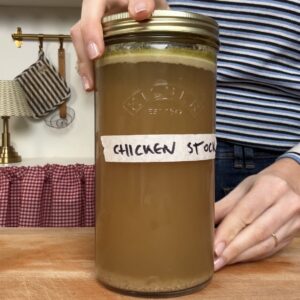
I know that making stock can seem complicated and fussy, but I promise you, nothing elevates home cooking like a homemade chicken stock. It’s rich and nourishing, full of flavour and so versatile. It’s surprisingly easy to make; it just requires time to simmer, and it’s a great way to use a leftover chicken carcass from your weekly roast chicken.
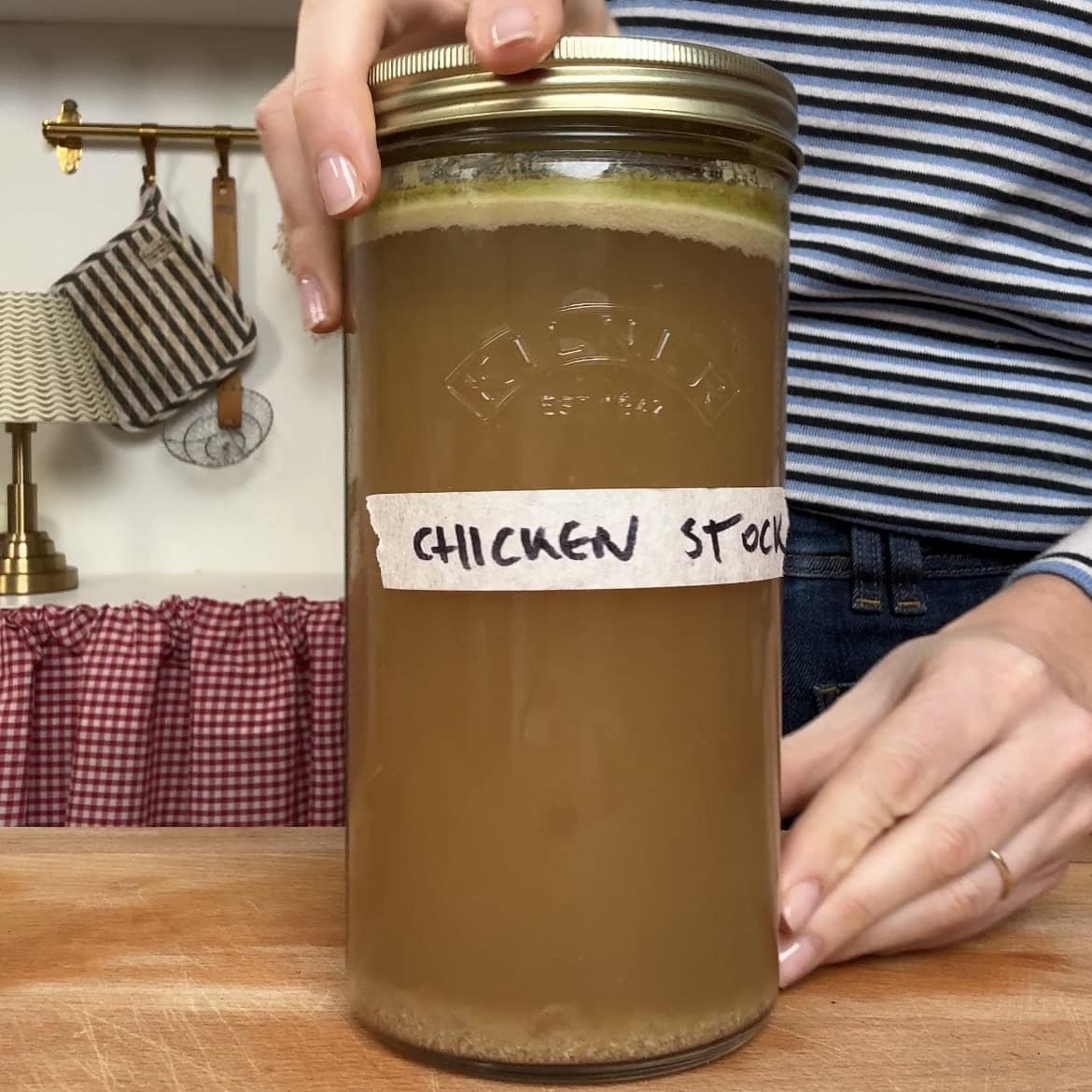
One of the great things about homemade chicken stock is its versatility. Not only in how you make it and the aromatics you choose, but also in how to use it. It’s delicious when making a comforting bowl of pastina, fragrant chicken tom yum soup or in my classic French chicken in a pot. This post has a full guide on how to make homemade chicken stock, a step-by-step guide, and tips to make it rich, clear and jiggly!
Table of Contents
Why you will love this recipe:
- Homemade chicken stock has a rich, deep flavour that you don’t get in shop-bought stock.
- It’s a great way to use up kitchen scraps – cutting waste and saving money overall.
- Making your own chicken stock is the best way to build a delicious foundation for great soups, stews and sauces.
- Homemade stock is full of protein and nutrients.
Ingredients:
Full recipe can be found in the printable recipe card at the bottom of the post, just scroll down!
Chicken carcass – I use leftover chicken carcasses after roasting a chicken. You could also raw chicken carcasses, breaking down the chicken first for the meat.
Carrots – these add colour and flavour. I don’t bother to peel.
Herbs – I like thyme and rosemary but you can also use parsley or bay.
Substitutions and Variations:
Ginger & spring onion – if you are making stock to make a homemade ramen, you could add ginger and spring onion for added flavour.
Parsley – I like to add parsley, as well as its stems – it’s delicious.
Dried shiitake mushrooms – these add umami flavour to the stock.
Adding sweetness – simmering with leeks, fennel or parsnip can add some natural sweetness to the chicken stock.
What not to add to chicken stock
- Cruciferous veg such as broccoli, cauliflower and cabbage – this can make it sulphurous.
- Potatoes – this can make the stock cloudy and thick.
- Courgette – this can make the stock bitter when it’s overcooked. It’s also full of water so doesn’t add much.
- Salt – By not adding salt here, it means that you can adjust the seasoning later when cooking, which avoids a final dish being too salty.
Here’s how to make homemade chicken stock:
Here’s a step by step guide for what you need to do, but you can find the full recipe at the bottom of the page for detailed instructions.
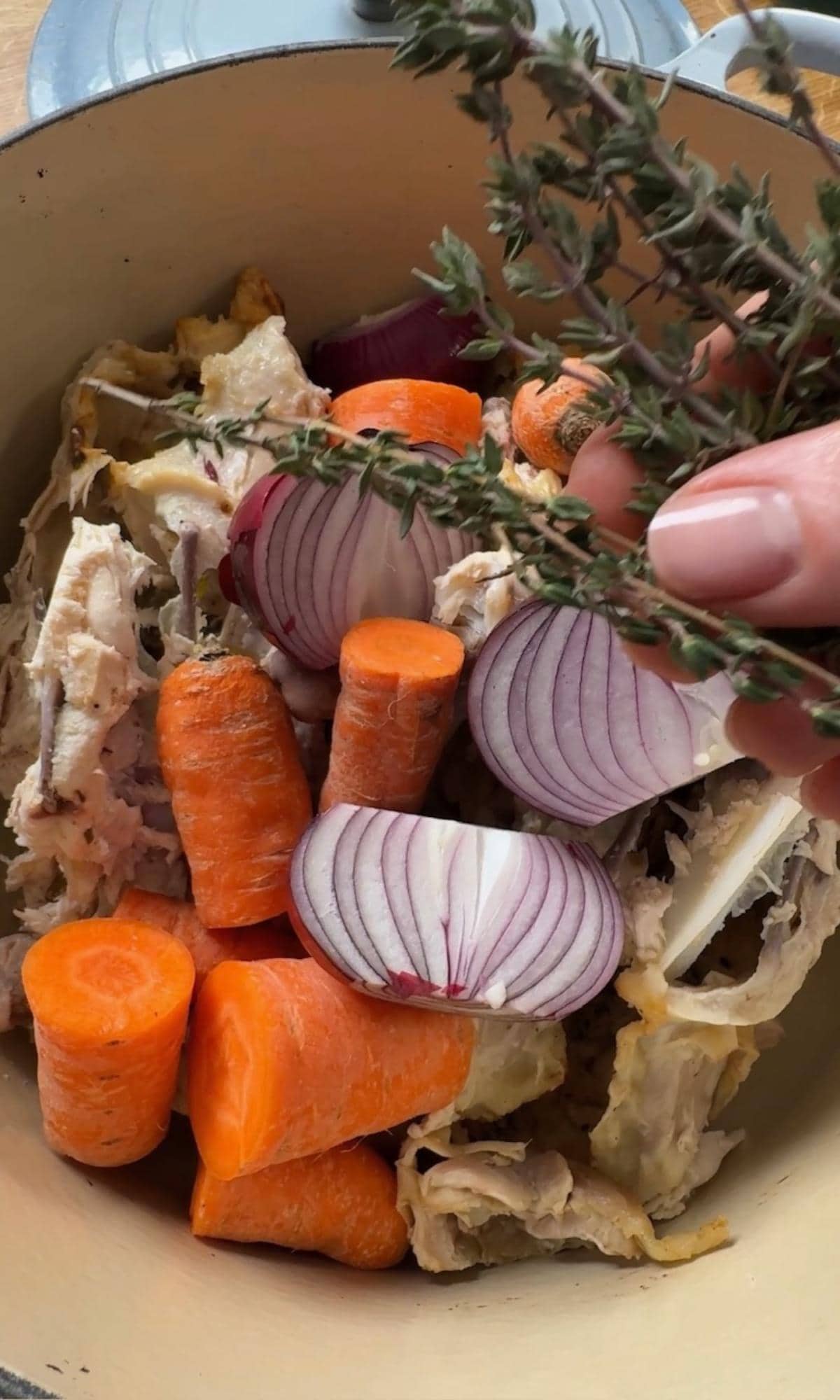
ONE: Add the chicken carcasses and all the vegetables and aromatics to a large pot.
Pour over enough cold water to cover everything.
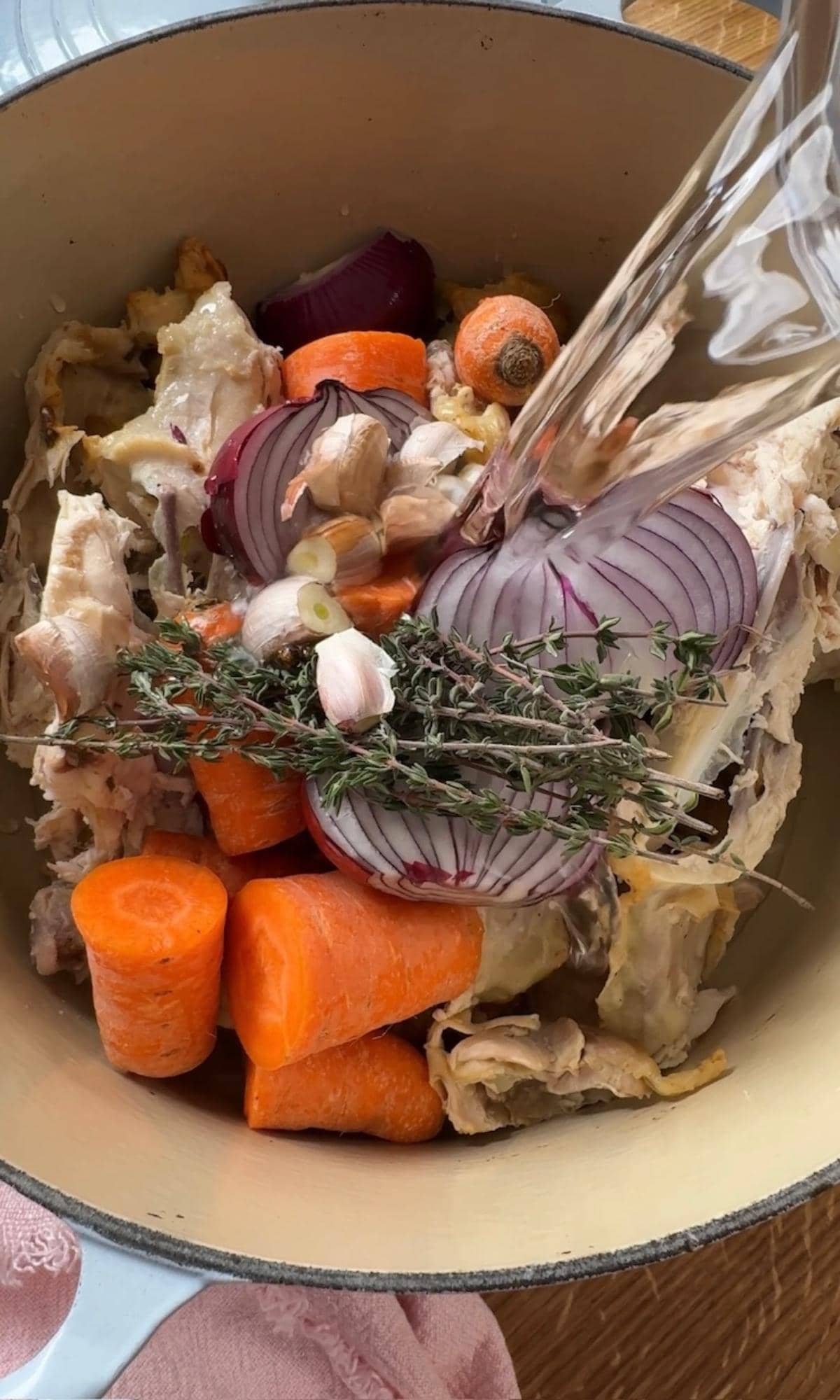
TWO: Cover with a lid and slowly bring to a simmer, over medium heat. Skim off any foam or scum that comes to the surface.
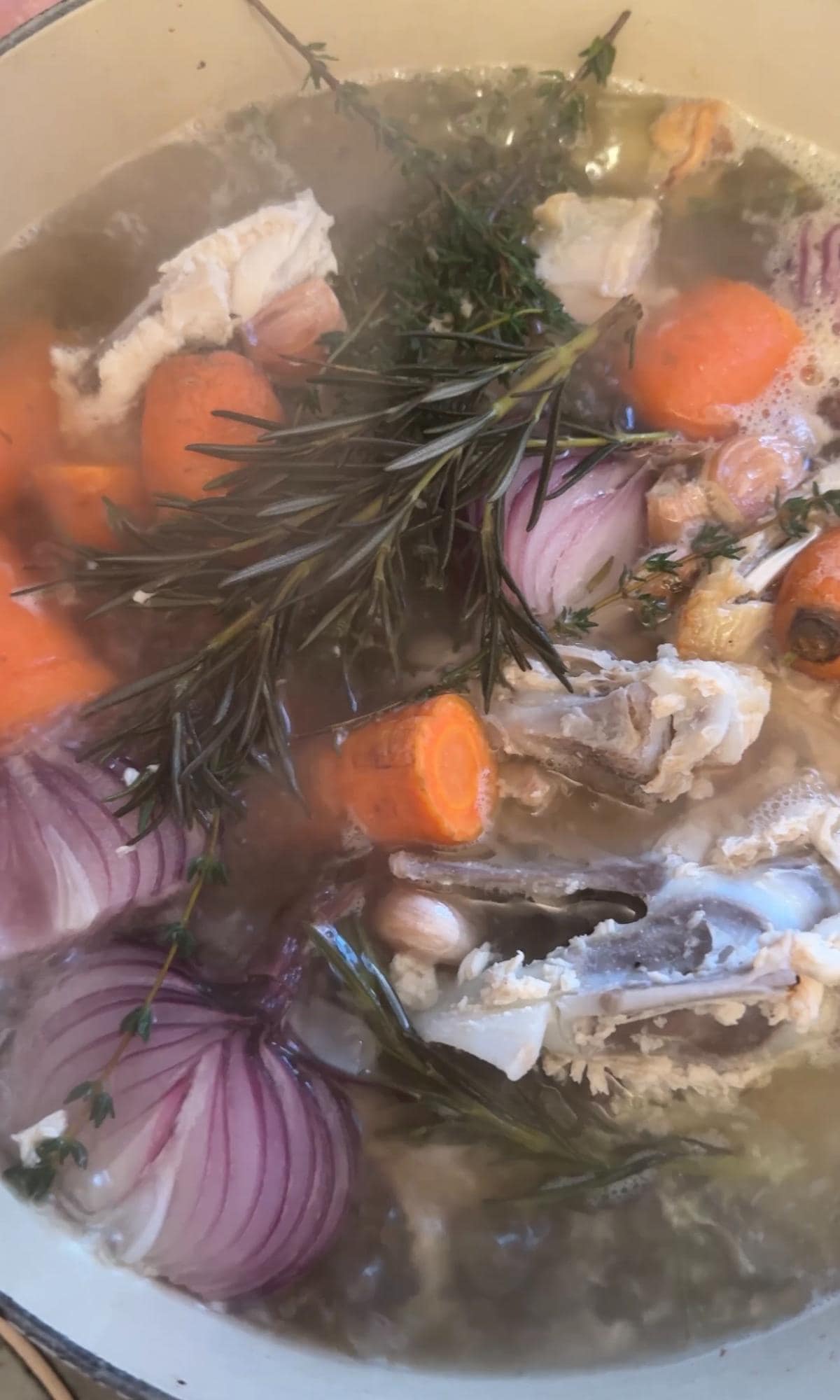
THREE: Once it’s simmering, turn it down to low and let the stock simmer gently for 3 hours, or longer if you have it (up to 5 hours). Don’t boil it, just simmer.
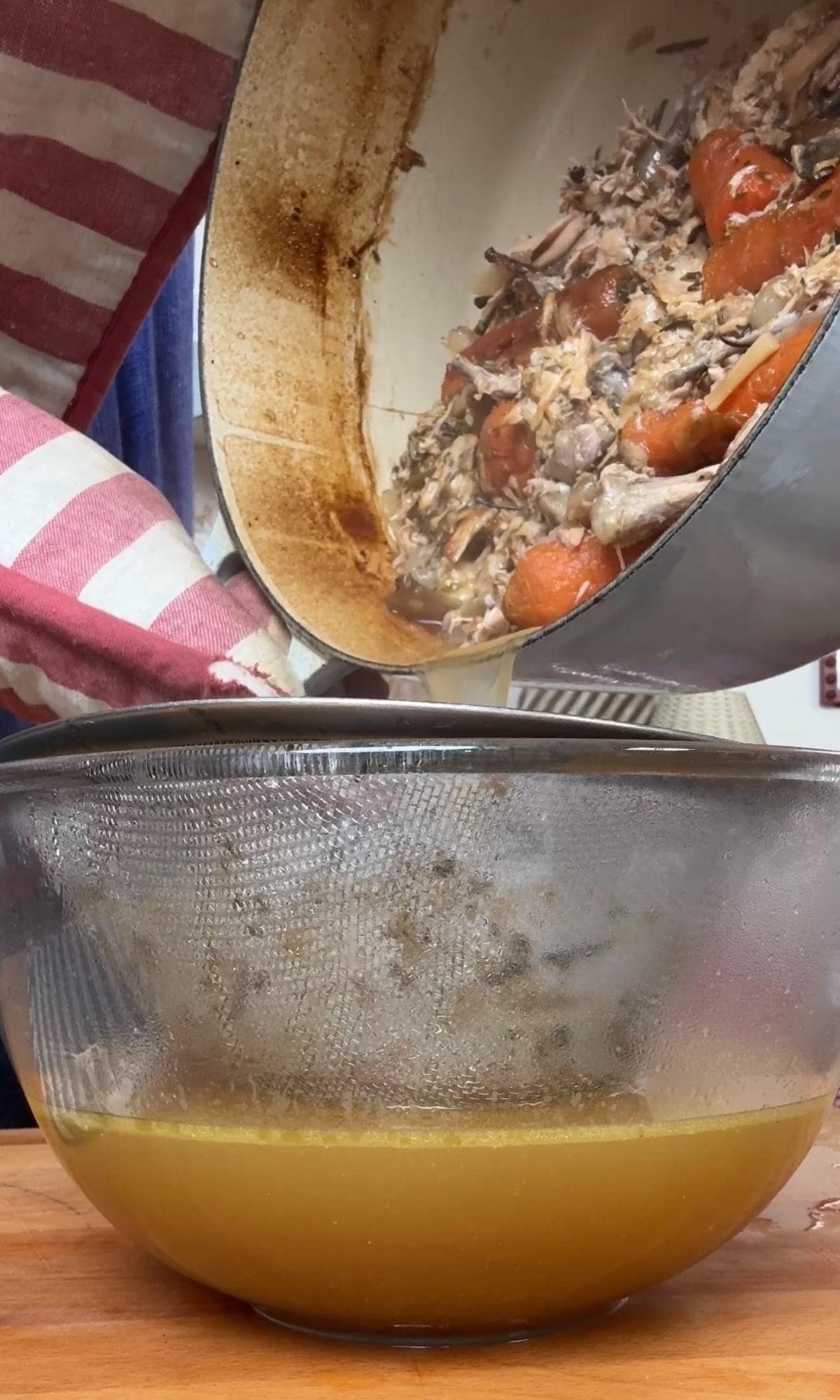
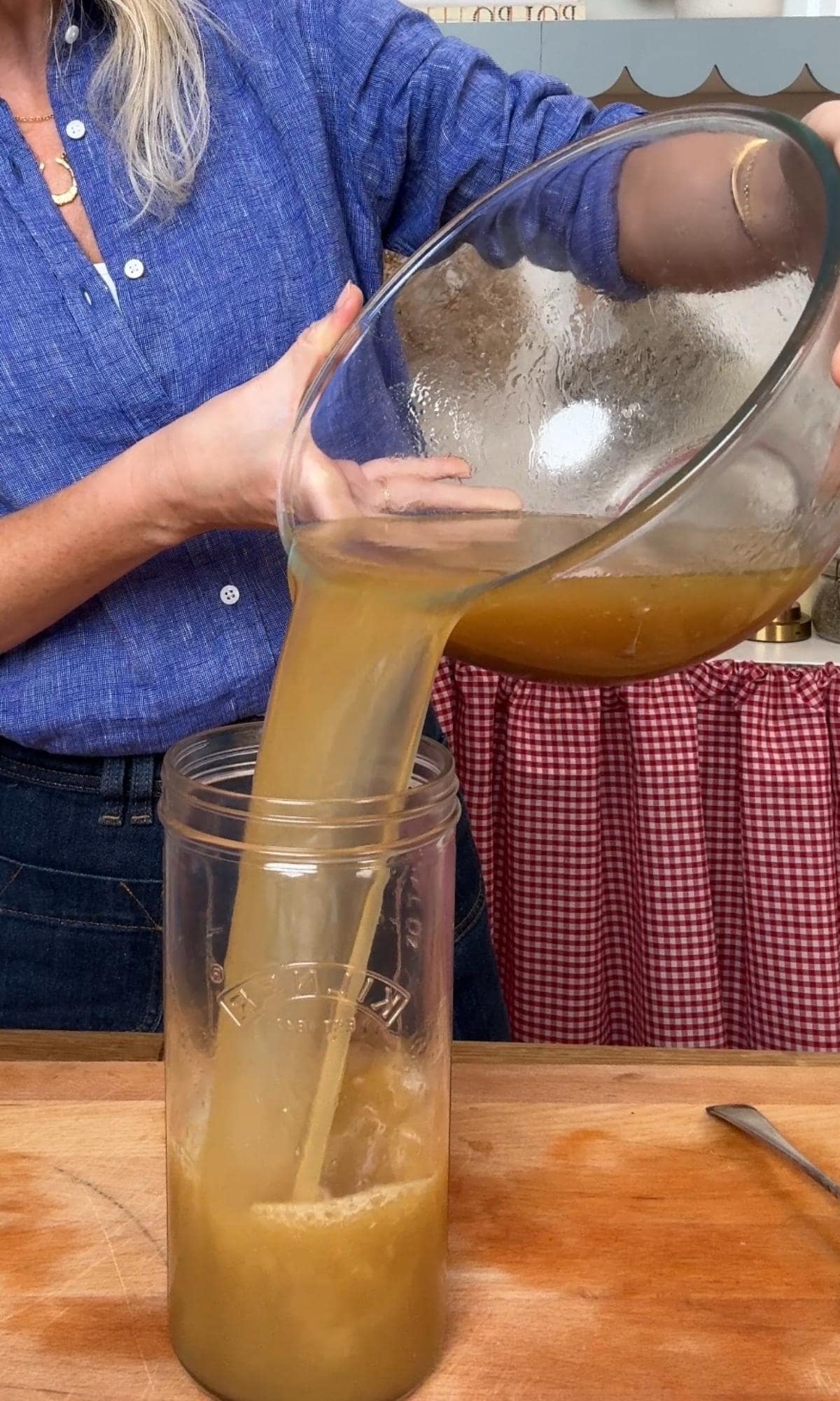
FOUR: Strain the stock through a fine sieve into a large bowl or jug. Discard all the sieve catches.
FIVE: Cool and then transfer to an airtight container or jars. Place in the fridge or freeze.
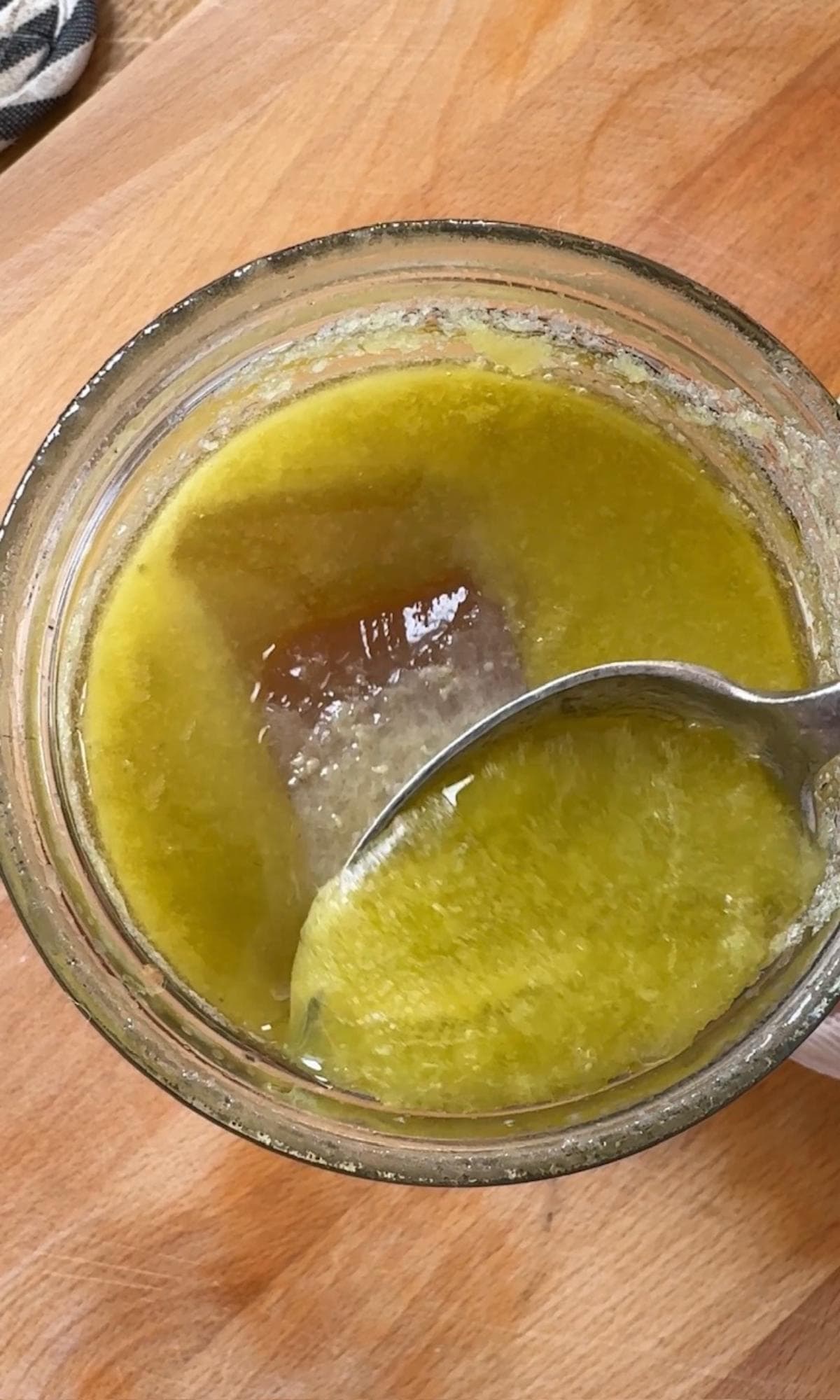
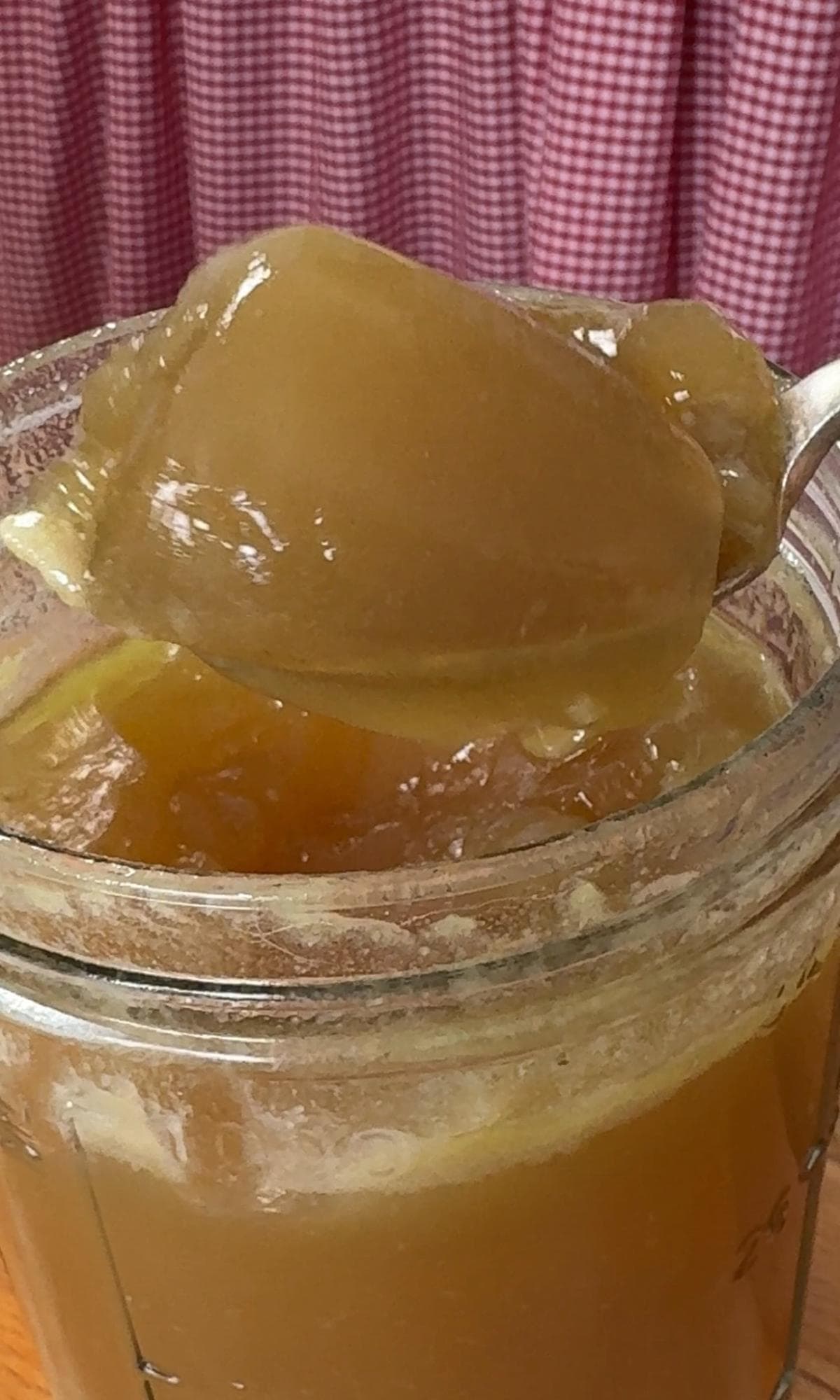
SIX: Once it’s chilled, any fat will have solidified on the surface. Use a spoon to skim off and discard any unwanted fat.
Cooking Tips:
Too high heat: if you boil the stock too aggressively, it can emulsify the fat into the stock, which can make it cloudy or greasy.
Keeping scraps in the freezer: this is a great way to minimise waste. Freeze chicken carcasses or veg scraps (like carrot peelings and onion skin) and then you can make a huge batch of stock at once.
Skim the scum: make sure to skim the top of the stock to get rid of the scum, otherwise it can lead to cloudy stock.
How to freeze: freeze in Tupperware or sealed freezer bags, ideally in portions for ease, for 6 months. Defrost overnight before using.
How to refrigerate: store in a Tupperware in the fridge for up to 5 days.
Frequently Asked Questions
Cloudy chicken stock is often due to boiling rather than simmering. If you boil the stock too aggressively, it can emulsify the fat into the stock, which can make it cloudy or greasy.
Not skimming off the foam, impurities and any scum can also lead to a cloudy stock.
There is nothing wrong with cloudy stock though, it’s still delicious and works exactly the same way.
I usually do, only because I use leftover roast chicken carcasses – I roast 2 chickens nearly every Sunday, so I always have a carcass ready. Unroasted bones/raw chicken carcass can create a lighter stock, whereas roasted has more flavour. I would say it just depends on what you have and what you like.
Make homemade chicken stock in:
– Instant pot: pressure cook on high for 45 minutes then allow the steam to naturally release.
– Slow cooker: cook on low for 8 hours, up to 10. This is a very hands-off method.
Stock is simmering slowly with bones, not only meat. Using the bones imparts collagen which is what gives homemade stock its signature gelatinous texture when chilled.
Broth is made by simmering the meat for a shorter time, rather than the bones for hours, leading to a clearer, lighter broth.
Other recipes you might enjoy:
Risotto is a great way to use up homemade chicken stock. Try my asparagus risotto, pumpkin risotto or my zucchini risotto. It would also be delicious in my spicy wonton soup.

Easy One Pot Dishes
Easy Tomato Bean Stew with Cavolo Nero

Easy Pasta Recipes
Creamy Mushroom and Spinach Pasta

Vegetarian Dishes
Tofu Noodle Soup

If you tried this homemade chicken stock or any other recipe on the site, please do leave a rating or comment and let us know how it went!
Homemade Chicken Stock
Ingredients
- 1-2 cooked chicken carcasses
- 2 onions, halved (skin on)
- 2 carrots, roughly chopped
- Small bunch of thyme
- Small bunch of rosemary
- 6 –10 black peppercorns
- 8 garlic cloves
- Cold water, to cover
Instructions
- Add the chicken carcasses and all the vegetables and aromatics to a large pot.
- Pour over enough cold water to cover everything.
- Cover with a lid and slowly bring to a simmer, over medium heat. Skim off any foam or scum that comes to the surface.
- Once it’s simmering, turn it down to low and let the stock simmer gently for 3 hours, or longer if you have it (up to 5 hours). Don’t boil it, just simmer.
- Strain the stock through a fine sieve into a large bowl or jug. Discard all the sieve catches.
- Cool and then transfer to an airtight container or jars. Place in the fridge or freeze.
- Once it’s chilled, any fat will have solidified on the surface. Use a spoon to skim off and discard any unwanted fat.
- The video below will help with this recipe.
Video
Notes
Nutrition
Nutrition information is automatically calculated, so should only be used as an approximation.



This is my favourite chicken stock recipe. Homemade is a treat and it does take a little time but the end product is so worth it.