
This post may contain affiliate links. Please see our disclosure policy.
Discover all you need to know about the spicy, spreadable Italian sausage Nduja that will revolutionise how you cook…
What is Nduja?
Nduja is a fermented and dried salami from Spillinga – a small town in Calabria, Italy. Like so many incredible Italian dishes, it was originally developed by peasants out of necessity (as is the basis of the Italian cooking style: cucina povera).
They were unable to afford the more expensive pork cuts, so they had to make do with the leftover pork back fat, belly and trimmings. On their own, these don’t taste great. However, once blended together, properly seasoned with local chillies and cured, they transform into a delicious spreadable sausage.

Table of Contents
How to pronounce Nduja?
Nduja is pronounced ‘en-doo-ya’. It has French and Calabrian linguistic roots as it’s said to originate from the French word ‘andouille’, a type of pork sausage and pronounced ‘ohn-douy’. You can see how the word evolved from the two pronunciations.
It’s likely that when the French had influence in Calabria in the 13th century, the word ‘andouille’ slowly became adapted into their language to describe a different pork sausage, namely nduja.
How is Nduja made?
Each producer will have their own exact methods, but they all follow similar steps.
- Fatty minced pork is mixed with ground Calabrian chillies (the amount varies – it is usually around 30% of the total weight of the sausage) and salt.
- Traditionally, and some may find this off-putting, this is then stuffed into a part of a pig’s intestine (known as an orba). However, Nduja in orba can weigh up to 3kg which isn’t very practical for the home kitchen. Thus, nowadays it is usually stuffed into smaller sausage casings.
- The cased Nduja is then put in a warm climate-controlled fermentation room for around 12-48 hours depending on the size. During this time it develops flavour and becomes shelf-stable. I am no scientist, but apparently this is due to the build-up of acid.
- Once it has finished fermenting, it is placed into a cooler climate-controlled drying room for anywhere between 45-180 days. Again, this will depend on the size but the longer it dries, the spicier and deeper the flavour becomes.
Unlike other types of cured meat and salami, it doesn’t firm up as it hangs. This is because it has a high fat content which allows it to maintain a deliciously soft, spreadable and buttery texture. Don’t be afraid of the fat content – it is where all the flavour is. Plus you really do only use a little at a time.
What does Nduja taste like?
It has a deep savoury, umami-rich flavour with a strong spicy kick from the Calabrian chilli peppers.
- Think of it a bit like a meaty, spreadable chorizo but with a more intense heat and prominent pork flavour.
- It also has a rich, soft and buttery texture due to the high fat content. It isn’t overly greasy – just full of flavour.
Bear in mind that due to its spice and richness, you only need it in small quantities. Different varieties vary in heat level, so I always recommend tasting a little before adding it to your cooking. The perfect excuse for a snack!
Where can I buy Nduja?
Once only available in specialist shops, Italian delis and online, you can now buy Nduja in most large supermarkets, sometimes in the chilled aisle.
Lots of shops also sell small jars of Nduja paste alongside the dried herbs and spices. It isn’t quite the same, but is a good substitute at a push. It has the same kind of flavour as the proper stuff and since it’s in jar format, it’s accessible for home cooks. But the real stuff does have a more intense flavour and that melty, fatty texture mentioned above.
How to cook with Nduja
However, it can also be added to all sorts of recipes for a rich, meaty flavour and spicy kick.
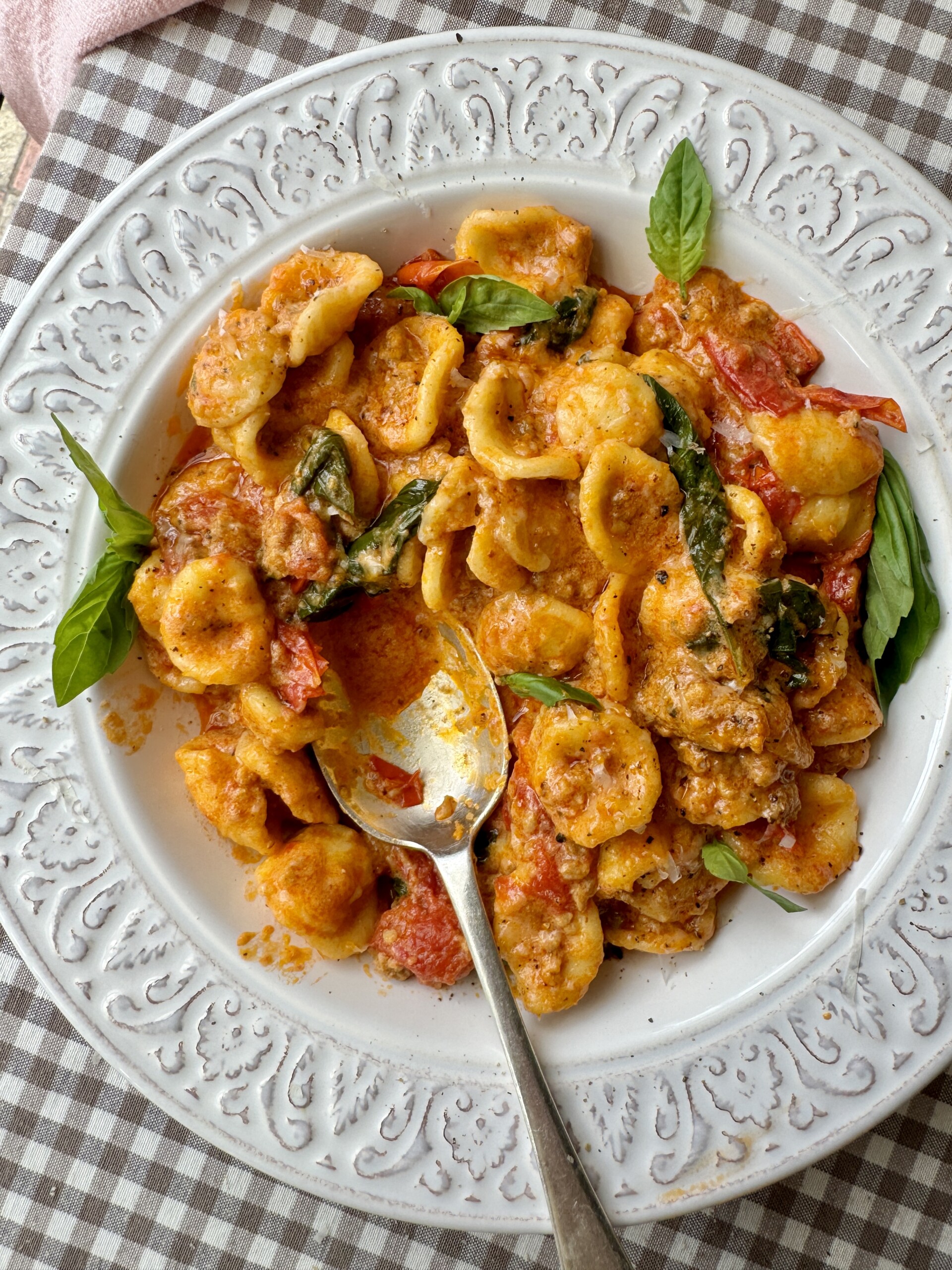
- I love to add it to all sorts of egg recipes – from scrambled eggs to shakshuka.
- Delicious in a whole host of pasta recipes – as well as risottos.
- Add it to warm butter which you can then drizzle over all sorts of things (like my flatbread pizza or Turkish eggs).
How to store Nduja
If you buy a jar of Nduja paste:
- it can usually be kept in the larder until opened, then it needs to go in the fridge.
If you buy a version from the chilled aisle:
- it will need to be kept in the fridge.
- Always follow the directions on the label – or ask the people working at the deli.
How I store Nduja:
- As a rule, once opened, I tend to wrap mine tightly in cling film (or pop in a sealed container) and keep it in the fridge. This helps maintain its texture and stops it from absorbing other smells from the fridge.
- It usually lasts 3-4 weeks well wrapped in the fridge, once opened.
- Unopened and vacuum-sealed nduja can last up to 6 months in the fridge.
- How long it lasts varies greatly depending on the type you buy. Once again, always follow the producer’s directions.
Frequently Asked Questions
Both sobrassada and Nduja are spreadable pork sausages with a similar texture, but they have different origins and flavours.
Nduja: from Italy. Nduja has a strong and spicy flavour (thanks to the Calabrian chilli peppers).
Sobrassada: from the Balearic Islands in Spain. Sobrassada has a sweeter, smokier taste more akin to chorizo (due to the smoked paprika).
Both chorizo and nduja are cured and have similar colours.
Nduja: Nduja has a strong and spicy flavour (thanks to the Calabrian chilli peppers). It’s spreadable and soft.
Chorizo: chorizo is firmer and can be sliced more easily. You can buy it either for cooking or cured (can be eaten raw), and it’s full of paprika. It can be mild or spicy too.
Yes, you can buy authentic nduja in the UK and US. You just need to know what to look for. Italian delis and speciality shops will likely have it. Look for a deep red colour with some signs of meaty texture (not too fatty). If you can smell it, it should have a strong, slightly fermented smell – similar to salami. Don’t buy anything labelled ‘paste’ as this isn’t the authentic stuff, even if still delicious.
Yes, you can freeze nduja to extend its shelf life. For best results, wrap it tightly in cling film or place it in a freezer-safe bag to protect it from freezer burn and minimise texture changes. While freezing may slightly affect its consistency, it’s a good way to store it if you’re not planning to use it right away. It does last a while in the fridge though, as it’s cured, so consider that too. When unopened and vacuum-sealed, it can last up to 6 months in the fridge.
You can eat nduja raw. Sometimes I have it spread onto crackers or toast for a quick and easy snack. So good (especially with a bit of Italian cheese).
My favourite nduja recipes
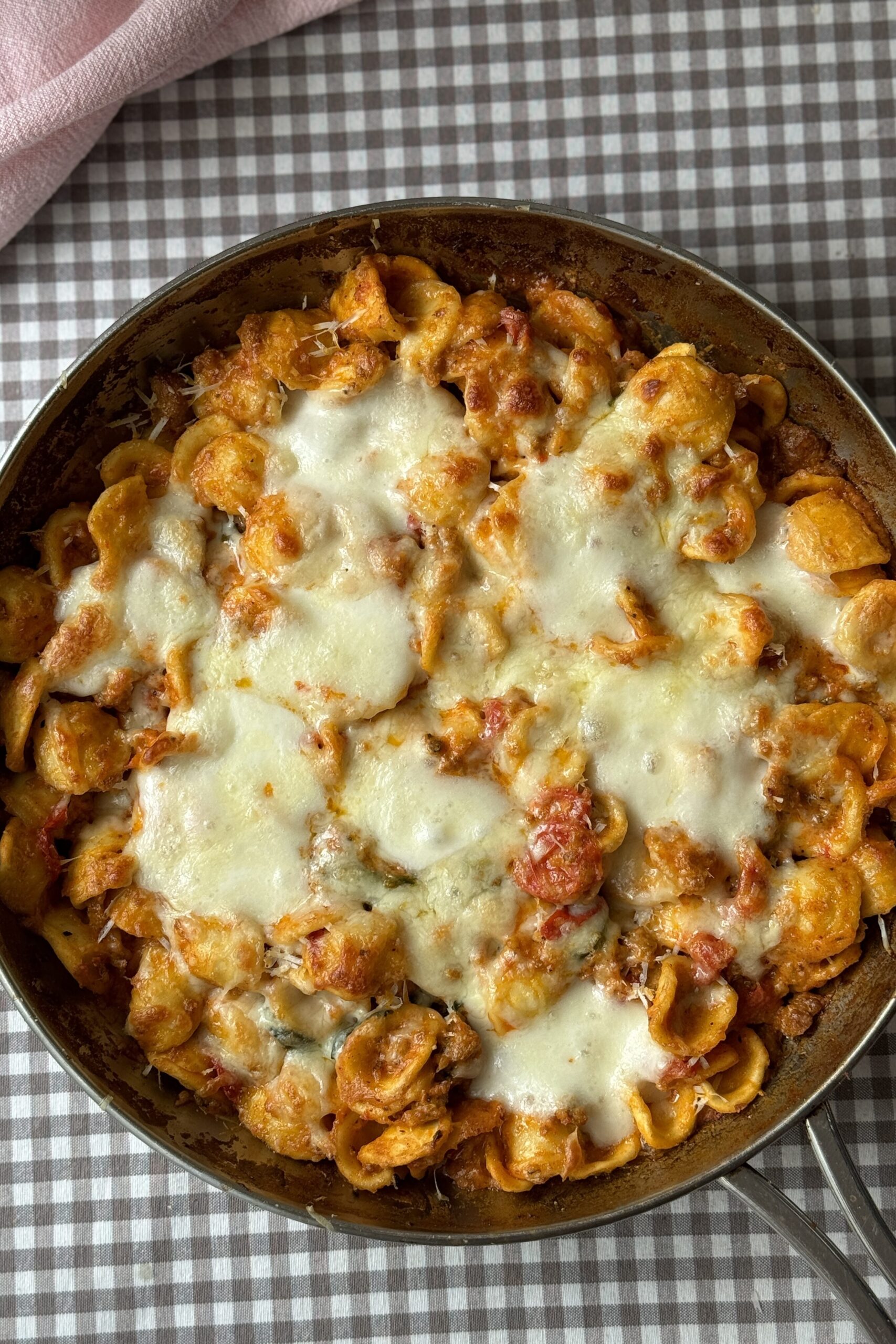
My Nduja and sausage pasta bake is one of my favourite go-to prep-ahead comfort foods. Alternatively, try my sausage Nduja pasta for a speedy midweek meal ready in under 30 minutes. Don’t miss my spicy Nduja pasta – a fiery twist on the viral vodka pasta. So good.

Easy Pasta Recipes
Spicy Nduja Pasta

Easy Pasta Recipes
Sausage Nduja Pasta (Pasta con Nduja)

Easy Pasta Recipes
Nduja and Sausage Pasta Bake

Easy Pasta Recipes


